

.webp)
Corporate talent acquisition (TA) leaders are under pressure to prove recruiting's strategic value, reduce time-to-fill, improve quality of hire, and connect workforce decisions to business outcomes.
Most HR leaders understand talent intelligence to mean a platform that shows external labor market data, skills availability benchmarks, and competitive hiring patterns. Although the understanding is not wrong, it is incomplete. The missing part is where most organizations get stuck.
Most TA functions have invested in tools that surface external data, while the internal data already in their own systems sits inert, and the reasoning layer that connects both to a decision is missing entirely. The result is a talent intelligence stack that names what the market holds and goes silent on what the organization already knows.
In this blog, we will examine the three layers that make up talent intelligence, why the institutional knowledge problem inside most corporate TA programs blocks AI from working as advertised, how data fragmentation turns intelligence into a dashboard nobody acts on, and what changes when all three layers operate together.
What is Talent Intelligence?
Talent intelligence involves three layers. Most corporate teams actively invest in one, passively generate a second, and largely skip the third, which is the one that determines whether any of it changes decisions.
.png)
The External Layer
The external layer is what most platforms market as "talent intelligence." It tells the organization what the world outside looks like.
- Skills demand data: which capabilities are growing, shrinking, or shifting in your sector and function areas
- Labor market supply: where qualified talent concentrates, how deep specific pools are, and what geographic availability looks like
- Competitive signals: which roles industry peers are hiring for, what compensation benchmarks indicate, where talent is moving
Labor market intelligence platforms, skills taxonomy tools, and benchmarking services all operate here. Corporate talent acquisition teams use this data to inform sourcing strategy, build target talent maps, and benchmark compensation against the market.
The external layer tells you about the talent that exists externally. It is silent on the relationship layer that your organization has already invested in building.
The Internal Layer
The internal layer is the history your organization has already generated, including:
- Every placement made
- Every candidate who moved through the pipeline
- Every interview debrief
- Every performance review on a previously hired candidate is institutional intelligence already produced and sitting inside your ATS
Traditional applicant tracking systems (ATS) record this data without learning from it. Pipeline history, interview feedback, and assignment outcomes are captured as static records, with no mechanism to turn them into a signal that improves the next decision.
The candidate who came second for a Senior Product Manager role two years ago, completed three rounds of interviews, and got positive hiring manager feedback exists in the system as a closed requisition, not as a scored, ranked, retrievable signal for the next similar role.
The Reasoning Layer
The reasoning layer is what most platforms skip and what determines whether the other two layers translate into different decisions.
Intelligence sitting in a dashboard is just information. Intelligence that surfaces the right candidate for a specific role, based on the full history of what has worked for that role type, hiring manager, and organizational context, is a signal.
Recruiters do not have time to read dashboards while sourcing for a role. They need the signal embedded in the workflow at the moment a decision is made.
This is where the limits of traditional talent technology become visible. Boolean search returns literal results. Semantic matching scores resumes against job descriptions. Both operate on what is written, not on what is known.
Neither has any concept of which candidates performed well on a specific assignment type, how far someone got in a previous process, what a hiring manager said in debrief two years ago, or which combinations of background and trajectory have historically produced successful placements for a given client.
That institutional knowledge usually lives in a recruiter's head, and when that recruiter leaves, it goes with them.
A reasoning engine changes what is possible. It does not match fields to fields. It evaluates pipeline history, interview feedback, assignment outcomes, and unstructured documents the way a senior recruiter would, and makes that judgment available to every member of the team, not just the ones who have been there long enough to remember.
Search becomes a natural language conversation, not a Boolean query. Matching becomes a fit score with a breakdown of why, not a keyword hit.
The three-layer framework is the blueprint for how talent intelligence is supposed to work:
- External intelligence tells you what the market holds.
- Internal intelligence tells you what your own history has proven.
- The reasoning layer connects both to the decision in front of the recruiter right now, not as a search result, but as a signal with context, history, and a score that reflects how a role has actually been filled before.
The Institutional Knowledge Problem at the Core of Most Corporate TA Programs
The most consequential intelligence problem in corporate talent acquisition is what experienced recruiters know that their systems do not, and why that knowledge is not compounding at the firm level.
How Senior Recruiters Make Decisions and Why It Cannot Be Replicated
Veteran recruiters make calls that newer members of the team cannot explain or reproduce, not because of instinct, but because of accumulated pattern recognition built over years of placements.
They know which candidates who looked "overqualified" actually stayed in similar roles and why. They remember what a hiring manager said in a debrief about the candidate who didn't work out three years ago.
They have developed a sense of which career trajectories tend to produce strong performers for specific functions. They notice when a candidate's combination of background and motivation matches a pattern that has succeeded before.
None of this is searchable or present in the ATS. It isn't in the human resource information system (HRIS). It lives in the recruiter's head as a working memory built over the years.
What Happens When That Knowledge Walks Out the Door
When experienced recruiters leave, the institutional intelligence they carry leaves with them. The next person on that desk inherits a record-filled database that tells them who applied and nothing about what those records should mean.
The replacement recruiter starts cold, sourcing net-new for roles the existing pipeline could fill. They miss silver medalists from past requisitions because the system does not surface them. They redo screening work that has been done before, on candidates who have already been evaluated, because the previous evaluation context did not transfer.
The cost of recruiter turnover lies in the relationships and judgment that left with them. Until that knowledge moves into a system that holds it at the firm level, talent intelligence stays at the recruiter-attribute level and never reaches organizational capability.
Why Data Fragmentation Turns Intelligence Into a Dashboard Nobody Acts On
Even when internal data exists, it cannot reach the recruiter at the moment a decision is made. Fragmentation blocks the decision layer entirely.
The Architecture Underneath Most Corporate Talent Data
Most corporate talent acquisition teams operate with talent data distributed across multiple systems.
- The ATS holds applications, screening notes, and offer history.
- The customer relationship management (CRM) tool holds candidate engagement and outreach history.
- The HRIS holds post-hire performance and retention data.
- The assessment platform holds skills and personality results.
None of these share a single talent record. Each system holds a fragment, and reconciling them requires manual data joining, custom reports, or middleware that synchronizes records without building a shared intelligence layer.
The operational cost is real:
- Teams source net-new for roles their existing pipeline should fill
- Sourcing spend pays for talent the organization has already engaged
- Time-to-fill stretches because the right candidate is in the database and invisible to the search
- AI tools that depend on this data produce outputs limited by what they can see, which is one fragment at a time
Internal Mobility as a Talent Intelligence Failure
Internal mobility is consistently named as a strategic priority for corporate HR, but it consistently underperforms relative to expectations.
According to a 2024 Gartner HR Survey, fewer than 20% of organizations move talent effectively to fill skill gaps. This happens because the system has no signal about the internal candidate that matches the depth used to evaluate external candidates.
The system does not know what the internal candidate's real skills are beyond their job title and last performance rating. It does not see the projects they led, the certifications they completed, the adjacent skills they have developed, or the career interests they expressed in their last manager check-in.
When a role opens, the search defaults to external because the internal candidate is invisible at the depth the role actually requires.
According to a 2023 Deloitte Study on Skills-based Job-matching, 93% said moving away from a focus on jobs to a focus on skills is important to their organization's success, while only 20% felt their organization was very ready to do it.
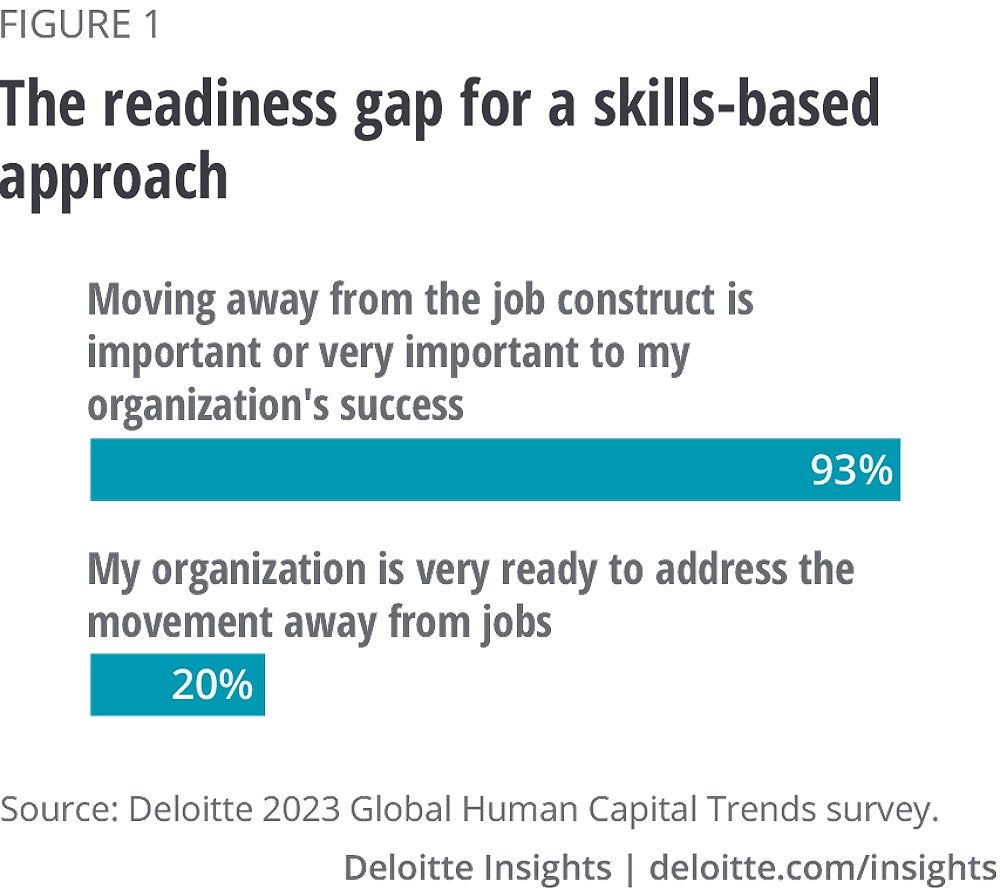
A reasoning layer that works across internal candidate profiles is what makes internal mobility an operational reality and not an HR policy document.
What Makes AI in Talent Intelligence Different From What Most Teams Are Running
What AI can actually do for recruiting decisions depends entirely on the intelligence layer it is reasoning against. Most corporate teams have not realized that the AI tools they have purchased are still working on keyword-level data.
Why AI Recruiting Tools Without a Reasoning Layer Are Doing Faster Boolean Search
When AI screening tools process applications, they are matching signals in a resume against signals in a job description. If the intelligence layer they are operating on is resume text and job description keywords, the AI is faster at the same task.
It returns more candidates per minute against the same shallow signal that a Boolean search has always used.
The quality of a recruiting AI's judgment is bounded by the depth of the data it can access:
- A model that sees only resume content cannot replicate the judgment that comes from knowing how that candidate type performed when placed in a similar role previously.
- A model that sees only the open requisition and a pool of resumes cannot weigh hiring manager preference history, debrief patterns, or prior performance data on similar profiles.
- A model that sees only job descriptions and candidate profiles cannot understand whether a candidate's career trajectory matches the trajectory of high-performing hires for that function.
What a True Talent Intelligence Foundation Enables for AI
When AI operates on a complete intelligence layer (external market data, internal pipeline history, hiring manager debriefs, post-hire performance, engagement signals), the output changes structurally.
An organization with a shallow intelligence infrastructure gets AI that produces faster, bad decisions. An organization with a deep intelligence infrastructure gets AI whose decisions improve over time as the model learns from every outcome.
The hire that succeeded becomes training data, while the hire that did not becomes a signal for what to weight differently next time. The candidate who declined twice becomes the context for the third outreach.
The compounding effect is what separates AI in talent intelligence as a real capability from AI as a faster search tool.
- Every placement should make the next one easier.
- Every interview debrief should sharpen the next screen.
- Every offer that closed should inform the next compensation decision.
None of that happens without a reasoning layer that connects internal history, external context, and the decision at hand.
Asymbl Talent Intelligence
Asymbl Talent Intelligence is the Recruiter Brain that powers the Asymbl platform. It is the reasoning layer that the three-layer framework requires, based on Salesforce alongside Asymbl Recruiter Suite, with the same data foundation that human recruiters and digital workers operate against.
Talent Intelligence scores candidates using pipeline history, interview feedback, assignment outcomes, and CRM context, drawn from the full talent relationship management record.
It evaluates the candidate the way an experienced recruiter would, weighing what the resume says alongside what the candidate's prior interactions, hiring manager debriefs, and outcomes from similar candidates have already proven.
Talent Intelligence runs on the same Salesforce data model as Recruiter Suite. The architecture is one record, one platform, no integration layer between them.
Recruiter Suite is the workflow and data foundation that holds the candidate record, the requisition, the engagement history, and the hiring manager activity. Talent Intelligence is the layer that reads across that record and produces the signal a recruiter or digital worker can act on.
There is no second copy in another system, and no synchronization gap between what the workflow captures and what the intelligence layer scores.
That same architecture is what makes Asymbl's digital recruiter, Rosa, work as a digital teammate rather than a faster automation. Rosa is Asymbl's pre-built digital recruiter (AI agent), built on Salesforce Agentforce, that operates inside Recruiter Suite as a defined team member.
Sourcing, initial screening, outreach sequencing, interview scheduling, and offer letter coordination all run through Rosa with full context available at every step.
Rosa operates from the same signals Talent Intelligence produces. When Rosa sources for a new requisition, she uses Talent Intelligence to score candidates against the role with the full relationship and outcomes record in view.
The result is closer to how an experienced recruiter would evaluate the same candidate, drawn from the entire talent relationship management record. When she screens an inbound application, the score she sees reflects pipeline history, prior interview feedback, and the patterns Talent Intelligence has learned from past hires for similar roles.
When she escalates to a human recruiter, the recruiter receives the candidate with the same context Talent Intelligence used to surface them, removing the swivel-chair work of looking up history across systems.
The combination is what makes the three-layer framework operational inside Asymbl:
.png)
- External intelligence flows in through skills, the labor market, and competitive signals
- Internal intelligence is captured continuously as the recruiting workflow runs inside Recruiter Suite
- The reasoning layer is Talent Intelligence, surfacing signals in the workflow itself, accessible to every human recruiter and every digital worker on the platform
When the Digital Recruiter operated on connected Talent Intelligence data inside Recruiter Suite, it screened 17,000 applications, scheduled 800 interviews, and helped a two-person team hire 100 people in 100 days, with a 47% increase in fill rate and $575K in hiring cost savings.
For corporate TA leaders being asked to deliver quality of hire, demonstrate strategic value, and prove that AI investment is producing operational capacity, the architecture is the foundation on which the strategy depends.
Conclusion
A talent intelligence framework that only delivers external market data leaves the organization buying intelligence about strangers while ignoring the intelligence already paid for about the people it has already met.
A framework that surfaces internal data without a reasoning layer produces dashboards that nobody uses at the moment of decision. A framework that runs AI without all three layers produces faster output on a shallow signal.
The teams that build talent intelligence as a connected reasoning layer compound capability with every placement, while the teams that buy a dashboard keep being asked to demonstrate strategic value with intelligence that does not reach the workflow.
Explore what Asymbl Talent Intelligence makes possible for corporate talent acquisition teams.
With the Recruiter Brain operating on the same Salesforce data foundation as Recruiter Suite, and Rosa, the pre-built Digital Recruiter, acting on the same signals Talent Intelligence produces, request a demo to see how the three-layer framework changes time-to-fill, quality of hire, and recruiter capacity.
FAQs
Talent intelligence is the practice of collecting, connecting, and interpreting talent data to produce actionable signals that improve recruiting decisions. It operates across three layers. External labor market data, internal pipeline and outcomes history, and a reasoning layer that connects both to the decision in front of the recruiter.
People analytics examines internal workforce data to understand the employees an organization already has, focusing on engagement, retention, performance, and workforce planning. Talent intelligence focuses on the full talent relationship across who could join, who has engaged, and what patterns in past candidates predict success for future roles.
A functional talent intelligence framework operates across three layers. External intelligence covers labor market data, skills demand trends, and competitive hiring signals. Internal intelligence covers pipeline history, interview outcomes, and performance data on previously hired candidates. The reasoning layer interprets both at the moment of decision and is what most organizations skip, the layer that determines whether the framework changes recruiting decisions or just produces dashboards.
Talent intelligence shifts HR from reporting on what happened to informing what should happen next. It connects workforce decisions to business outcomes such as
- Which roles to fill externally versus internally?
- Which skills to develop versus hire?
- Which pipelines to build before demand spikes?
Without talent intelligence, HR strategy depends on individual recruiter judgment and historical reporting. With it, HR leaders make defensible decisions backed by the organization's own pattern data.
AI adds reasoning and pattern-recognition capability that human-only analysis cannot match at scale. AI that processes resumes against job descriptions is doing keyword matching at a higher speed.
Internal mobility consistently underperforms corporate expectations because the intelligence infrastructure cannot match internal candidates to open roles before external searches begin. The system holds job titles and performance ratings, while the candidate's real skills, project history, certifications, and career interests sit unstructured. A reasoning layer that operates across internal profiles, with the same depth used for external candidates, is what makes internal mobility operational instead of aspirational.
.webp)
A Digital Workforce Takes More Than Agents Alone
Product, custom, or service, a digital workforce needs a manager behind every worker. Explore how staffing firms design, onboard, and coach theirs with Asymbl

The Right Fit Starts With a Conversation.
See what working together could look like.
.webp)