

.png)
Introduction
Staffing and recruiting firms have already launched AI agents, but the performance is still not reliable enough to trust without a person checking behind it. Recruiters still lose a third of their week to admin work their software was supposed to absorb.
They work out of databases full of records nobody fully trusts. A digital workforce closes that gap, and most firms have not built one yet.
Firms miss redeployment signals because talent relationships belong to individual recruiters rather than the firm. Revenue walks out the door when a top recruiter leaves. A workforce comes from roles, boundaries, handoffs, and accountability, which are the same decisions that build any business, human or digital.
In this blog, we will separate digital workers from the automation you already run and show why more agents alone do not add up to a workforce.
Digital Workforce vs. Automation
A business can automate hundreds of tasks and still have no digital workforce. The dividing line between digital workforce and automation is not autonomy, AI capability, or the number of agents running in the background. It is whether those capabilities have been organized into actual roles with defined responsibilities, boundaries, handoffs, and accountability.
Bots vs Agents vs Digital workers
Digital Labor vs. Digital Workers
Adding More Agents Does Not Produce A Workforce
Accenture’s Pulse of Change 2026 Research Report found that 82% of C-suite leaders are increasing AI investment, yet only 23% report widespread, sustained business value from AI. Even more telling, 55% are confident their agentic AI initiatives will deliver board-reportable outcomes within the next year.
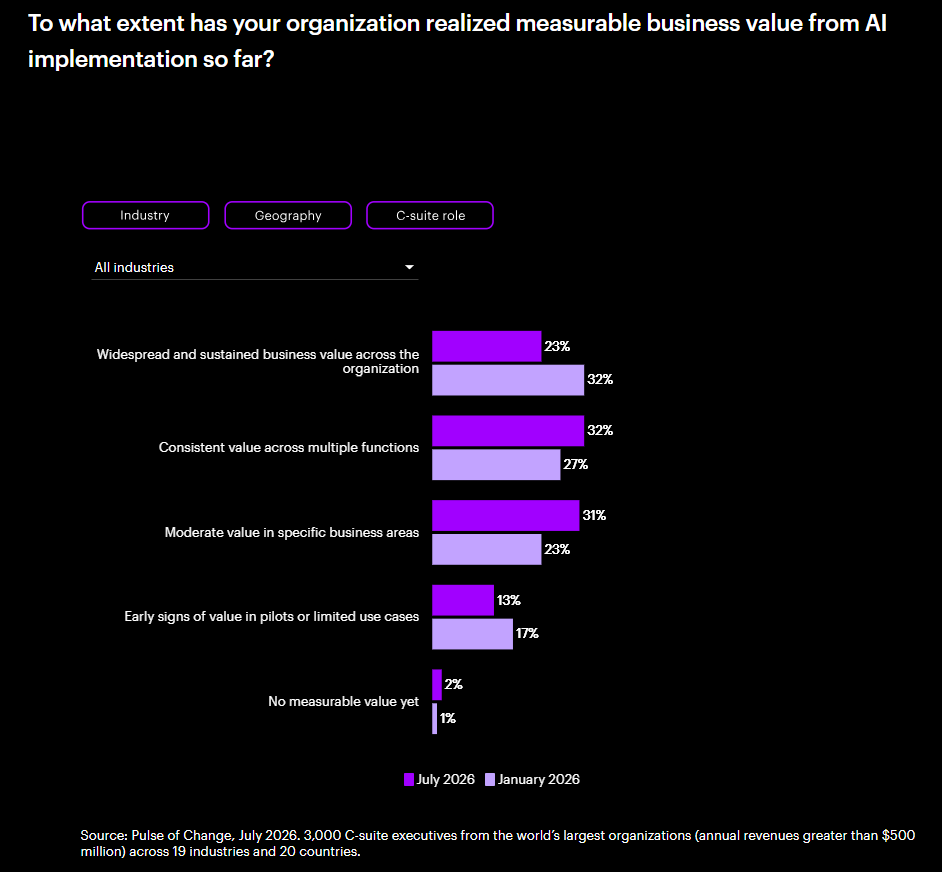
When each agent is commissioned to handle one team's task, businesses accumulate capabilities without necessarily creating a workforce because roles overlap, context stays fragmented, handoffs get missed, and nobody has a clear view of how the workers fit together.
1. Roles Overlap Because Nobody Drew The Org Chart
Most agents are built to solve one team's immediate problem. For example:
- Recruiting builds a screening agent because recruiters need help with applications
- Finance builds another to match invoices.
Both solve the problems they were designed for, but the problem starts when they begin operating alongside everything else the business has already deployed.
Without a broader view of who owns what, the boundaries start to blur. Two agents might update the same customer record using different rules.
These aren't failures of the individual agents because each one may be doing exactly what it was built to do. The problem is that nobody designed the jobs around them, so there is no clear answer to where one role ends, where another begins, or who owns the work when their responsibilities overlap.
A human team would normally sort this out through managers, job descriptions, and a conversation about who owns what. A growing group of agents has no such mechanism unless the business builds one.
2. Every Agent Starts From Zero Because Context Is Not Shared Between Them
Every agent starts from zero because each agent reasons only from whatever inputs it received for that one task. It keeps none of that once the task closes. One agent might learn something about a client, a piece of talent, a vendor, or an edge case, but that doesn’t reach the next agent that needs the same context.
The judgment that should accumulate across a business stays trapped inside individual task runs instead. It disappears the moment each one ends.
A human team builds shared context by sitting next to each other for years. They overhear the deal that fell through and the client who reacts badly to certain kinds of pushback. A fleet of agents has no equivalent mechanism unless somebody built one on purpose. Shared intelligence has to be built underneath the agents deliberately, before any of them go live. Otherwise none of them will ever draw on it.
3. Work Falls Between Workers Because Nobody Designed A Handoff
Work falls between workers because nobody specifies either boundary before go-live. Two agents with adjacent scopes have no defined boundary between them. An agent and the human meant to catch its escalations have no defined boundary either.
A digital worker completes its part and produces an output that nothing downstream is actually watching for. Nothing alerts anyone or fails loudly. The work just waits in a queue or an inbox until a person notices weeks later.
The agent did its job correctly, but it stopped exactly where the handoff should have started, and nobody built the bridge across that gap.
4. Nobody Owns The Workforce, So Nobody Reviews It
IT may be responsible for the platform and infrastructure, while the recruiting, finance, or support team owns the process where an agent is being used, which leaves everyone with the question: who is responsible for the agent itself?
Deloitte’s “State of AI in the Enterprise: The Untapped Edge” 2026 Report found that 74% of companies plan to deploy agentic AI within two years, but only 21% say they have a mature governance model for autonomous agents.
Without that ownership and governance, agents can keep running long after their original purpose has changed. The cost is easy to miss because nothing necessarily breaks as the agent is still running, and the reports still show activity. But:
- Nobody reviews whether the output is still useful
- Nobody updates the criteria when the business changes
- Nobody has a clear performance record to justify the ongoing cost
That is how a collection of individually useful agents turns into a workforce nobody is actually managing. Each one has a deployment owner somewhere, but no one is accountable for whether the workforce as a whole is still doing the right work.
What A Digital Workforce Looks Like When It Actually Exists
Most companies can show you a list of agents, which does not tell you much about whether they have a digital workforce. The better test is examining how these agents work:
- Who owns each role
- Where its work starts and ends
- What happens when another worker or a human needs to take over
- How anyone knows the worker is still doing a good job.
1. Six Roles Across Six Functions, And What Each One Owns
Asymbl understands the only credible way to help other businesses build a digital workforce was to build for itself first, so it did, function by function, with a name and a defined scope attached to each role.
- Rosa, The Digital Recruiter: Owns resume screening, talent outreach at scale, interview scheduling, and qualification, working alongside a human recruiting team.
- Teddy, Digital Sales Development Rep: Owns lead qualification, personalized outreach, meeting scheduling, and pipeline management.
- Ben, Digital Business Analyst: Runs discovery and requirements workflows. He covers stakeholder synthesis, gap analysis, user stories, statement of work (SOW) traceability, and test planning.
- Polly, Digital People Operations Specialist: Answers employee questions on policy, benefits, onboarding, and time off, available in Slack where employees already ask.
- Bradley, Digital Intelligence Analyst: Produces the weekly chief executive officer (CEO) briefing from live data pulled across the business.
- Casey, Digital Marketing Strategist: A content guardian who reviews content for brand guidelines, IP risk, and factual accuracy before it goes external.
2. Bradley: Coordinates Fifty Agents Across Nine Phases
Bradley delivers a complete, verified briefing to Asymbl's leadership every Monday, which does the weekend assembly a team of analysts and a chief of staff would otherwise carry out, so they spend that time on judgment instead.
Bradley pulls live data from more than fifteen sources spanning Salesforce, financial systems, Slack, and recorded executive one-on-ones. Fifty agents coordinate across nine phases to complete forty-nine distinct steps, all before a single line reaches anyone's inbox.
Three independent audits run before anything reaches the CEO, checking structure, data accuracy, and narrative compliance in sequence. Bradley audits his own output and coaches himself every cycle, catching drift before a human ever has to.
3. Nearly Two Hundred Workers, More Than Half The Workforce
Asymbl has rapidly scaled toward 200 digital workers, spread across 13 business functions and 30 different systems. This makes for a hybrid workforce that is now more than half digital.
At that scale, the management systems underneath every worker have to actually function day to day. They cannot just exist on paper, so no meeting ever happens without a digital teammate present, or no digital worker operates without a human manager accountable for it.
Getting there took decisions about how a worker enters the business and how Asymbl builds and onboards it. It also took a decision about what holds all of them together once they are live.
Three Ways A Digital Worker Enters Your Business
.png)
The way a digital worker enters your business affects
- Who builds it
- Who manages it
- Who carries the responsibility when something needs to change
1. Product Workers, Pre-Built For A Defined Role
Asymbl’s product worker is built for a role common enough across businesses. The buyer gets the worker, its workflows, guardrails, and governance structure without having to build everything from scratch.
Rosa is Asymbl's pre-built Digital Recruiter, powered by Asymbl Intelligence. She runs inside Recruiter Suite, a Salesforce-based system. This lets her work from talent history, pipeline, and job data instead of a resume parsed in isolation.
Guardrails, audit trails, and governance come with the product worker, and nobody has to request them afterward as an add-on. Pre-built fits for jobs that are standard across businesses. A pre-built worker needs enough configuration to fit. At that point, it turns into a custom build anyway, without any of the benefits of actually onboarding one.
2. Custom Workers, Built To Your Context When No Product Fits
Asymbl builds a custom worker for a specific business's own context. The job it does does not exist anywhere else in a form a vendor could pre-package. A weekly CEO briefing draws on one company's fifteen-plus sources, its own financial structure, and its own recorded leadership conversations. It only works because Asymbl built it for that exact company.
Polly, a people operations specialist, answers policy, benefits, and onboarding questions inside the company's own documentation. She meets employees in the Slack channel where they already ask.
Building internally sounds straightforward until scope expands and the data turns out messier than expected. Months pass with a proof of concept instead of a performing worker. The gap is rarely the technology and usually the absence of a role definition and a management framework behind it.
Custom work still follows the same underlying structure. Role definition and design happen before any build begins, then comes the build itself, then onboarding into the environment, then optional ongoing coaching against defined key performance indicators (KPIs).
3. Service Workers, Embedded Inside A Delivery Engagement
A service worker is different from a product or custom worker because the customer is not buying the worker itself. The worker is part of a service engagement that Asymbl provides, manages, and remains responsible for the worker while the customer receives the work it produces.
Ben, Asymbl's digital business analyst, works this way. He can be embedded into a client engagement to handle discovery and requirements work, from gathering information and identifying gaps to creating user stories and supporting test planning.
There is another advantage when the work continues across projects. When a human consultant leaves an engagement, some of the context they built up leaves with them.
The next person then has to spend time understanding the project before they can contribute. A service worker can carry their role and working context from one engagement to the next.
How To Decide Which Path A Given Job Belongs To
Deciding which path a job belongs to comes down to three questions. Ask them in order, ahead of any gut call about which vendor pitch sounded best:
- Is the job standard across functions, or is it custom to one particular role or function?
- Standard points to product
- Particular role points to custom
- Is the job central to how the business runs, or is it attached to a project with an end date?
- Central points to owning the worker
- Project-bound points to service.
- What is the business actually prepared to manage? Every owned worker needs a named human manager and a review cadence. A business that cannot staff that for a given role should not own a worker doing it.
Design, Onboard, And Coach: The Framework Behind Every Worker
Whichever path a worker enters through, product, custom, or service, the same discipline builds it and keeps it accountable. Asymbl built this discipline for itself before ever offering it to another business.
1. Design Around The Job Before Any Technology Is Chosen
A business cannot manage what it never took the time to define. The role comes first, and Asymbl chooses the technology afterward to fit whatever the job actually requires.
Design covers:
- The job to be done
- The motivation for success that defines what good looks like
- The boundaries of what the worker does and does not do.
- Names the human manager who will own it
- The coaching plan that follows.
Every digital worker gets a written role definition before the design begins
- The role definition states the job's scope
- The criteria that define whether it is succeeding
- The limits of what the worker will never do on its own
Asymbl wrote Casey's scope as a content guardian, her quality standards, and her escalation rules before she ever went live. Writing those down before go-live made it possible to assess her today against the right KPI metrics.
Most businesses reverse this order, choosing a platform first and then looking for work to point it at. This reversal is the single most common reason pilots stall. It is a planning failure rather than a technology one.
2. Onboard Into The Systems The Work Already Happens In
Onboarding means bringing a worker into the business the way a new hire arrives. It means a structured process, defined expectations, and checkpoints along the way. Those checkpoints confirm it is actually doing the job the business designed it for.
Ben's onboarding ran through a five-phase training plan built by his human manager with defined checkpoints along the way, and those checkpoints confirmed Ben could handle discovery and requirements work independently before he took on a full caseload alone.
This is the same investment a business makes in a senior human hire. Treating it as optional for a digital worker produces a capable system that never actually performs.
3. Coach, Because Go Live Is Not The Finish Line
Coaching means active performance management rather than passive monitoring. It means:
- Reviewing a worker's outputs on a regular cadence
- Refining the criteria it reasons from as conditions change
- Updating its role definition as its scope matures
- Tightening guardrails wherever its behavior drifted somewhere nobody intended.
Bradley runs three independent audits on his own output every cycle, checking structure, data accuracy, and narrative compliance. He also coaches himself against what those audits find. This is what coaching looks like once a worker is mature enough to carry part of it itself.
Most workers still need a human manager running that same review on their behalf every week.
What Turns A Digital Worker Into A Workforce
.png)
One well-managed digital worker is still just one worker. The bigger challenge starts when a business has dozens of them and needs them to work together without duplicating work, losing context, or creating gaps between teams.
The workers need
- Shared rules for how they fit together
- Where their responsibilities start and stop
- How they hand work to each other
- Who is accountable when something goes wrong.
It turns a group of digital workers into a workforce, and Asymbl calls it Workforce Orchestration™.
1. Distinct Roles With Boundaries Written Down
Roles do not overlap because Asymbl writes each one down before the worker goes live. Polly's boundary is the clearest example, and the highest stakes. Sensitive matters, including harassment and discrimination, automatically route to private human resources (HR) channels instead of Polly answering them directly.
Asymbl decided this routing rule in advance, before Polly ever answered a live question.
A team can trust the digital worker that knows exactly where its authority ends and works inside those limits.
2. One Intelligence Layer Every Worker Reasons From
Asymbl Intelligence captures the judgment, context, and pattern recognition that accumulates across workflows, decisions, and outcomes. It makes that signal available to every digital worker and every human teammate on the platform. Most systems store data, whereas Asymbl Intelligence learns from it and gets sharper with time and more accumulated context.
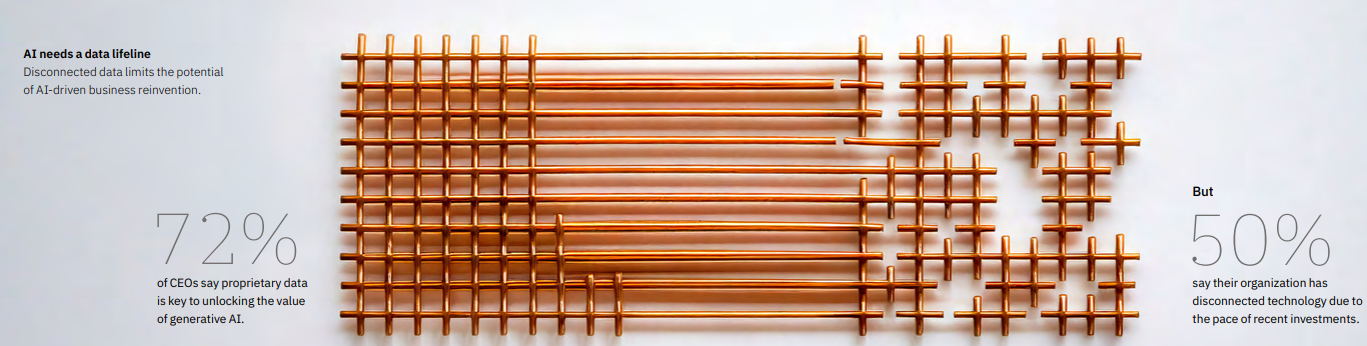
In the 2025 IBM CEO Study, 68% of CEOs identify an integrated, enterprise-wide data architecture as critical to cross-functional collaboration, while 72% say using an organization’s proprietary data is key to unlocking the value of generative AI. A fleet of agents reasoning from separate, disconnected contexts works against that architecture, no matter how large the fleet grows.
Rosa reasons from inside that record. She does not reach across a separate applicant tracking system (ATS) or a human resources information system (HRIS). She does not stitch together a customer relationship management (CRM) system and a spreadsheet either. Those connectors break the moment one of those systems updates. This is why her screening gets better as a firm keeps placing people.
Every worker contributes signal, and every worker draws on it in turn. The workforce improves as a unit instead of one worker getting smarter in isolation. Adding more agents to the roster does not produce that same effect on its own.
3. Handoffs Designed Between Digital Workers And Human Teams
Asymbl designs handoffs as specifications rather than assumptions. Each one covers:
- The trigger
- What travels across
- Who receives it
- What happens if that person does not act
Teddy hands off from digital to human at the top of the funnel. He qualifies, runs outreach at volume, and schedules the meeting. The human SDR takes the relationship from there. This handoff marks the exact point where the work stops being repeatable and starts requiring judgment.
Rosa screens, schedules, and briefs. The human recruiter makes the decision, holds the closing conversation, and owns client alignment. In both cases, the digital worker owns structured execution, and the human owns judgment, influence, and the actual decision.
4. A Named Human Manager And KPIs For Every Worker
Every digital worker gets:
- A named human manager accountable for its performance
- A set of KPIs reviewed against on a defined cadence
Ben's KPIs cover:
- Requirements documentation velocity
- First pass accuracy
- SOW Coverage Completeness
- Stakeholder satisfaction
- Reduction in analyst rework.
Bradley's KPIs cover:
- Briefing delivery reliability
- Audit pass rate
- Data source coverage
- Leadership time reclaimed.
They also cover briefing accuracy verified by spot audit and executive satisfaction. Rosa's KPIs cover time to fill, time to hire, screening throughput, and interview scheduling efficiency. They also cover candidate response rate, headcount avoidance, and screening compliance rate.
None of these are activity counts. Tasks completed and hours saved can increase every quarter whether or not the actual business outcome moved. Activity counts like these cannot carry a client or margin conversation on their own.
Every metric above is one the function already reports without a digital worker in the picture. Reporting a metric the function already tracked makes a digital worker defensible when the line item comes up for review.
5. Guardrails And Audit Trails That Exist Before Go Live
Asymbl defines guardrails before go-live, including;
- What a worker decides on its own
- What escalates
- When human override is mandatory
- How edge cases route when they fall outside a defined pattern
Bradley runs three independent audits on structure, data accuracy, and narrative compliance before a single line reaches a human. Every data point stays verifiable against source systems by spot check.
Gartner's Avoid Governance Mismatch: Classify AI Agents by Autonomy Level (2026) predicts that by 2027, 40% of enterprises will demote or decommission an autonomous AI agent, with the governance gaps surfacing only after a production incident.
Retrofitting auditability onto a digital worker nobody designed it into means a rebuild, which costs far more than a configuration change would have. Governance is cheap to design in from the start and expensive to add back in afterward.
What Changes For Your Human Teams
Everything covered so far builds and holds accountable only the digital half of this org chart. None of it explains what happens to the humans standing next to that roster once it goes live.
- The Work Businesses Design Rather Than Leave Over: A business designs the work that is left for humans with the same deliberateness as the digital side. This happens when it builds roles properly from the start. A business assigns judgment, relationships, exception handling, and the decisions that carry consequence on purpose.
- Managing Digital Workers Becomes Part Of The Job: Managing digital workers becomes a defined part of a human manager's actual job description. It carries the same weight as managing a human report. Ben's manager builds his training process, runs the weekly one-on-ones, and reviews sample outputs. He gives specific corrections and decides when Ben is ready to take on more. Those are the same responsibilities a manager already carries for a human hire.
- Digital Workers In The Headcount Plan And The Performance Review: Digital workers show up in headcount plans and in performance reviews once a business actually treats them as workers. Leaders write job descriptions for them and coach them through weekly one-on-ones the same way they would any human hire.
Capacity decisions stop being a binary choice between hiring a person and automating a task. They become a question of which kind of worker, human or digital, a given job actually calls for.
A Digital Workforce Is Only As Strong As Its Management Capacity
Every decision covered above happens at the level of one worker. Its scope, its manager, its KPIs, its guardrails. A workforce built entirely from workers this well designed still hits a limitation none of those decisions remove.
Scaling past a handful of workers comes down to how many people inside a business know how to manage one.
Bradley coaches himself against three audits every cycle. Nobody had built that discipline into a digital worker before Asymbl needed it. Ben's manager built that same training process with no precedent to draw on.
Scaling toward a workforce this size takes people who can run KPI reviews and catch drift early. It also takes people who can decide when a worker earns more scope. A people manager already makes that same call for a human hire.
Building that capacity is the harder work behind every product, custom, and service worker covered above. A business evaluating its own digital workforce can borrow that discipline instead of building it from zero. Book a demo to see how Asymbl designs, onboards, and coaches a digital worker inside your own business.
.webp)
AI in Recruitment: 8 Practical Ways to Modernise Hiring
Artificial intelligence in talent acquisition: 8 patterns and a 6-step path to implement AI without breaking your process

The Right Fit Starts With a Conversation.
See what working together could look like.
.webp)