

10 Staffing Software Features Every Recruiting Firm Needs

The right staffing software features give recruiting firms the tools to place more candidates, operate with less overhead, and build the kind of client and candidate relationships that compound over time. The best platforms unify sales, recruiting, and talent data in one connected environment so every recruiter has the full picture and every decision is backed by real intelligence, not guesswork. This guide covers the 10 features your staffing software must deliver to move faster, hire smarter, and grow without adding headcount.
Historically, staffing and recruiting firms have relied on emails and Excel spreadsheets to manage and engage their clients and candidates. Today, most firms have replaced those manual processes with staffing software solutions that streamline recruitment workflows, reduce time to fill, improve placement accuracy, and enhance client and candidate experiences.
However, not all staffing software solutions deliver the same results.
Some force you to adapt your workflows and processes to fit the solution, which often leads back to email, spreadsheet, and file folder workarounds.
Others require expensive customizations to make the solution work how you need it to.
The good news is that you don’t have to settle for either of these options. A little due diligence will help you implement a staffing and recruiting software strategy that aligns with your organization’s recruitment processes and business objectives.
10 Key Outcomes You Should Expect from Your Staffing Software Solution
Every staffing and recruiting firm has its own recruiting workflows, business processes, client- and industry-specific requirements, and talent engagement strategies.
Here’s what to look for in a staffing software solution to ensure your technology aligns with your desired business outcomes.
1. Efficient Automation
Intelligent automation tools take on repetitive administrative tasks, maintain consistent engagement with candidates and clients, and streamline the recruitment process from first contact to onboarding, freeing up skilled staff to focus on the strategic aspects of staffing and recruiting.
2. Improved Candidate Experience
User-friendly interfaces, streamlined application processes, and automated communication tools create an exceptional candidate experience, making it easier for candidates to engage with hiring managers and the staffing firm.
3. Unsiloed Sales and Recruiting
Assembling business-process-specific applications inside a single platform bridges the gap between sales and recruiting teams, providing a unified candidate and customer profile across all touchpoints.
4. Configurable Workflows
Configurable workflows tailor recruiter workflows to specific job roles, industries, clients, and teams, ensuring your firm’s recruiting strategies align with client needs, industry regulations, and internal policies.
5. Scalability
Scalable staffing software solutions seamlessly adapt to changing business needs, such as increased job openings, a broader talent pool, or a larger number of recruiters interacting with the system.
6. Candidate and Client Relationship Management
Centralized data, communication tools, data analytics and reporting capabilities, and automated, configurable workflows work together to provide client and candidate insight to build and nurture strong relationships.
7. Enhanced Data Analytics and Reporting
Robust data analytics and reporting capabilities measure performance, inform decisions, optimize processes, ensure compliance, foster transparent communication and drive continuous improvement throughout the recruiting lifecycle.
8. Quick Candidate Evaluation
AI and machine learning technologies facilitate talent pool management and candidate evaluation, speeding up time to fill and ensuring the right candidates are placed in the right positions.
9. Robust Network Building
Centralized client and candidate data and automated multichannel communications enable recruiters to engage seamlessly through email, text, or phone to build and nurture strong relationships.
10. Predictive Hiring Technologies
Predictive hiring technologies leverage client and candidate information and analytics to make data-based predictions about candidate success, organizational fit, cost to hire, employee retention, and source channel effectiveness.
Bring Your Staffing Software and Your Business Strategy into Alignment
Staffing and recruiting technology is a rapidly growing industry, with firms increasingly turning to software solutions to improve efficiency in their recruiting workflows, automate manual processes, and accelerate hiring.
Numerous staffing software solutions are available on the market, and they aren’t all created equal. Before you make a costly mistake, do your due diligence and find a solution that lets you choose the applications with the features, functionality, and workflows your firm needs to achieve its desired business outcomes.
Find out how Asymbl is helping create a new generation of staffing and recruitment technology solutions. Book a demo today.
FAQs
Q1: What are the most important features to look for in staffing software?
The most important staffing software features depend on your firm's size and placement model, but the ones that consistently deliver the highest impact are automation, unified sales and recruiting data, configurable workflows, and strong analytics and reporting. Beyond those core capabilities, look for integration support with the tools you already use, compliance coverage for the jurisdictions you operate in, and a platform that can scale with your firm without requiring a full re-implementation every time your needs change.
Q2: How do staffing software features differ from general HR software?
Staffing software is built specifically for the two-sided nature of recruiting managing both client relationships and candidate pipelines simultaneously across high-volume, fast-moving workflows. General HR software is designed for internal workforce management, not for the placement lifecycle that staffing firms run. The features that matter most in staffing software multichannel candidate engagement, job order management, redeployment tracking, and placement-to-invoice workflows are either absent from general HR tools or adapted poorly from use cases that were never designed for a staffing firm's operating model.
Q3: Can staffing software integrate with the tools my firm already uses?
Yes, and it should. The best staffing software platforms offer pre-built integrations with job boards, payroll providers, background check systems, VMS platforms, and communication tools so your existing stack connects rather than competes. When evaluating options, ask specifically about how data flows between systems, whether integrations are bidirectional, and whether the vendor has a vetted partner ecosystem with proven technical compatibility not just a list of logos on a partnerships page.
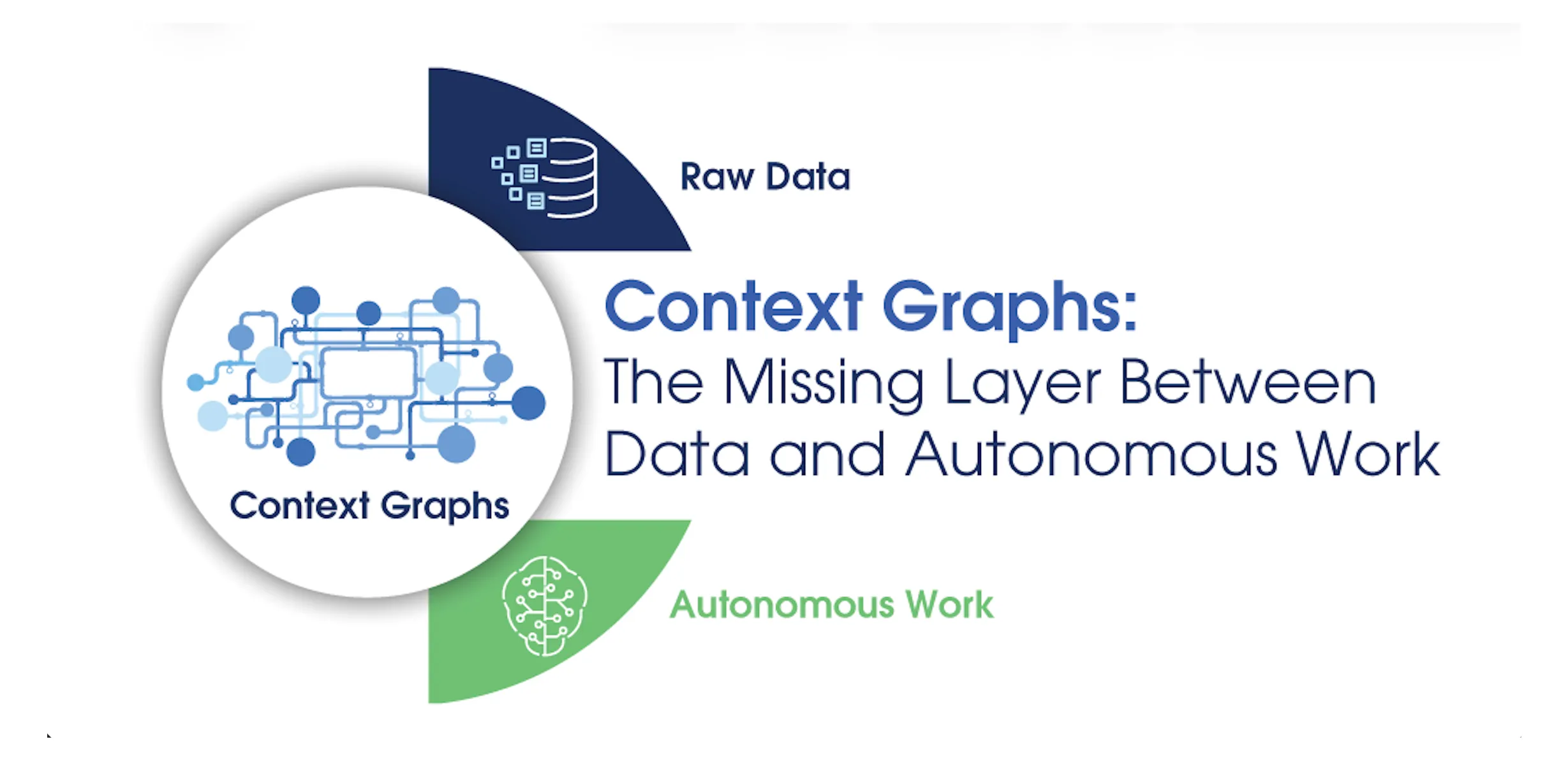
Context Graphs: The Missing Layer Between Data and Autonomous Work
Context graphs help you debug autonomy by capturing decision traces. Learn why organizational memory, context graphs, and decision trees are essential for AI to deliver autonomous work.

The Right Fit Starts With a Conversation.
See what working together could look like.
.webp)