


.webp)
Quality of hire is the metric almost everyone agrees matters most, and the one almost no team trusts its own number for. Most recruiting teams face heightened pressure to improve hire quality, yet most still grade it as a vague metric that lands months after the decision was made.
The reason it stays slippery is that teams treat quality of hire as an after-the-fact opinion on whether a hire worked out, when it is really a measurable readout of how well the hiring system selects.
For a corporate talent acquisition team, it shows up as performance, retention, and the confidence of the business. For a staffing firm, it shows up as whether a placement sticks and whether the client comes back.
The real question is whether your system can produce a number you would stake a decision on. In this blog, we will examine what quality of hire means for each audience, what poor quality actually costs, how to measure it, why it stays hard, and how to improve it.
What Quality of Hire Actually Means
Quality of hire is the value a new hire adds, measured by how well they perform, stay, and fit the role they were brought in for.
A corporate talent acquisition (TA) leader and a staffing firm owner are accountable for different results, so quality of hire has to be defined twice before it can be measured once.
What It Means for Corporate Talent Acquisition Teams
For a corporate team, quality of hire is whether the person performs in the role, ramps to productivity on schedule, stays past the first year, and earns the confidence of the hiring manager and the team around them.
Each of those is a distinct signal, and a hire can pass one while failing another. Someone can stay two years and never reach the output the role was opened to deliver. Someone can perform brilliantly and leave in eight months. Quality of hire is the composite that holds all of it together.
It is the effectiveness measure that sits above speed and cost, the one that tells leadership whether recruiting brings in people who move the business forward.
What It Means for Staffing and Recruiting Firms
For a staffing firm, quality of hire is placement durability. It is whether the candidate placed stays through the guarantee period and beyond, performs well enough that the client is satisfied, and reflects well on the firm that sent them.
The firm does not own the role, the performance review, or the retention budget. What it owns is whether the placement holds and whether the client trusts the firm enough to call again.
A quality placement opens a relationship, produces repeat business, referrals, and a client who hands the firm the next role without shopping it around. A weak one puts all of that at risk in a single phone call.
For a staffing firm, quality of hire is measured in the client's behavior afterward, which makes it the leading indicator of revenue rather than a backward-looking report.
What Poor Quality of Hire Actually Costs
The cost of a bad hire compounds differently for corporate teams and staffing firms:
For Corporate Teams
.png)
A poor hire inside a corporate team spreads across the manager who hired, the team that absorbs the gap, the leaders who funded the headcount, and the recruiting function that promised the outcome. Four costs stack on top of each other, and only the first one shows up cleanly in a spreadsheet.
1. The Rehire Itself: Paying Twice for One Hire
A hire that does not work out resets the entire cost and effort on the same role. The role reopens, sourcing restarts, screening runs again, and the interview loop reconvenes.
The function pays twice to fill one position, and the second cycle often runs slower because the team is now hiring under pressure to recover lost time. The original cost-per-hire number was never the real cost. The real cost was that number, doubled, plus the months in between.
2. Lost Productivity and Delayed Business Outcomes
A weak hire ramps slowly or never reaches full capacity, so the output the role was expected to deliver arrives late or not at all. Projects stall, go-to-market dates slip, and the team that was supposed to gain capacity spends it covering for a hire who is not contributing.
The salary is the smallest part of the loss. The higher cost is the outcome of the headcount that was approved to produce, which is almost always worth more than the salary itself.
3. Ripple Effects Across Every Team Involved
One poor hire pulls time from everyone connected to it. The hiring manager re-spends hours interviewing replacements. The team absorbs the unfinished work and watches its own output drop. Morale dips because nothing erodes a team faster than carrying someone who is not pulling their weight.
Onboarding has to run a second time. The cost radiates outward from the empty role into every calendar around it, and none of that time is recorded anywhere as a hiring cost.
4. Eroded Trust in Talent Acquisition From Leadership
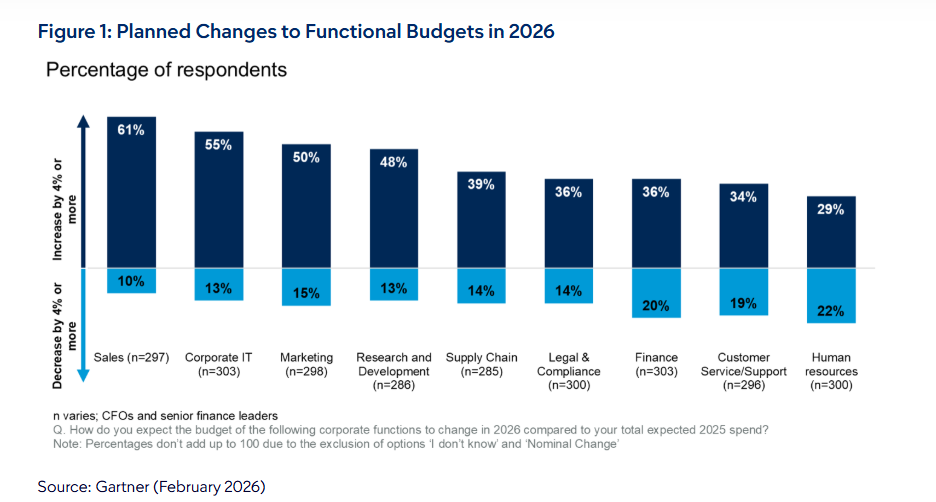
When leadership loses trust in TA’s judgment, the budget conversation shifts too. According to the 2026 Gartner CFO Budget Priorities report, only 29% of CFOs plan to increase the human resources budget for 2026 while 22% expect cuts, a pullback, Gartner attributes to reduced hiring and AI efficiency gains rather than confidence in the function.
A TA function seen as unreliable has to fight harder against that structural pivot, not defend itself in a stable environment.
For Staffing Firms: Broken Client Trust and Lost Repeat Business
For a staffing firm, a poor placement does more damage than a missed margin on one deal. It threatens the relationship the entire revenue model depends on.
1. Fall-Offs and Free Replacements That Erase the Margin
A placement that does not stick triggers a replacement under the guarantee period. The firm works the role a second time for no additional revenue, and the margin on the deal disappears into the cost of the redo.
A fall-off converts a profitable placement into an unpaid one, and if the replacement also struggles, the deal moves from low-margin to loss. The firm carries all the delivery costs and collects none of the upside.
2. Broken Client Trust in a Relationship Business
A bad placement tells the client the firm does not understand their needs, and that doubt is far harder to win back than the placement was to make.
Clients extend a firm credibility based on a track record, and one visible miss withdraws more of it than a single good placement restores.
In a relationship business, the firm is only as strong as the client's confidence that the next candidate will be right, and a fall-off spends that confidence directly.
3. Lost Repeat Business and Referrals
Clients who receive a poor hire quietly stop sending roles and stop referring the firm to others. The most expensive cost of a fall-off is the future pipeline of work that never arrives, and it never shows up as a loss because it was never booked.
A firm can watch its fall-off rate stay low and still lose ground, because the real damage is the calls that do not come. Repeat business and referrals compound when placements hold, and they evaporate just as quietly when they do not.
4. Recruiter Time Spent Re-Placing Instead of Earning New Revenue
Every hour spent replacing a fall-off is an hour not spent on a new, billable role. Poor quality of hire lowers the recruiter efficiency the firm depends on for revenue, because a recruiter reworking an old placement is a recruiter not generating a new one.
The opportunity cost is the placements that the recruiter would have made with the same hours.
Margin and revenue keep a staffing firm running, and speed protects both. Even so, a firm cannot buy them at the expense of quality of hire, because the trust a quality placement builds is what the repeat revenue is made of. Lose the quality, and the margin follows it out the door.
How Quality of Hire and Time to Fill Pull Against Each Other
Quality of hire rewards taking the time to select well, while time to fill rewards moving fast. Every team feels the two pulling in opposite directions on the same requisition, and when they are treated as a tradeoff, the faster one almost always wins because it is the one leadership can see today.
The mis-hire shows up later, on a different report, owned by a different conversation.
For Corporate Teams: Filling Fast for Leadership and Growth Without Filling Wrong
Corporate teams are pushed to fill fast because leadership is waiting, go-to-market depends on the role, and team growth stalls while the role sits open. The pressure to close quickly is constant and visible to everyone above the recruiter. A role open for ninety days is a number the business notices.
The same speed that answers leadership can produce the mis-hire that costs far more than the open role ever did. A role rushed to closure to meet a deadline can deliver a hire who underperforms for a year, which is a longer and more expensive delay than the one the speed was meant to prevent.
For Staffing Firms: A Fast Placement Books Revenue, a Fall-Off Returns It
Staffing firms need speed because faster placements mean faster revenue and protected margin, and a role filled by a competitor first is revenue gone for good. Velocity is the business model. A firm that moves slowly loses the placement to a firm that moves quickly, and there is no second prize for the right candidate submitted late.
A placement rushed to book revenue can fall off and return that revenue, along with the client's trust in the firm. Speed and durability are both required, and the firm that trades one for the other loses on the exact metric it was trying to protect.
How to Measure Quality of Hire
Quality of hire becomes usable the moment a team fixes one definition, picks the signals that express it, and measures them the same way every time. The method below is the repeatable core. The two audience sections that follow show what to put inside it. The formula is the easy part. The discipline of scoring the same things from the same place is where most measurement efforts quietly fall apart.
The Quality of Hire Formula and the Signals Behind It
Quality of hire equals the sum of the indicator percentages divided by the number of indicators. A standard version combines a performance rating, productivity, and first-year retention into one score, so a hire scoring 90% on performance, 80% on productivity, and 100% on first-year retention produces a quality of hire of 90%.
The indicators are typically split into two groups, and an efficient measurement system needs both:
- Pre-hire signals predict quality early. Assessment scores, sourcing channel, structured interview ratings, and fit analysis all generate signals before the offer goes out.
- Post-hire outcomes confirm quality later. Time to productivity, performance ranking, retention, and hiring-manager satisfaction all measure what the pre-hire signals only predicted.
Pre-hire signals tell the function whether its selection is improving. Post-hire outcomes tell it whether selection actually worked.
A team that tracks only post-hire data can report on the quality of hire but cannot influence it, because by the time the data arrives, the decision is months gone. A team that tracks only pre-hire signals can influence selection but cannot prove it worked. Both are required, scored the same way, from the same source, every time.
What Good Looks Like for Corporate Teams
For corporate teams, the core indicators are:
- Performance against role expectations
- Time to full productivity
- First-year retention
- Engagement
- Hiring-manager satisfaction.
A team whose quality of hire rises quarter over quarter is improving its selection. A team whose number holds flat is running in place, even if the number itself looks healthy.
What Good Looks Like for Staffing Firms
For staffing firms, the core indicators are:
- Placement tenure against the guarantee period
- Fall-off rate
- Client satisfaction
- Redeployment rate
- Repeat business
- Referrals a placement generates.
These measure durability and trust rather than internal performance, because for a firm, the proof of a quality hire is a client who keeps the placement and comes back with the next role.
Redeployment rate deserves particular attention because it is both a quality signal and a margin signal. A candidate the firm can place again is a candidate whose quality the firm has already validated, and a high redeployment rate means the firm is compounding its prior work instead of sourcing cold every time.
Both corporate teams and staffing firms track different indicators because they sell different things, and a measurement system that respects the difference produces numbers both readers can act on.
| Dimension | Corporate Talent Acquisition | Staffing Firm |
|---|---|---|
| What quality proves | The hire performs and stays | The placement holds, and the client returns |
| Core indicators | Performance, time to productivity, first-year retention, engagement, hiring-manager satisfaction | Placement tenure vs. guarantee, fall-off rate, client satisfaction, redeployment rate, referrals |
| Who confirms it | The hiring manager and the business | The client |
| What it predicts | Recruiting's strategic credibility | Repeat revenue and referrals |
Why Quality of Hire Stays Hard to Measure
A team can know the formula perfectly and still have no reliable way to fill it in because of the following reasons:
The Signal Is Scattered Across Disconnected Systems
The data that defines quality of hire lives in different places:
- Interview feedback sits in the applicant tracking system (ATS).
- Performance and retention live in the human resources information system (HRIS).
For staffing firms, client and placement outcomes sit in the customer relationship management (CRM) system, and the rest is scattered across spreadsheets nobody fully maintains.
This fragmentation often comes from buying point solutions over time, each one optimized for its own stage, none designed to share signals with the others. Until the data foundation is unified, a trustworthy quality-of-hire number is out of reach no matter how good the formula is.
Everyone Defines It Differently, So It Cannot Be Compared
Without one shared definition, each recruiter, manager, and office scores quality of hire on its own terms.
A metric that means something different for different members of the organization cannot be compared across recruiters, roles, or clients, which is the entire point of measuring it.
Comparability is what turns a number into a key performance indicator (KPI). When the definition drifts by the team, the aggregate number is an average of incompatible measurements, and leadership learns to ignore it because it cannot be used to decide anything.
It Is Measured Too Late to Change the Outcome
Most quality-of-hire measurement is post-hire and retrospective. It arrives months after the decision, through performance reviews and turnover data, by which point the cost is already spent, and the system that produced the choice has moved on to the next requisition.
It tells the function that a hire made two quarters ago was poor, long after anything can be done about it, or the next twenty hires that followed the same flawed process.
How Teams Typically Try to Improve Quality of Hire
Most teams respond to quality-of-hire problems by optimizing the parts, like adding more evaluation, tightening hiring criteria, leaning on trusted candidate sources, or introducing new screening tools.
Each approach appears sensible in isolation, which is why they have become standard practice across both corporate recruiting teams and staffing firms.
- Adding More Interviews and Assessment Stages: The most common response is to add interview rounds, panels, and assessment stages, under the assumption that more evaluation catches more risk before an offer goes out. If one interview missed the problem, the logic goes, three will catch it. More eyes on the candidate feel like more rigor, and it is easy to add a stage without changing anything else
- Leaning on Referrals for Safer Hires: Teams lean on employee or recruiter referrals because a known, vouched-for candidate feels like a safer bet than a stranger from the open market. A referral arrives with a built-in reference and a warm relationship, which lowers the perceived risk of the individual hire. For staffing firms, the equivalent is leaning on recruiters' personal networks for candidates they have placed or worked with before.
- Writing Better Job Descriptions and Scorecards: Teams rewrite job descriptions to describe the role more precisely and build interview scorecards so everyone evaluates against clearer, more consistent criteria. The aim is to reduce the subjectivity that lets two interviewers reach opposite conclusions about the same candidate, and a good scorecard genuinely does standardize what people look for.
- Buying Screening and Assessment Tools: Screening, assessment, and matching tools promise to score candidates more objectively and filter out weaker fits earlier in the funnel. A tool applies the same logic to every candidate, runs at a scale no human can match, and produces a score that looks rigorous. Buying a tool also feels like decisive action, which makes it the default move when leadership demands improvement.
Why These Methods Do Not Reliably Improve Quality of Hire
Each method can help at the margins, then quality of hire settles back roughly where it started, because none of them fixes how the selection signal is gathered, shared, and acted on.
Improving a step inside a broken system rarely moves the output, and sometimes it makes the process worse.
1. More Interview Rounds Add Friction, Not Better Signal
Extra rounds add time, tire the panel, and drop strong candidates who take competing offers while the loop drags on. Past the first few well-designed interviews, additional rounds rarely surface new information.
They re-ask what earlier rounds already covered, because they are drawing on the same shallow signal as everyone else in the loop.
The delay then feeds straight back into the time-to-fill conflict, so the team trades speed for a quality gain that never materializes. Adding evaluation does not help when the problem is the quality of the signal being evaluated, and a sixth interviewer reading the same resume sees no more than the first five did.
2. Referrals Narrow the Pool and Repeat Its Blind Spots
Referrals are a useful channel, but a team that relies on them as the main quality lever limits the diversity of who it can hire. The method improves confidence on each hire while quietly shrinking the field those hires are drawn from, which is a quality risk that does not show up until the team realizes how narrow its pipeline has become.
3. A Scorecard on Fragmented Data Still Cannot Be Trusted
Better scorecards and tools improve how quality is recorded, but do not change whether the underlying data is connected. A sharper score built on a scattered signal is still reconstructed manually from systems that do not talk to each other, so the inputs to the cleaner score are as fragmented as they ever were.
According to the Boston Consulting Group's AI at Work 2026: Strategy Matters More Than Tools report, 30% of organizations have AI agents integrated into their workflows, while 50% remain in experiments and pilots.
How to Actually Improve Quality of Hire
.png)
The four practices below apply to both corporate teams and staffing firms, because both are trying to achieve the same goal one way or the other:
Orchestrate Selection on Full-Context Signal
Catching a weak hire in the post-hire phase recovers only a fraction of what a better first decision would have prevented.
Choosing well means matching candidates on the full context that predicts success, including pipeline history, interview feedback, and prior assignment outcomes, instead of on resume keywords that describe the past in the candidate's own words.
A keyword match confirms a candidate used the right vocabulary. A full-context match evaluates whether the candidate is likely to succeed in this role, for this team or this client, based on everything the organization already knows.
Better first-pass selection prevents the bad-hire reset that drives every cost described earlier. It is the highest-impact move available to both teams, because it acts at the one point in the process where the outcome is still fully open.
Standardize One Definition and One Source of Truth
Fix one definition of quality of hire and the indicators that express it, then measure every recruiter, role, and client against the same connected record. Comparability is what turns the metric from an opinion into a KPI, and a single source of truth is what makes comparability possible.
When pre-hire signals and post-hire outcomes live on one record, the score is calculated the same way every time, with no manual reconciliation and no room for each team to drift into its own definition.
Measure Early Enough to Act, Not Just Report
Pair early signals with short post-hire checks, so quality is read while the process that produced it can still be corrected. Structured thirty-, sixty-, and ninety-day feedback turns quality of hire from an annual autopsy into a live signal.
A ninety-day check that flags a struggling hire gives the function a chance to intervene, and it gives the next requisition a correction the team can apply immediately.
Measured early, quality of hire guides the next selection instead of grading the last one. The difference between a report and an improvement loop comes down to timing. A report tells the function what happened, while a loop tells it what to change while the change still matters.
Protect Quality by Reusing Proven, Known Talent
The lowest-risk hire is someone whose performance the organization has already seen. Re-engaging proven talent removes most of the uncertainty that makes quality of hire hard to predict, because the prediction has already been validated by a real outcome.
For staffing firms, this is the redeployment of candidates already placed and validated, which protects client trust and compounds margin at the same time. For corporate teams, it is re-engaging strong past and internal candidates, including silver medalists and alumni, instead of restarting cold on every role.
Reusing known talent only works when the relationship and its history are held in one place over time, so the proven candidate can be found in seconds rather than buried behind a closed requisition.
How Asymbl Helps Improve Quality of Hire For Both Corporate Teams & Staffing Firms
Asymbl treats recruiting as workforce orchestration on a single Salesforce-based foundation, built on the relationships a team already has and the intelligence to select from them well.
Recruiter Suite: One Connected Record That Makes Quality Measurable
Recruiter Suite is a talent relationship management platform that unifies applicant tracking, search, engagement, and outcomes in one system, so the signal quality of hire is not scattered across disconnected tools.
With pre-hire and post-hire data on one record, quality of hire can be defined once, measured the same way across every recruiter and client, and trusted enough to act on.
Corporate teams running on Salesforce can tie quality of hire to performance and retention because the data lives on one foundation. For teams on other HRIS platforms, Recruiter Suite is woven in to unify the picture.
Reusing Proven Talent as a Durable Asset
The most reliable way to raise the quality of hire is to hire people whose performance is already known, and that only works if the relationship and its history are held as a durable asset rather than a recruiter's personal memory.
Managing candidate relationships at the firm level turns past and active contacts into the lowest-risk source of the next hire.
For staffing firms, this is the redeployment of vetted, previously placed talent, which protects client trust and compounds revenue. For corporate teams, it is re-engaging proven past and internal candidates instead of gambling on strangers.
Both lower selection risk only when the relationship history stays in one place over time, which is the discipline Asymbl's approach to talent relationship management is built to hold.When a top recruiter leaves, the proven candidates they knew stay with the organization rather than walking out the door with them.
Talent Intelligence: Signal-Based Selection That Raises First-Pass Quality
Talent Intelligence is the recruiter brain on the Asymbl Intelligence platform, matching candidates on pipeline history, interview feedback, and assignment outcomes rather than keyword overlap.
It scores candidates against jobs and jobs against candidates the way an experienced recruiter would, then returns a breakdown of why a candidate fits.
By selecting on the full context that actually predicts success, it raises first-pass quality and prevents the mis-hire before it happens, which protects corporate performance and staffing placement guarantees at the same time.
Placement quality stops depending on which recruiter remembers what, because the whole team selects at the level of its best. This is what moves the quality of hire from a number a team reports to a result a team orchestrates.
Asymbl Intelligence: A System That Learns What a Good Hire Looks Like
Asymbl Intelligence turns every interaction, placement, and outcome into a signal that sharpens the next match. Where most platforms store data, Asymbl Intelligence learns from it, so each hire teaches the system more about what a good one looks like for this team or this client.
The same intelligence also powers Asymbl Skills, a library of pre-built agentic building blocks that gives teams immediate AI capability without a build project or custom code. Instead of starting from scratch, teams begin with proven capabilities that can be configured to fit their workflow and grow into custom digital workers over time.
The definition of quality of hire stops being a static formula and becomes a model that improves with every cycle.
This is what lets a team improve quality of hire structurally and hold speed at the same time, rather than scoring the result more carefully after the fact. The function gets smarter with every hire, and the metric gets sharper with it.
Conclusion
Quality of hire stops being a vague metric the moment a team stops asking whether the last hire worked and starts asking whether the system that chose them is getting better.
Three questions separate the two:
- When a hire underperforms, can you trace it back to a selection signal you could have read before the offer went out?
- If you deleted every quality-of-hire report you produce today, would your hiring decisions actually change, or only your dashboards?
- When your best recruiter leaves, does their judgment stay in the system or walk out the door with them?
A function that can answer those is already orchestrating selection rather than grading it. One that cannot is measuring an outcome that it has no real way to influence.
See how Asymbl's approach to workforce orchestration improves quality of hire for corporate teams and staffing firms.
Book a demo to see how a single connected foundation turns quality of hire from a number you report into an outcome you can orchestrate, without trading away the speed your business depends on.
FAQs
Quality of hire is the measurable value a new hire adds, judged by how well they perform, how long they stay, and how well they fit the role. It is best understood as a readout of how well the hiring system selects, rather than a one-time verdict on a single person.
The common quality of hire formula averages a set of indicators into one index, the sum of the indicator percentages divided by the number of indicators. A widely used version combines performance rating, productivity, and first-year retention, so scores of 90%, 80%, and 100% produce a quality of hire of 90%.
Measure quality of hire by fixing one definition, choosing pre-hire and post-hire indicators, and scoring them the same way every time from one source of truth. Pre-hire signals like assessment scores and fit analysis predict quality early. Post-hire outcomes like time to productivity, retention, and hiring-manager satisfaction confirm it later. Pairing early signals with thirty, sixty, and ninety-day checks lets you act on the number while the process can still be corrected, rather than only reporting on it.
The best quality of hire metrics depend on the audience. Corporate teams track performance against role expectations, time to full productivity, first-year retention, engagement, and hiring-manager satisfaction. Staffing firms track placement tenure against the guarantee period, fall-off rate, client satisfaction, redeployment rate, and referrals.
Yes, quality of hire should be a primary recruiting KPI, because it is the one metric that describes whether recruiting produced the outcome the business paid for. Time-to-fill and cost-per-hire measure efficiency, but a fast, cheap hire that underperforms or leaves within a year costs far more than the metrics report.

Best Recruitment Automation Software: A 2026 Buyer's Guide
Compare the best recruitment automation software in 2026. See which platforms deliver real workforce orchestration, not just faster hiring tasks

The Right Fit Starts With a Conversation.
See what working together could look like.
.webp)