

.webp)
Staffing firms often run three jobs at once. Selling and winning client business, recruiting and placing talent, and delivering the engagement through time, pay, and billing. Most staffing software solutions are excellent at one of those three and hand the other two to a second system, a spreadsheet, or a manual handoff.
This guide reviews the staffing software solutions firms shortlist in 2026 and judges each on the question that decides the buy at this stage. How much of sales, recruiting, and delivery runs in one connected place.
Top Staffing Software Solutions in 2026
.png)
Here’s a quick comparison of the top staffing software solutions firms shortlist in 2026:
| Platform | Primary focus | AI capabilities | Starting price |
|---|---|---|---|
| Asymbl | Workforce orchestration for staffing with unified CRM, recruiting, digital workers, and back office | Talent Intelligence, Rosa (Digital Recruiter), Asymbl Intelligence, pre-built Skills | Starts at $60/user/month |
| Beamery | Talent lifecycle management and workforce planning | Skills intelligence, AI Talent Advisor, AI matching | Custom |
| Avionte | End-to-end staffing platform with ATS, CRM, onboarding, payroll, and back office | AI Auto Matcher, AI resume parsing, AI job description generator, AI interview script & summary generator | Custom |
| Lever | ATS and CRM for talent acquisition | AI automation, candidate nurturing, recruiting analytics | Custom |
| Recruiterflow | ATS, CRM, recruiting automation, and AI-powered sourcing for staffing firms | AIRA Search, AI Research Agent, Job Change Alert Agent, multichannel recruitment automation | Starts at $149/user/month |
| Bullhorn | Staffing agency ATS and CRM | AI matching, automation, recruiting assistants | Starts at $99/user/month (as of July 2026) |
| Loxo | Recruiting CRM, ATS, sourcing, and outreach | AI agents, Natural Language Search, Talent Intelligence | Free plan; paid plans start at $169/user/month (as of July 2026) |
| Ashby | All-in-one recruiting platform | AI Notetaker, scheduling automation, recruiting analytics | Starts at $400/month (as of July 2026) |
| Workable | Recruiting and HR platform | AI recruiting agent, sourcing, screening, and candidate qualification | Starts at $299/month (as of July 2026) |
Every platform in this comparison can manage recruiting workflows, but they differ significantly in architecture, AI capabilities, and the types of staffing firms they are designed to support. Below is a closer look at each platform, including what it does, its core capabilities, pricing, and the organizations it fits best.
Asymbl
Asymbl is a workforce orchestration platform built on Salesforce that combines talent relationship management, digital workers, automation, and workforce applications in one system. It enables organizations to orchestrate human and digital workers, connect recruiting and business data, and manage hiring, workforce operations, and AI-driven workflows from a unified platform.
Key Features
- Job Management: Manages every req from open to filled with automated workflow templates and one-click posting to external job boards, eliminating manual re-entry across active jobs.
- AI Fit Scoring & Natural Language Search: Talent Intelligence scores candidates against jobs using pipeline history and outcomes, letting recruiters search in plain language without Boolean expertise.
- Rosa: A pre-built digital worker that handles screening, scheduling, and offer letters at scale, freeing recruiters to focus on relationships and closing placements.
- Contact Management: Keeps every candidate and client relationship at the firm level, not the recruiter's, with segmented lists and full communication history captured automatically.
- Time, Billing & Compliance: Generates timesheets, manages complex rate structures, and handles multi-jurisdiction compliance in the same system as recruiting, from placement to invoice with no manual reconciliation.
Pricing: Asymbl offers three Recruiter Suite editions. Launch starts at $60/user/month and includes Recruiter Suite with pre-built Skills. Premier costs $125/user/month, adding Talent Intelligence. Ultimate uses custom pricing and includes Rosa ( a Digital Recruiter), Time, and additional workforce orchestration capabilities. Consulting and Digital Labor Advisory services are priced separately through scoped engagements.
Best for: Staffing firms and corporate talent acquisition teams that want to unify recruiting, AI, talent intelligence, digital workers, and workforce orchestration on a single platform to increase recruiter capacity, improve hiring quality, and scale without proportional headcount growth.
Beamery

Beamery is an AI-powered talent lifecycle platform that combines talent relationship management, recruiting, workforce planning, internal mobility, and skills intelligence in one system. It helps organizations attract, engage, hire, develop, and retain talent by connecting workforce data, candidate profiles, employee skills, and AI-powered insights across the entire talent lifecycle.
Key Features:
- Talent CRM: Centralizes candidate, alumni, and employee data collected from applications, LinkedIn, and internal HCM systems, giving recruiters a single source of truth for outreach.
- Skills Intelligence Engine: Uses an AI-built skills ontology to infer candidate skills from career history and match them to open roles, enabling faster, more accurate shortlisting.
- AI Talent Scoring: Scores candidates against role fit using a bias-audited AI model, helping recruiters prioritize outreach without manual resume review.
- Automated Engagement Campaigns: Sends personalized emails, texts, and LinkedIn messages automatically to nurture candidates, keeping pipelines warm with minimal recruiter effort.
- Internal Mobility & Workforce Planning: Surfaces internal employees for open roles based on skills data, supporting long-term workforce planning alongside external hiring.
Pricing: Custom
Best for: Large enterprises that want to unify talent acquisition, workforce planning, internal mobility, and skills intelligence on a single AI-powered talent lifecycle platform.
Avionte
Avionté is a staffing and recruiting software platform that combines applicant tracking (ATS), customer relationship management (CRM), onboarding, payroll, and back-office operations in a single system. It helps staffing agencies manage the entire recruitment lifecycle, from sourcing and placement to timekeeping, billing, and workforce management, while providing automation and analytics to improve recruiter productivity.
Key Features
- AI Auto Matcher: Scans a firm's own database and surfaces top-fit candidates before a recruiter begins sourcing from scratch, delivering a pre-qualified shortlist from data the firm already owns.
- Placement Protection and Governed Workflows: Required tasks and documents must be completed before a placement can be finalized, with compliance checks built into the workflow itself rather than handled separately.
- AI Job Description Generator and Resume Parsing: The platform generates job descriptions and parses resumes automatically as part of the talent acquisition and sourcing workflow, reducing repetitive admin work at the top of the funnel.
- AI Interview Script and Summary Generator: Generative AI produces interview scripts and summaries as part of the screening and engagement stage, standardizing how interviews are prepared and documented.
- Staffing Onboarding Automation: Automation moves talent from "hired" to "on-site" faster by handling onboarding steps that would otherwise cost time and margin, while aiming to reduce compliance risk in the process.
Pricing: Custom
Best for: Staffing agencies and recruiting firms that need an end-to-end staffing platform to manage recruiting, sales, onboarding, payroll, timekeeping, billing, and back-office operations from a single system
Recruiterflow
Recruiterflow is a recruiting software platform that combines applicant tracking (ATS), candidate relationship management (CRM), recruiting automation, and AI-powered sourcing in a single system. It helps staffing agencies and recruiting firms manage the hiring lifecycle, automate outreach, track candidates, and collaborate with clients to streamline recruitment workflows.
Key Features
- AIRA Search: This natural-language search engine lets recruiters describe a mandate the way they'd explain it to a colleague, rather than translating it into Boolean strings and dropdown filters. It also expands beyond the resume to search call notes, funding and investor data, and professional networking activity, and gives a documented explanation for every candidate it shortlists.
- Job Change Alert Agent: This agent notifies recruiters when a contact changes jobs or gets promoted, and lets the CRM record be updated with a single click instead of manual re-entry.
- Research Agent: Before any outreach, this agent gathers intelligence on people and companies to give recruiters unique context going into a conversation. It's designed to replace ad hoc pre-call research with a consistent, automated step.
- Multichannel Sequences: Recruiters can build automated outreach sequences that combine email, LinkedIn, and phone in a single flow. This lets a firm run consistent, multi-touch candidate and client engagement without manually coordinating each channel.
Pricing: Custom
Best for: Recruiterflow offers a Platform Plan starting at $149 per user/month, which includes ATS, CRM, recruitment and sales automation, reporting, API access, and sourcing tools. The AIRA Plan is custom priced and adds AI agents, omnichannel communication sync, and advanced business intelligence dashboards.
Bullhorn
Bullhorn is a cloud-based staffing and recruitment platform that combines applicant tracking, customer relationship management, sales, recruiting, and workforce management in one system. It enables staffing firms to manage candidates, clients, job orders, placements, and recruiting operations from a unified platform while connecting front-office and back-office workflows.
Key Features
- Unified ATS & CRM: Combines candidate tracking and client relationship management in one system, so recruiters and sales teams work from shared data without duplicate entry.
- AI-Powered Search & Matching: Uses AI to rank and match candidates against job orders, contributing to reported gains of 36% more placements and 51% more submissions.
- Resume Parsing & Fast Find: Automatically parses resumes into searchable profiles and enables keyword, skill, or location search across the full candidate database.
- Configurable Workflows & Reporting: Lets firms tailor fields, pipelines, and reporting to their specific staffing methodology without needing IT support.
Pricing: Bullhorn offers per-user pricing for smaller staffing firms. Starter begins at $99/user/month, Core at $165/user/month, and Pro is available through custom pricing. Higher tiers add AI, automation, analytics, recruitment CRM, and expanded staffing capabilities.
Best for: Staffing and recruitment agencies that need one platform to manage recruiting, client relationships, sales, placements, and workforce operations across the entire staffing lifecycle.
Loxo
Loxo is an AI-powered recruiting platform that combines applicant tracking, recruiting CRM, candidate sourcing, outreach automation, and recruiting intelligence. It provides recruiters with a unified platform to discover talent, manage hiring pipelines, engage candidates, and automate recruiting workflows across search, staffing, and placement activities.
Key Features
- 800M-Person Talent Graph: A proprietary, self-built people and company database gives recruiters direct access to verified contact info without relying on third-party data.
- Self-Updating CRM Agent: Automatically enriches and refreshes candidate records in the background, keeping job titles, skills, and locations current without manual updates.
- AI Sourcing & Copilot Matching: An AI assistant instantly sources, ranks, and matches candidates to open roles, replacing manual searches across separate platforms.
- Multi-Channel Outreach Sequences: Runs automated, personalized email and messaging campaigns that mirror a recruiter's own outreach style at scale.
- Deals (Sales CRM for Recruiters): A built-in business development CRM tracks client relationships and BD activity alongside recruiting, removing the need for a separate sales tool.
Pricing: Loxo offers four plans. Free includes its ATS and Recruiting CRM for one user. Basic starts at $169/user/month (annual billing). Professional adds sourcing, AI agents, outreach automation, and talent intelligence, while Enterprise offers custom pricing with advanced integrations, security, and AI configurations.
Best for: Executive search firms, recruiting agencies, and staffing companies that want an AI-powered platform combining sourcing, applicant tracking, CRM, and automated candidate outreach.
Ashby
Ashby is an all-in-one recruiting platform that combines applicant tracking, sourcing, scheduling, interview management, recruiting analytics, and recruiting operations in a single system. It centralizes hiring data and workflows, helping recruiting teams manage structured hiring processes, collaborate efficiently, and make data-driven hiring decisions throughout the recruitment lifecycle.
Key Features
- All-in-One ATS, CRM & Sourcing: Combines applicant tracking, candidate relationship management, and sourcing in one system, eliminating tool-switching across the hiring workflow.
- Ashby Assistant (AI Agent): A chat-based AI agent answers questions and takes action across pipelines and candidates using the full context of recruiting data.
- Custom Analytics & Dashboards: Self-serve report building across every recruiting field lets teams track funnel conversion and recruiter performance without exporting to spreadsheets.
- Automated Interview Scheduling: Coordinates multi-panel interviews and syncs calendars automatically, reducing manual back-and-forth in scheduling candidates.
- DEI & Hiring Plan Tracking: Tracks diversity goals at every pipeline stage and visualizes hiring plan progress against forecasted recruiting activity.
Pricing: Ashby offers three All-in-One recruiting plans and a standalone Analytics product. The Foundations plan starts at $400/month for startups with up to 100 employees. Plus and Enterprise use custom pricing based on company size, usage, and commitment, while Ashby Analytics is priced separately based on usage.
Best for: Fast-growing startups, scale-ups, and enterprise recruiting teams seeking an all-in-one hiring platform with structured workflows, advanced analytics, and recruiting operations capabilities.
Workable
Workable is a cloud-based hiring platform that combines applicant tracking, candidate sourcing, interview scheduling, evaluation, and hiring workflows in one system. It helps organizations attract, assess, and hire talent while providing recruiting teams with centralized tools to manage candidates, job postings, interviews, and hiring decisions from a single platform.
Key Features
- 400M+ Candidate Sourcing Database: Gives recruiters direct access to a massive passive-candidate pool alongside job posting to 200+ boards in one click.
- AI Recruiting Agent: Sources, screens, and messages candidates against up to 14 job criteria automatically, verifying interest before they reach a recruiter.
- Interview Kits & Scorecards: Standardizes candidate evaluation with customizable interview kits and science-backed assessments to keep hiring teams consistent.
- Custom Reporting Engine: Builds reports from any recruiting or HR field, combining tables, charts, and KPIs to track pipeline and diversity metrics.
- MCP & API Access for AI Agents: Exposes documented APIs and MCP endpoints so external AI tools can read and operate Workable with full permisioning.
Pricing: Workable offers three subscription plans. Standard starts at $299/month, Premier at $599/month, and Enterprise at $719/month (annual billing). All plans include recruiting and HR features, while the Workable Agent is priced separately using a credit-based model, with 1,000 free credits included for paid accounts.
Best for: Small and mid-sized businesses that need an easy-to-use hiring platform combining applicant tracking, candidate sourcing, interview management, and HR tools in one system.
How to Choose Staffing Software That Grows With Your Firm
Five questions separate a point tool from a system a firm can run the whole desk on, and each one maps to a cost that shows up after the contract is signed.
| The question to ask | What the answer reveals | What does choosing wrong cost |
|---|---|---|
| Do sales and recruiting share one record? | Whether client and candidate data are in one system or two | Submissions without client context, missed redeployments |
| Is time, pay, and billing native? | Whether delivery runs in-platform or in a separate tool | Margin lost between placement and invoice, reconciliation hours |
| Built as one system or assembled? | Whether breadth is native or integration-connected | Integrations that break, upgrades that stall, hidden maintenance |
| Will the data foundation carry AI without a rebuild? | Whether AI runs on connected data or a synced copy | Stale recommendations, AI that adds work instead of capacity |
| Does it fit the firm you intend to become? | Whether the platform scales or caps growth | A re-implementation the day you outgrow it |
Do sales and recruiting share one record, or do client and candidate data live in separate systems?
A staffing firm sells to clients and recruits candidates, and a placement happens only when the two sides align. When client data lives in one system and candidate data in another, the recruiter making a submission works with half the picture and rebuilds the other half from memory or a second tab.
A firm whose submissions depend on which recruiter happens to hold the client relationship cannot scale past the producers it can hire and keep, because the knowledge that makes a good submission never leaves anyone's head.
One record turns individual knowledge into firm knowledge, and firm knowledge is what lets a second recruiter serve the account as well as the first.
Is time, pay, and billing native to the platform, or another tool to integrate and reconcile?
Recruiting ends at the placement, whereas the staffing business does not. The engagement is delivered through time capture, pay rules, approvals, and client billing, and that is where a large share of the margin is actually realized.
When delivery runs in a separate tool, the window between a completed placement and a sent invoice leaks margin, payroll errors and compliance exposure grow, and ops teams spend hours reconciling systems that should have been one.
Every day a placement sits un-invoiced is a day the firm has paid its contractor and has not been paid by its client, funded out of working capital. On a growing contract book, a slow placement-to-invoice cycle quietly enlarges the line of credit the firm runs on, and no recruiting dashboard shows it.
Was the platform built as one system or assembled through acquisitions and add-ons?
One firm's platform was designed as a single system, while another's was assembled over years from acquired products connected together with integrations, and the gaps show up exactly where the work crosses from one module to the next.
Integrated systems tend to carry version mismatches, upgrades that stall because one component cannot move, and a maintenance cost nobody put on the quote.
The tell is what happens when a firm asks a question that spans different systems:
- Total margin by client across recruiting and delivery
- A candidate's full history across sales, placement, and pay
On one data model, those are queries, but on integrated systems, they are projects, because the data lives in systems that were never designed to answer together. The integration tax is paid every time the firm wants to see itself as a whole.
Will the data foundation support AI and digital labor without a rebuild as the firm grows?
Intelligence built on one connected record can reason across sales, recruiting, and delivery. However, AI bolted onto a synced copy of the record reasons on a stale slice and produces recommendations a firm learns to distrust.
According to a Gartner HR Survey of 114 HR Leaders released in October 2025, 88% report that their organizations have not realized significant business value from AI tools.
An AI agent is only as reliable as the record it reads. If you point it at a synced slice and it acts on stale data, surfacing placed candidates as available and erodes the team's trust. Point it at one live record, and it becomes a teammate the firm can actually delegate to.
This is where digital workers differ from traditional AI assistants. Rather than simply answering prompts, they operate in defined roles with assigned responsibilities, measurable KPIs, governance, and human managers. They execute recruiting work inside live business workflows while continuously improving from real outcomes.
Asymbl's Digital Recruiter, Rosa, is one example. Rosa handles resume screening, candidate outreach, interview scheduling, qualification, and follow-up at scale while working from the same live recruiting record as human recruiters.
Since it operates on connected data instead of synchronized copies, every placement, recruiter action, and hiring outcome makes future recommendations more accurate instead of reinforcing stale information.
Does it fit the firm's size today and the firm it intends to become?
A tool that suits a small permanent-desk agency can become a limitation for a firm adding contract volume, new jurisdictions, or digital labor.
The expensive version of this mistake is discovering the limit after go-live, when removing it means a migration and a re-implementation the firm was trying to avoid. Growth in staffing rarely arrives in the way a firm planned for:
- A permanent desk wins a contract account.
- A regional firm crosses into a new state with different tax rules.
- A team decides to add digital labor.
Each of those is trivial on a platform designed to extend and expensive on one that was not. The question is whether the next stage of growth is a configuration or a migration.
By the time a stack shows its limits, the firm has usually built workarounds it now depends on, which makes the eventual move to a real system harder the longer it waits.
Asymbl: Staffing Software Built to Run Sales, Recruiting, and Delivery as One System
Asymbl is a Salesforce-based workforce orchestration platform supporting the workflows of staffing firms so a firm runs sales, recruiting, and delivery on one connected system instead of integrating three together.
Recruiter Suite: Sales and Recruiting on One System
Asymbl Recruiter Suite is a purpose-built talent relationship management platform that connects them in a single environment. Client relationships, job orders, and candidate activity live together on one record, so the recruiter about to submit sees the account, the history, and the margin context in a single view.
Recruiter Suite keeps the client data a firm already runs its business on and its recruiting data in the same place, with no middleware and no parallel system to reconcile.
With sales, recruiting, and placement data on a shared model, a firm sees gross profit by client, fill rate by recruiter, and pipeline health across the whole front office in one place, on live data.
Forecasting stops being a monthly reconciliation project and becomes a query. The firm runs the desk on numbers it can trust, on the day it needs them, well before the quarter-late reconciliation those numbers were meant to inform.
Asymbl Time: Delivery, Time, and Billing Connected to the Placement
Asymbl Time runs time capture, complex rate and pay rules, approvals, and multi-jurisdiction compliance in the same platform as recruiting, so the placement, the timesheet, the pay run, and the invoice sit on one record.
When time and billing run in a separate system, the days between a completed placement and a sent invoice fund themselves out of working capital, and every manual re-key is a chance for a payroll error or a billing dispute.
With delivery connected to the placement, billing cycles compress, the front office can see and correct time data before it locks into payroll, and gross profit shows up in real time on the same records the team already works in.
Asymbl Time integrates with the payroll and billing providers a firm already uses, so the firm keeps the back-office relationships it trusts and removes only the manual handoff between them and recruiting.
Delivery data also completes the profitability picture. When time, pay, and bill live on the same record as the placement, the firm sees true margin by assignment, by client, and by recruiter, net of pay rate and burden, well beyond an estimate built from a bill rate alone.
Talent Intelligence and Digital Workers: Capacity and Intelligence on the Same Foundation
Asymbl Talent Intelligence goes beyond Boolean search to score candidates on pipeline history, assignment outcomes, and placement likelihood, so the database a firm already owns becomes an active source of its next placement instead of a stale archive.
On top of that foundation, digital workers absorb the repetitive work that caps recruiter capacity. The Digital Recruiter, Rosa, handles job description drafting, outreach at scale, screening, and interview scheduling, so recruiters spend their time on the relationships and closings that actually require them.
When Asymbl ran this model on its own hiring, a two recruiters working alongside Rosa (a Digital Recruiter) processed 17,000 applications, hired 100 people in 100 days, and lifted fill rate 47%, reclaiming roughly 21 hours a week for the human recruiters.
This is the compounding advantage behind Asymbl's own numbers. Asymbl runs a hybrid workforce with 200+ digital workers across the business at a 5:1 output ratio, five times the output at a fifth of the cost. The same model it puts in a staffing firm's hands.
Every placement, debrief, and outcome the platform records improves the next recommendation, so the intelligence a firm builds is an asset that grows with use.
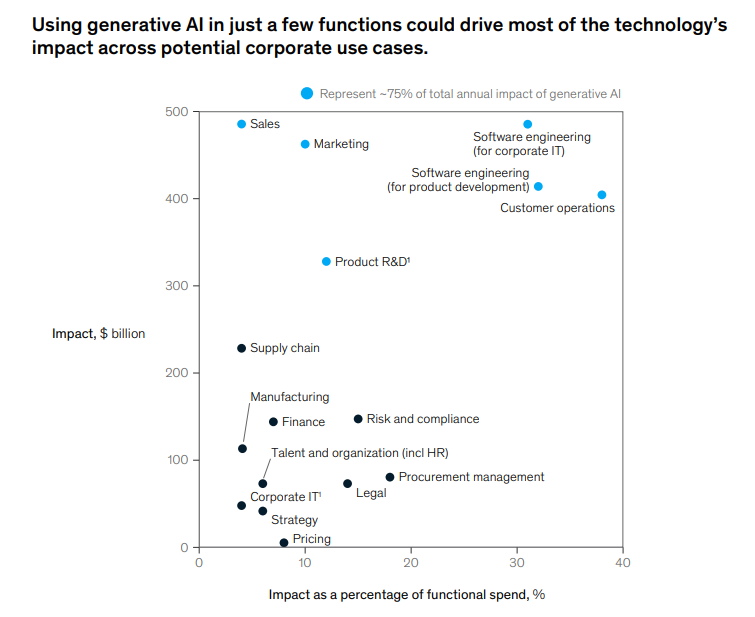
According to McKinsey’s “The Economic Potential of Generative AI” 2023 Report, about 75% of the value generative AI can create falls in four areas, including customer operations and marketing and sales, software engineering, and R&D.
The same report highlights that implementing AI across customer operations can raise productivity by 30 to 45% of a function's cost. However, those gains land only when the AI runs on connected data.
Conclusion
The question that actually scales a firm is different. Can one connected platform run the sales that win the work, the recruiting that fills it, and the delivery that bills it, on a foundation that carries AI as the firm grows?
The test worth applying to the shortlist is simple. Which platform runs most of the desk in one place, and which one is still the right system as the firm doubles? A firm that answers those two questions well buys once and compounds. A firm that answers them on feature count buys again in three years.
See how Asymbl runs sales, recruiting, and delivery for staffing firms on one system, with client relationships, placements, time, pay, and billing on a single record.
Book a demo to walk through how the full desk runs on one connected foundation, calibrated to your desk mix and growth plan.
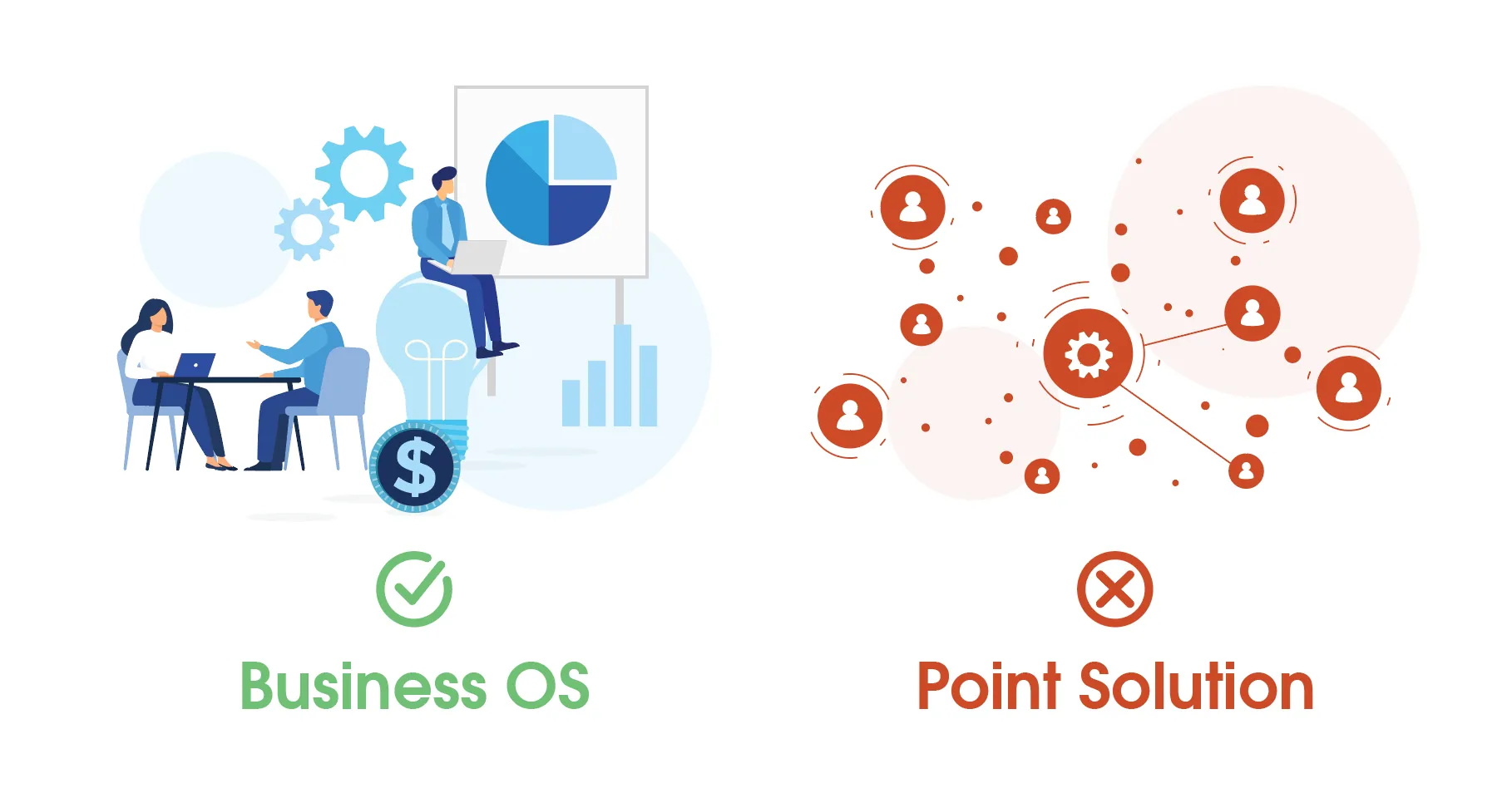
Why Recruiters Should Be Running Talent on Their Business OS and Not Another Point Solution
Recruiting deserves infrastructure, not heroics. See how unified talent operations unlock forecasting, automation, and scale on Salesforce.

The Right Fit Starts With a Conversation.
See what working together could look like.
.webp)