


.png)
According to a 2025 Gartner prediction, by 2028 AI agents will outnumber human sellers 10 to 1, yet fewer than 40% of sellers will report that those agents actually improved their productivity.
Leaner sales headcount, tighter budgets, and buyers who ignore generic outreach have pushed most Go-To-Market (GTM) leaders to stand up an AI SDR somewhere in the funnel.
The pitch is coverage, speed, and execution, but the harder question is whether that coverage produces pipeline a human rep can actually close, or just more activity for someone else to sort through.
The answer depends less on the AI SDR itself and more on how the role around it gets designed. A well-defined role compounds capacity, whereas an undefined one compounds noise, and the two look identical on a dashboard until a VP of Sales tries to explain why meetings booked did not turn into revenue closed.
In this blog, we will examine what an AI SDR actually does, where it fits across GTM motions, why most deployments break down without deliberate role design, how it compares to a human SDR, and what separates a generic AI SDR tool from a managed SDR digital worker.
What An AI SDR Actually Does
.png)
A Sales Development Representative (SDR) owns the earliest stage of the sales cycle, finding the right accounts, opening a conversation, and handing off a qualified prospect to an account executive.
An AI SDR is the automated version of that role, and what it actually does across a deal cycle determines whether a GTM team gets more coverage or just more noise.
- Research Accounts and Contacts: An AI SDR starts by building the account and contact records a rep would otherwise manually research. It pulls company firmographics, role and seniority data, and recent buying signals such as funding events, leadership changes, or hiring surges, then organizes that context against the account list a sales team is already working.
- Personalize Outreach At Scale: Once the account context exists, an AI SDR writes cold emails for the outreach. Messages pull from the account data, the buyer's role, and whatever trigger event justified the outreach in the first place, adjusting tone and messaging by industry and company size rather than sending one script to every contact on the list.
- Run Follow-Up Across the Buying Window: Deals are not won or lost on the first touch. They are won or lost on the fifth, sent at the right interval, after the right trigger, before the prospect has moved on to a competitor or lost interest entirely. An AI SDR tracks that timing automatically, running reminders, next touches, and re-engagement windows that do not depend on a rep remembering to check a spreadsheet.
- Qualify Interest Before Human Handoff: When a prospect replies, an AI SDR reads the response, asks the basic qualification questions that establish fit and intent, and routes the ones worth pursuing to the right human rep.
- Book Meetings and Update Sales Systems: After qualification, an AI SDR closes the administrative loop, scheduling the meeting, logging the activity, and updating the customer relationship management (CRM) fields that keep pipeline records current. None of this requires judgment, yet it consumes a rep's day when done manually.
Where AI SDRs Fit In Corporate GTM Motions
The five capabilities above describe what an AI SDR can do, but what determines whether that capability creates value for a GTM team is the motion it gets dropped into:
- Inbound Teams Use AI SDRs To Respond Before Interest Cools: A prospect who fills out a form or downloads a resource is evaluating in that moment, and a slow follow-up reads as disinterest even when the delay is purely operational. An AI SDR responds, asks qualifying questions, and routes the lead to a rep while the buyer is still in the mindset that generated the form fill in the first place. Inbound leads sitting in a queue are not neutral. Every hour they sit, the odds of a reply drop, and the AI SDR's job in this motion is closing that window before it closes on its own.
- Outbound Teams Use AI SDRs To Expand Account Coverage: Outbound teams typically know which accounts matter. However, they lack the capacity to work every contact and every signal inside those accounts with the same attention a rep gives their top ten. An AI SDR extends coverage across the full account list, surfacing and acting on signals a human team would otherwise triage down to "get to it later."
- Sales Ops Teams Use AI SDRs To Reduce Manual Routing And CRM Work: For sales ops, the AI SDR's value has less to do with outreach and more to do with data. Every meeting booked, every reply logged, and every stage change captured in real time turns outreach execution into structured pipeline data instead of a set of disconnected activities someone has to reconcile at the end of the week. An AI SDR that logs its own work addresses one of the most common sources of pipeline data challenges.
- SDR Managers Use AI SDRs To Standardize Execution Across Reps: An AI SDR handles the repeatable parts of a rep’s job the same way every time, for every account, regardless of how many other things are competing for a rep's attention that week.
Why AI SDR Tools Break Down Without Role Design
The same properties that make an AI SDR valuable also make it dangerous when nobody has defined the boundaries it should operate inside:
1. More Outreach Can Damage Pipeline Quality
More messages sent does not translate directly into a more qualified pipeline. When targeting is loose, or the underlying signal is weak, volume-first execution produces the opposite of its intent.
- Unsubscribes increase
- Domain reputation takes a hit
- The meetings that do get booked turn out to be a poor use of an account executive's time.
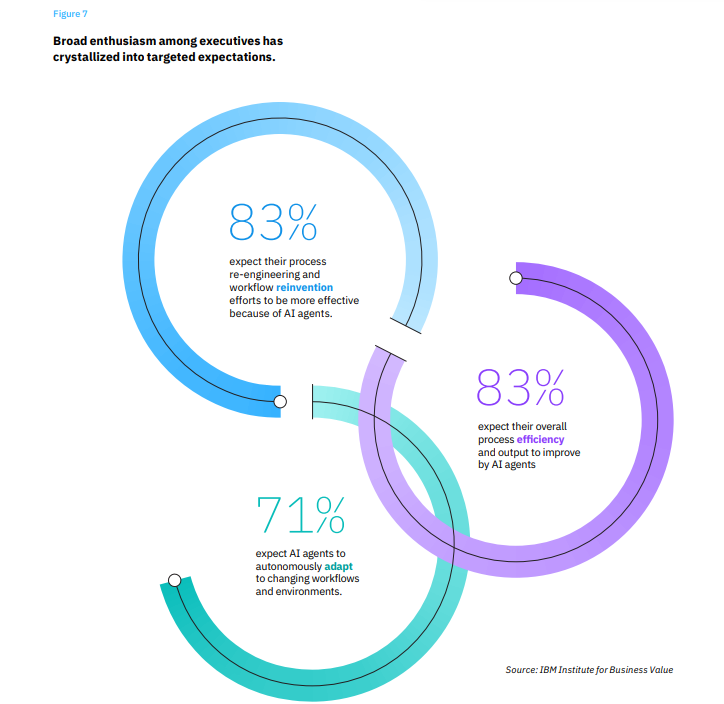
According to the 2025 IBM ‘From AI Projects to Profits’ study, 83% of executives expect their overall process efficiency and output to improve because of AI agents.
Personalized outreach execution at scale is exactly that kind of repetitive, rule-based work, but an AI SDR pointed at the wrong list executes the wrong strategy faster.
2. Personalization Without Context Creates Brand Risk
A message that gets a prospect's role, their company's recent news, or the basic premise of a pitch wrong reads as a company that automated its way past paying attention, at the exact moment it is asking a stranger to trust it.
Bad context or stale data does more damage in outreach than in almost any other part of a GTM motion, because outreach is often the first impression a prospect forms of the company.
3. Autonomous Follow-Up Needs Clear Guardrails
An AI SDR that keeps emailing a prospect after they've replied asking to be removed hands the sales team a compliance exposure it didn't sign up for. Guardrails like:
- Who can be contacted
- When follow-up should stop
- What claims a message is allowed to make, and
- When a human needs to step in are not optional details to configure later.
They are the operating boundaries that determine whether an AI SDR's speed is an asset or a liability.
Without any guardrails defined in advance, the same autonomy that lets an AI SDR work a full account list around the clock lets one bad decision repeat before anyone catches it.
A rep who keeps emailing a contact who asked to be removed can course-correct after a single complaint, but an AI SDR running that same mistake across a full account list repeats it a hundred times over before a manager reviewing weekly numbers even sees the pattern.
4. Human Reps Still Own Judgment And Live Selling Moments
Objection handling, account strategy, and the live back-and-forth of a sales conversation still belong to human reps and account executives. Nothing about an AI SDR's execution speed changes what a buyer needs in the room once a deal gets complicated.
The point of an AI SDR is to create more room for those moments. A pipeline full of meetings nobody prepared a human to actually run is a different kind of bottleneck wearing a better dashboard, and more automation the team never asked for will not fix it.
5. Activity Metrics Do Not Prove Pipeline Contribution
Emails sent, replies received, and meetings booked describe activity levels rather than results, and the productivity gap already cited above is exactly what happens when a team keeps measuring the first kind and calling it the second.
GTM leaders need a harder question answered before they trust an activity dashboard. Does this AI SDR create qualified opportunities, improve conversion, and support revenue that holds up after the deal closes? Until that question has an answer, activity volume is a vanity metric with a friendlier name.
How AI SDRs and Human SDRs Work Together
The AI SDR versus human SDR question misses the point. An AI SDR and a human SDR do not share a job description, even though they share a job title. The AI should expand execution capacity without taking over human judgment, while the human should spend less time on the repetitive work that limits coverage.
- Human SDRs Own Judgment, Context, and Relationship Development: Human SDRs read nuance an automated system cannot fully own, sensing hesitation a reply's text does not capture, or adjusting a pitch mid-conversation because the buyer just shared a new insight the script did not anticipate. This judgment is strongest where the work requires interpretation, trust, and a strategic read of the account.
- AI SDRs Own Repeatable Execution Within Defined Boundaries: An AI SDR is strongest where the work is repeatable, data-driven, and governed by clear rules. Research, first-touch outreach, structured follow-up, routing, and CRM hygiene can all be owned within limits a manager sets in advance and can audit later. Outside those limits, the same execution speed that made it valuable starts working against the pipeline.
- The Better Question Is Division Of Labor: Whether an AI SDR beats a human SDR is the wrong question, because it assumes they are competing for the same job. The real decision is which parts of the SDR motion should run on digital execution, which parts should stay with a person, and exactly where the handoff between them happens. Get the division wrong, and neither one performs the way its strengths suggest it should.
The category clusters into three camps:
- Autonomous AI SDR platforms (Artisan, 11x, AI SDR)
- Inbound-focused qualifiers (Qualified's Piper), and
- Sales-engagement platforms where reps still run manually (Outreach, Salesloft).
Each ships execution speed. What they rarely ship is a managed role: the accountability, KPIs, and coaching that separate an AI SDR tool from an SDR digital worker.
A Quick Comparison Between AI SDRs and Human SDRs
| Dimension | AI SDR | Human SDR | Best Fit |
|---|---|---|---|
| Repeatable execution and coverage | Strong | Limited by capacity | AI SDR |
| Judgment, conversation, and strategy | Not equipped | Strong | Human SDR |
| Research | Fast account and contact gathering | Interprets context and account priority | Shared |
| Outreach | Personalized messages at scale | Relationship-led communication | Shared |
| Follow-up | Consistent timing and reminders | Reads buyer timing and hesitation | Shared |
| Qualification | Basic fit and interest signals | Complex discovery and objection handling | Human SDR |
| Accountability | Needs defined key performance indicators (KPIs) and oversight | Owns pipeline quality and rep performance | Human SDR |
| Risk | Brand, data, and governance drift | Capacity limits and inconsistent execution | Shared |
The Stronger Model Is An SDR Digital Worker
.png)
Asymbl treats digital workers as teammates, and an SDR digital worker has a defined role, clear motivations for success, a human manager, KPIs, and ongoing coaching. Teddy, A Digital Sales Representative (SDR), was designed to own the repetitive work across the top of the funnel while human sellers focus on relationships and closing.
1. Has A Defined Job To Be Done
An SDR digital worker holds a defined role within the GTM motion, with a specific scope of work and a specific pipeline job to complete, just as a new SDR hire would receive a job description before their first day.
2. Is Measured Against Pipeline KPIs
A managed SDR digital worker gets evaluated on outcomes such as:
- Qualified meetings
- Engagement lift
- Conversion quality
- Response accuracy, and
- Pipeline contribution, with activity volume treated as a secondary signal at most.
According to a 2026 Gartner Survey, sales organizations providing AI-enabled next best actions are 2.6 times more likely to achieve commercial growth.
A dashboard showing rising email volume next to flat meeting-to-opportunity conversion is the clearest early signal that a deployment has drifted from outcome to output, before anyone gets around to calling it a governance problem.
3. Operates With Governance And Handoff Rules
Messaging rules, account ownership, data access, escalation paths, CRM update logic, and the exact moment a human takes over all need to be defined before the digital worker starts working. This structure is what lets autonomy create capacity rather than risk nobody signed off on.
4. Improves Through Coaching And Feedback
Performance should get better over time as the digital worker learns from reply patterns, rep feedback, conversion data, and manager review, the same continuous improvement a manager would run with a human hire. Coaching separates a managed digital labor asset from a script that runs the same way in month twelve as it did in week one.
5. Teddy Shows What Managed SDR Digital Labor Can Produce
Asymbl's SDR digital worker, Teddy, is built on Salesforce Agentforce and works 1,000+ leads a week. Launched in 2025, Teddy delivered a 427% increase in prospect engagement and a 3,789% return on investment (ROI) for the sales team.
Those numbers came from a role that was designed before it was activated, with a manager accountable for its performance the way any new hire would have one.
How To Evaluate Whether An SDR Digital Worker Fits Your Pipeline Motion
Teddy’s results describe what a well-designed SDR digital worker can produce under one specific set of conditions.
1. Match The SDR Digital Worker Role To Inbound, Outbound, Or Expansion Motion
Inbound, outbound, and expansion motions need different work from an SDR digital worker, and matching the role to the motion has to happen before anyone starts comparing tools.
A digital worker built for inbound response speed is solving a different problem than one built for outbound account expansion, even when the underlying platform looks identical in a demo.
A team that skips this step usually finds out about the mismatch only after go-live, when the digital worker is technically performing exactly as configured and still not moving the number anyone actually cares about.
2. Define The Work It Should Own Before Comparing Tools
A clear job definition has to come before tool selection. GTM leaders should know whether the SDR digital worker owns research, first-touch outreach, follow-up, qualification, routing, CRM hygiene, or some specific part of the funnel before a single vendor conversation starts.
Comparing platforms without that definition means comparing feature lists instead of comparing role fit.
3. Pressure Test Data Access, Brand Guardrails, And CRM Hygiene
An SDR digital worker performs only as well as the data it can reach and the rules it has to follow. Bad account data, weak brand guardrails, and a CRM nobody trusts will surface in the buyer experience within the first few weeks, regardless of how capable the underlying model is.
A CRM with three different spellings of the same account name is not a minor hygiene issue once a digital worker starts acting on it at scale, because every downstream decision inherits that same fragmentation.
4. Decide Where Human SDRs Enter The Workflow
Human SDRs should enter when an account shows real intent, the conversation turns complex, or the relationship needs judgment a digital worker was never meant to own.
Defining that handoff point in advance prevents two failure modes at once:
- Over-automating a moment that needed a person
- Routing simple qualification logic to a human who should not have to touch it.
5. Measure Capacity, Conversion Quality, And Revenue Impact
Evaluation should track capacity created, qualified pipeline, conversion quality, rep time returned, and revenue impact rather than how much AI activity a dashboard can display. A clearer operating model that produces better GTM output is the actual goal, and automation only earns its place when it serves that goal.
Asymbl's Approach To SDR Digital Workers
The evaluation criteria above describe what any GTM leader should demand from an SDR digital worker deployment, regardless of vendor. Here’s how Asymbl builds toward that standard specifically:
1. Design The SDR Role Before Activating The Digital Worker
Asymbl starts with the job to be done, the motivation behind it, the GTM motion it needs to serve, the data foundation it will run on, and the outcomes it will be measured against. Activation comes last, only after the role has already been defined.
2. Onboard The Digital Worker Into The GTM Workflow
The digital worker gets brought into the systems, workflows, handoffs, and reporting structures the team is already using, on the same Salesforce-based foundation the rest of the GTM stack runs on, so it becomes part of the sales motion instead of one more disconnected tool a rep has to check separately.
Onboarding here mirrors how a new hire gets ramped into a team, with defined checkpoints and a manager tracking early performance.
3. Coach Performance Against Pipeline Outcomes
Asymbl treats the SDR digital worker as managed workforce capacity, reviewed and improved against pipeline outcomes over time rather than onboarded once and left alone. Performance gets coached the way a manager would coach a human SDR, because that is the standard a digital worker on the team should be held to.
Designing An AI SDR That Actually Contributes To Pipeline
Corporate GTM teams that treat an AI SDR as a switch to flip will get more activity and the same conversion problems they started with. Teams that design the role first, define what it owns and where it hands off to a human, and hold it to pipeline outcomes instead of activity counts end up with an accountable digital teammate.
If your team is weighing an AI SDR against building a properly designed SDR digital worker, the fastest way to see the difference is to look at how the role gets defined before it ever sends a message.
Asymbl's Digital Labor Advisory team can walk through what that role design looks like for your specific GTM motion, using Teddy as a working example of what managed SDR digital labor produces in practice. Book a demo to watch it live.
FAQs
An AI SDR is an automated system built to run the earliest stage of the sales cycle, researching accounts, personalizing outreach, following up across the buying window, qualifying interest, and handing off ready prospects to a human rep. It automates the repeatable execution of sales development without replacing the judgment a human account executive still needs to close a deal.
An AI SDR executes repeatable, rules-based work at scale, including research, first-touch messaging, follow-up cadence, and routing. A human SDR owns judgment, objection handling, and relationship development that requires reading nuance an automated system cannot fully own.
No. AI SDRs are strongest on repeatable execution within defined boundaries, while human SDRs own the discovery, objection handling, and account strategy that require judgment. Treating an AI SDR as a full replacement removes the human oversight that catches bad targeting, stale data, and brand risk before a prospect notices, which is where most unmanaged deployments break down.
The best AI SDR tools should be evaluated on whether they support a defined role rather than on feature lists alone. Look for clear KPI tracking against pipeline outcomes, configurable guardrails for messaging and data access, defined human handoff points, and a coaching mechanism that improves performance over time rather than running the same way indefinitely.
An automated SDR platform is the underlying technology that powers AI-driven prospecting, from account research through outreach and meeting scheduling. The platform provides the capability. Whether it performs like a managed digital worker or an unmanaged script depends on how the surrounding role, governance, and coaching structure are designed around it.
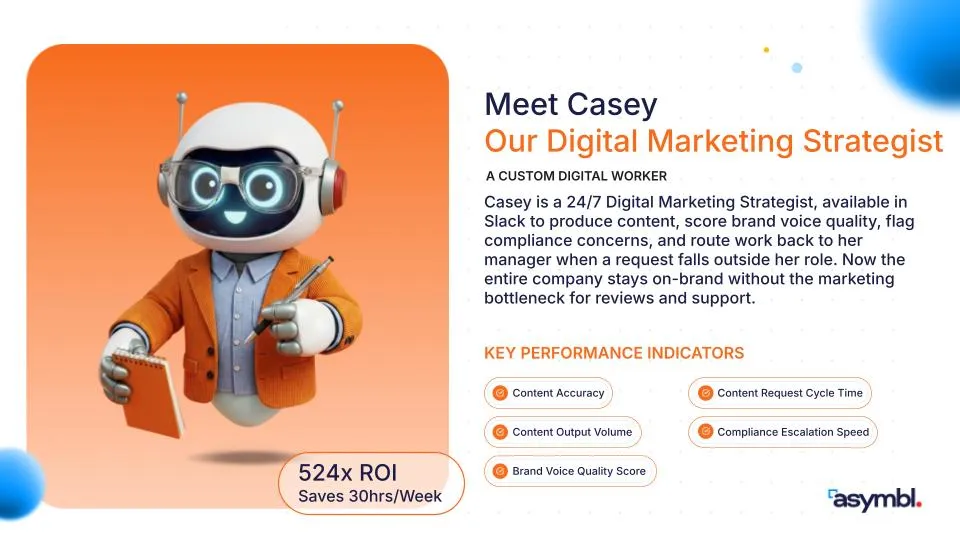
The Hybrid Workforce: Designing Roles Before Deploying AI Agents
Meet Casey: the AI agent that got promoted. Discover the management framework that turns standard AI tools into scalable digital teammates.

The Right Fit Starts With a Conversation.
See what working together could look like.
.webp)