

Every recruiting platform in a staffing firm's evaluation promises smarter matching, faster fills, and AI that surfaces the right candidate before a competitor does. The demos deliver, but the evaluations rarely do, because most of them measure the wrong things.
A feature checklist tells you what a platform can display. It says nothing about whether the tool changes how fast your firm places, how often you redeploy a consultant off the bench before sourcing costs climb, or whether the intelligence compounds with every placement or starts cold with every search.
Those are the questions that decide whether the purchase earns its keep eighteen months in. However, almost no evaluation asks them.
In this blog, we will walk through the seven talent intelligence platforms staffing firms evaluate most in 2026, the framework that separates tools built for placement economics from tools built for corporate hiring, and the questions that expose how each one behaves against your own data before you sign.
Top 7 Talent Intelligence Software for Staffing Firms in 2026
.webp)
These seven platforms show up in most staffing evaluations for talent intelligence software in 2026. Some were built for placement-driven businesses. Several were built for corporate talent acquisition teams and appear here because the category marketing is broad enough to pull them in.
Each entry below covers what the platform does, where it performs, where it struggles against staffing use cases, who it is genuinely built for, and its current 2026 pricing. The goal is an honest map of where each platform actually fits.
Bullhorn
Bullhorn is a cloud-based recruitment and staffing platform that combines applicant tracking, customer relationship management, and recruitment operations in a single system. It helps staffing firms manage candidates, clients, job orders, placements, and recruiting workflows while keeping hiring and sales activities connected.
Key Features:
- Bullhorn Amplify: Bullhorn's embedded AI suite includes eight recruitment-specific skills covering candidate record enrichment, ranking candidates against open roles, automated interview screening via chat or voice, and generating personalized outreach messages.
- AI Search and Match: Pulls best-fit candidates directly from a firm's own database and ranks them by fit against a job order, with the option to generate a search instantly from a pasted job description instead of building a Boolean string.
- Unified ATS and CRM: Manages candidates, jobs, shifts, and clients in a single mobile-first platform so sales and recruiting teams share one always-connected system instead of working from separate databases.
- Middle and Back Office Integration: Connects front-office recruiting activity to timesheets, billing, and financial data, closing the loop from placement to invoice inside the same platform.
Best for: Staffing and recruiting firms that need a unified platform to manage candidates, clients, placements, sales activities, and recruitment operations at scale.
Pricing: Bullhorn offers three primary plans: Starter at $99/user/month, Core at $165/user/month, and Pro with custom pricing. Additional AI, automation, middle-office, analytics, and enterprise capabilities are available as configurable add-ons or custom-priced solutions.
Loxo
Loxo is a recruiting platform that combines applicant tracking, candidate relationship management, sourcing, and recruitment automation in one system. It helps recruiters manage the hiring process, build talent pipelines, find candidates from multiple sources, and streamline communication throughout the recruitment lifecycle.
Key Features:
- AI-Native Sourcing with Loxo Source: Combines a proprietary database of people with a Chrome extension that captures profiles from anywhere on the web, letting recruiters source from both their own database and Loxo's external one simultaneously.
- Self-Updating CRM Agent: Continuously refreshes candidate records, updating job titles, skills, certifications, and locations as they change, while also flagging potential duplicate profiles for review.
- Loxo Outreach: Multi-step outreach sequences let recruiters engage large candidate pools with personalized messaging at scale, tracked from within the same platform as the candidate record.
- Deals for Business Development: A dedicated module manages sales and client-facing business development activity for agencies alongside recruiting, intended to remove the need for a separate sales CRM like Salesforce or HubSpot.
Best for: Staffing agencies, executive search firms, and recruiting teams that need an all-in-one platform for sourcing, applicant tracking, CRM, and recruitment automation.
Pricing: Loxo offers a Free plan, a Basic plan starting at $169 per user/month (billed annually), and Professional and Enterprise plans with custom pricing. Higher tiers add AI sourcing, recruitment automation, client management, enterprise security, and advanced integrations.
Asymbl
Asymbl is a workforce orchestration platform that unifies talent relationship management, AI-powered digital workers, workforce intelligence, and business workflows in a single system. It enables organizations to coordinate human and digital workers, automate repetitive work, and manage recruiting and workforce operations from one platform.
Key Features:
- Talent Intelligence: This reasoning layer goes beyond resume structure and keyword matching, incorporating pipeline history, interview feedback, assignment outcomes, and unstructured documents into a continuously improving model of candidate fit. It powers search and matching across the platform, so a candidate's actual track record with the firm counts as much as their resume.
- Rosa, Digital Recruiter: A pre-built digital recruiter, built on Salesforce Agentforce and powered by Asymbl Intelligence, perceives, plans, and executes recruiting workflows alongside the human team. It's designed to increase capacity, so recruiters spend more time on conversations, relationships, and decisions that actually require a person.
- Skills: Pre-built agentic automation building blocks are ready to onboard without custom development, giving teams immediate AI capability from day one instead of waiting on a build cycle. These Skills also serve as the foundation Asymbl uses to accelerate custom digital workers as a firm's needs grow.
- Asymbl Intelligence: A platform-wide layer that captures the judgment, context, and pattern recognition accumulating across every workflow and decision, then turns it into signal that powers every digital worker on Asymbl.
Best for: Organizations seeking a single platform to coordinate human and digital workers, automate talent workflows, and improve recruiting and workforce management.
Pricing: Asymbl offers tiered Recruiter Suite pricing starting at $60/user/month (Launch) and $125/user/month (Premier), while Ultimate is custom priced. Consulting uses fixed-fee, time-and-materials, or retainer models. Agentforce packages start at $25,000, and Digital Labor Advisory engagements are scoped based on project phase and business outcomes.
Beamery
Beamery is a talent lifecycle management platform that combines candidate relationship management, talent intelligence, and workforce planning in a single system. It helps organizations organize talent data, identify skill gaps, build talent pipelines, and support hiring and internal mobility through a skills-based approach.
Key Features:
- Talent CRM: Centralizes candidate relationships, tracking every touchpoint across the hiring lifecycle so recruiters can nurture talent pools over time instead of starting from zero on every requisition.
- Skills Intelligence: Built on connected data points about jobs, skills, and careers, this engine breaks roles down into individual tasks and required proficiencies to give a dynamic, organization-specific skills taxonomy.
- Ray, Agentic AI Consultant: Ray acts semi-autonomously with built-in guardrails to handle labor-intensive workforce planning tasks, providing transparent reasoning behind every recommendation so a human stays in the loop.
- Sourcing & Matching: Beamery's AI matches people to opportunities based on demonstrated skills rather than where they studied or worked, with the goal of surfacing candidates who might not have applied on their own.
Best for: Mid-sized and enterprise organizations looking to build long-term talent pipelines, strengthen candidate relationships, and adopt a skills-based approach to hiring and workforce planning.
Pricing: Custom
Eightfold AI
Eightfold AI is an AI-powered talent intelligence platform that helps organizations manage recruiting, internal mobility, workforce planning, and employee development. It uses deep-learning models to match people with jobs, projects, and learning opportunities based on skills, experience, and potential rather than traditional keyword searches.
Key Features:
- Deep-Learning Talent Matching: Analyzes candidates against job requirements using neural network models trained on over a billion career profiles, surfacing adjacent skills and potential rather than relying on literal keyword overlap.
- AI Interviewer: Runs autonomous first-round interviews and can collapse multiple rounds into a single 360 Interview session. Every candidate gets evaluated with identical rigor, whether the pool is one person or a million.
- Talent Rediscovery: Continuously mines a company's own historic applicant and employee data to resurface qualified people who already exist in the system but were previously passed over.
- Skills-Based Candidate Ranking: Rather than matching resumes to job postings by keyword, Eightfold models skills, capabilities, and career trajectory to rank candidates by true fit.
- TalentForge: A no-code layer that lets organizations build custom talent applications on top of Eightfold's intelligence engine in weeks rather than quarters.
Best for: Large enterprises that want AI-driven talent intelligence for recruiting, workforce planning, internal mobility, and skills-based talent management across global and high-volume hiring operations.
Pricing: Custom
Phenom
Phenom is an AI-powered talent experience platform that brings together recruiting, employee development, and talent management. It helps organizations attract, engage, hire, and retain talent by connecting candidates, recruiters, hiring managers, and employees through AI-driven workflows and personalized experiences.
Key Features:
- AI-Powered Talent CRM: Phenom's CRM uses dynamic lists, fit scoring, and AI-generated insights to help recruiters build, engage, and track pipelines in one place.
- Chatbot: A conversational AI chatbot automates lead capture, FAQ answering, screening, and interview scheduling around the clock, connecting talent to best-fit roles without a recruiter needing to be online.
- Personalized Career Site: The platform delivers tailored job and content recommendations to each visitor based on skills, experience, resume data, and location, aiming to improve application conversion.
- Automated Interview Scheduling: Phenom automates the back-and-forth of scheduling and rescheduling interviews for both candidates and hiring managers, removing one of the most common points where a hiring process stalls.
- Talent Marketplace: For internal mobility, Phenom's marketplace surfaces career pathing, gigs, mentoring, and employee resource groups so current employees can find new opportunities inside the company.
Best for: Enterprises seeking an AI-powered platform to improve candidate experiences, automate recruiting workflows, and support employee growth through internal mobility and career development.
Pricing: Custom
SeekOut
SeekOut is an AI-powered talent sourcing and talent intelligence platform designed to help organizations identify, evaluate, and engage qualified candidates. It combines data from multiple sources with advanced search capabilities to help recruiters discover talent based on skills, experience, and other workforce insights.
Key Features:
- AI Candidate Sourcing Across 1B+ Profiles: Searches over one billion profiles spanning LinkedIn, GitHub, academic publications, patents, and a firm's own ATS, using AI that matches on skills-based context rather than literal keyword filters.
- Talent Rediscovery: Surfaces silver-medalist candidates and past applicants already sitting in a firm's own ATS, then applies AI scorecards to evaluate them against current rubrics.
- Diversity Filters and Bias Reducer: The platform includes filters to assess representation within any talent pool and a Bias Reducer tool that can strip indicators like name, photo, school, or company from a profile during review.
- 30+ Power Filters and Natural Language Search: Recruiters can search using more than 30 filters covering skills, certifications, security clearance, and technical signals like GitHub contributions, or skip Boolean entirely and describe the ideal candidate in plain language.
Best for: Enterprise recruiting teams focused on sourcing hard-to-find talent, building diverse candidate pipelines, and making skills-based hiring decisions using talent intelligence.
Pricing: SeekOut offers Recruit Core starting at $179/month for individual recruiters, with a 14-day free trial. Team plans for sourcing, ATS integration, and full-funnel recruiting use custom, volume-based annual pricing, while AI recruiting services are priced by role, contractor, or hiring outcomes.
Why Staffing Firms Need a Different Evaluation Framework
.webp)
Corporate teams optimize for quality of hire and internal mobility, and they are the ones making the final hiring decision, so compliance and bias governance sit at the center of their evaluation.
Staffing firms optimize for placement velocity, redeployment, and gross profit per recruiter, and they win or lose on how many quality placements each recruiter can make before overhead eats the margin.
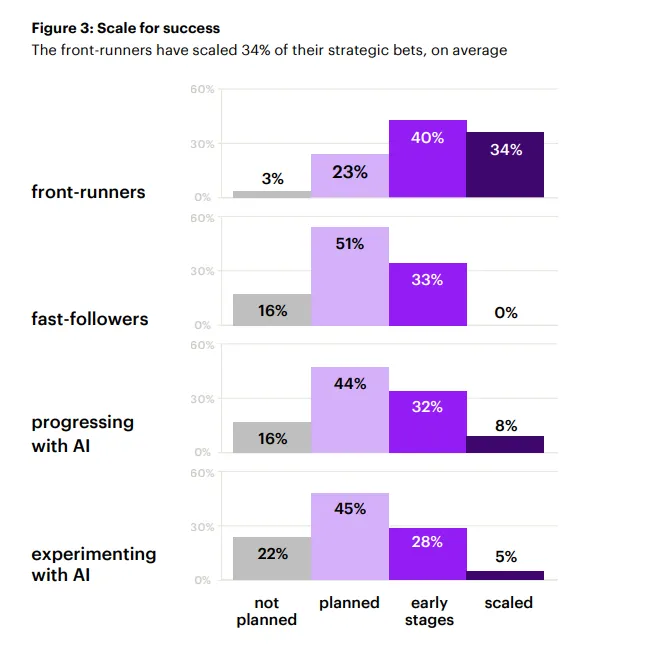
According to Accenture's 2025 “The Front-runners’ Guide to Scaling AI” Report, only 8% of organizations qualify as front-runners that have successfully scaled AI, and even they have scaled just 34% of their strategic bets. The four dimensions below explain where a staffing-calibrated evaluation diverges from the corporate checklist.
Pipeline and Revenue Visibility
The candidate who scores highest on skills fit can still be the wrong placement if the rate does not clear the margin or the assignment type does not match where that consultant has succeeded before.
What to evaluate:
- Can the platform rank candidates against the commercial context of the role, including bill rate and assignment type, rather than skills and resume keywords alone?
- Can recruiters and operations leaders see how pipeline activity connects to forecasted placements and revenue?
- Does the system show bench strength against open roles before sourcing costs climb, so redeployment becomes the first move rather than the missed one?
A consultant rolling off an assignment is recurring revenue at risk, and the firm that sees the signal early fills from the bench instead of paying to source net-new. The firm that cannot see it loses the revenue and the relationship at the same time.
Intelligent Candidate Search
Boolean search returns literal matches and demands expertise to run well. Semantic search improves on it by matching field-level data to field-level data. Neither captures the signals that actually predict a placement, including pipeline history, interview feedback, assignment outcomes, and the institutional knowledge that usually lives in a senior recruiter's head and walks out the door when that recruiter leaves.
The right intelligence runs a reasoning engine that weighs all of that the way an experienced recruiter would. It reads a natural language query, so recruiters search the way they think instead of the way a database is structured.
It produces placement likelihood scores that account for prior outcomes, so a thin resume backed by five strong assignments with your firm ranks the way that history deserves.
What to evaluate:
- Does the platform search across all available data, including unstructured documents, interview notes, and prior placement records, or only against structured resume fields?
- Does match quality improve as your firm's placement history grows, or does every search start from the same static baseline?
- Can it surface a strong-fit candidate who was never tagged or categorized for that role type, so the system finds a signal you did not know to look for?
Working Inside the Current Flow of Work
If recruiters have to leave the ATS to reach the intelligence, adoption fragments by preference, and the data boundary between systems quietly degrades signal quality over time.
Engagement history sits in one system, placement outcomes in another, interview notes in a third. Each sync is a point where records drift, go stale, or drop. The reasoning layer then scores against a partial record and returns a confident answer built on missing context.
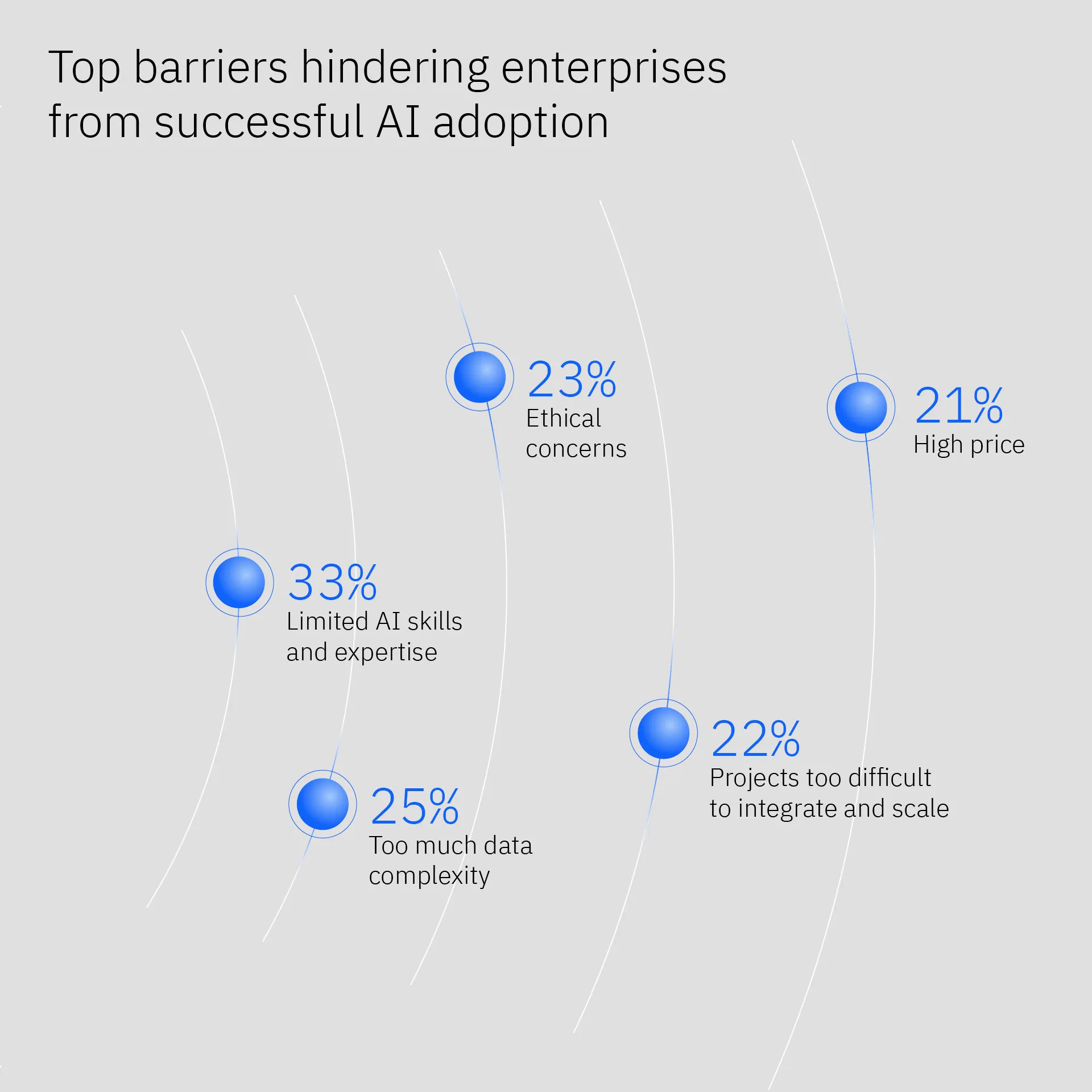
This is why disconnected data shows up in the research as a leading blocker. According to the 2023 IBM Global AI Adoption Index, 25% of enterprises cite data complexity as a top barrier to AI adoption.
What to evaluate:
- Does intelligence surface inside the recruiting workflow, or does it require opening a separate platform?
- Does every recruiter on the team draw on the same signal, or does quality depend on which tool an individual recruiter prefers to open that day?
AI Agent Scale When Ready
Talent intelligence and digital labor are different capabilities that depend on the same foundation. The intelligence layer is what a digital recruiter acts on when it screens applications, ranks submittals, and manages outreach at volume.
A firm that buys intelligence on one platform and its ATS on another is building a data boundary that a future digital worker will have to bridge, and that bridge is where accuracy and accountability leak.
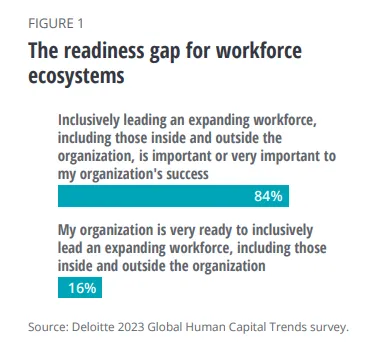
According to 2023 Deloitte’s “Unlocking The Workforce Ecosystem” Report, 84% of leaders say leading an expanding workforce that includes people inside and outside the organization is important, while only 16% feel ready.
What to evaluate:
- Does the intelligence platform connect directly to an AI agent or digital worker capability, or does adding that layer later require a fresh integration and a new data pipeline to maintain?
- Is the foundation you are buying today the same one your digital workers will run on tomorrow, so scaling capacity is a configuration decision rather than a rebuild?
Questions to Ask Every Talent Intelligence Vendor Before You Buy
The questions below reveal how each platform behaves against your actual candidate records, inside your workflow, and against your placement history. Ask them in every evaluation call, and ask for a live demonstration rather than a slide before a contract is signed.
Questions About Talent Intelligence
- Does your matching engine search across all candidate data in our TRM (Talent Relationship Management), including unstructured documents, interview notes, prior placement records, and internal feedback, or does it match only against structured resume fields and job description keywords?
- If a candidate has a thin resume but strong placement performance across five assignments with us over two years, how does that history weigh into their ranking on a new role? Can you show us that in a live environment?
- When a recruiter searches in natural language, what is the system doing underneath? Is it converting the query into keyword filters, or is a reasoning engine interpreting the full context of what the recruiter is looking for and matching against the full depth of the candidate record?
- How does the intelligence handle candidates who have been in our database for years with inconsistent data entry across that period? Does it reconcile conflicting or sparse records, or does record-level data quality directly cap match quality?
- Can the system surface a candidate who fits a role even if they were never explicitly tagged or categorized for that role type in our ATS? In other words, does it find signal we did not know to look for?
- How does match quality change between day one and month six, as the model sees more of our placement history and outcome data? What does that improvement look like in practice?
Questions About the Data Foundation
- Does your intelligence operate on our own candidate data, our placement history, and our TRM records, or primarily on external profile databases? What proportion of the matching signal comes from each source?
- When a candidate has minimal resume data but a strong placement history with us, does the match score reflect that history, or does sparse resume data drag their ranking down?
- How does match quality hold up when our candidate records are inconsistent, incomplete, or structured differently across record types? Where is the floor for data quality before the intelligence becomes unreliable?
- Does the model improve as our placement history grows, or does it run on a static external dataset that never updates based on our outcomes?
Questions About Architecture and Integration
- Where does the intelligence surface relative to where our recruiters work? Is it embedded inside our ATS workflow, or does reaching it mean opening a separate platform?
- How many data boundaries sit between the intelligence layer and our candidate records? Who owns consistency at each boundary, and what happens to signal quality when a sync fails or runs stale?
- If we expand into a new vertical or change our data model, what does reconfiguration require from our team versus yours?
Questions About AI Transparency and Governance
- Can a recruiter see why a candidate was ranked a specific way, in plain language? Or does the score come from a model whose logic is invisible to the user?
- Who controls the scoring criteria? Can we adjust weighting for specific clients, assignment types, or the placement signals that matter most in our firm's history?
- When a match recommendation turns out to be wrong, how does the model learn from that outcome?
Questions About Implementation and Time to Value
- What does go-live require from our team in data preparation, configuration, and recruiter training? How long before the intelligence runs against our live TRM data?
- What do the first 90 days after launch typically look like for firms similar to ours? What signals show the model is performing as intended versus still calibrating?
- How are recruiters trained to use the intelligence in their daily workflow? What does adoption look like among teams that have gone live successfully versus teams that have not?
Asymbl Talent Intelligence for Staffing Firms
Most of what the framework above describes, intelligence that compounds from placement history, search that reasons instead of filtering, and a foundation that supports digital labor without a second integration, is what Asymbl Talent Intelligence was built to do.
How Talent Intelligence Works
Asymbl is a Salesforce-based workforce orchestration platform, and Talent Intelligence is the Recruiter Brain that powers candidate search, match scoring, and placement likelihood inside Recruiter Suite.
The intelligence and the recruiting workflow run on one data model, which means the system reads the full candidate record. Pipeline history, interview feedback, prior assignment outcomes, and unstructured documents all feed the score, so a recruiter searching in plain language gets a ranked result with a breakdown of why, and a candidate's proven performance carries weight the resume alone would miss.
What the Data Foundation Makes Possible
Client data, job order history, and recruiting activity live on the same data model as the candidate record. It lets Talent Intelligence rank candidates against the context of a specific client relationship and assignment history rather than against an abstract role. It is also what makes redeployment visible.
Placement outcomes and post-engagement status are already in the system, so a consultant rolling off an assignment surfaces as a bench signal before the firm spends to source net-new.
When the score and the record share one home, the firm captures a signal it has already paid to collect. When they live in separate systems joined by middleware, that signal degrades at every boundary, which is the fragmentation the framework above warned about.
How It Connects to Digital Labor
Asymbl's pre-built digital recruiter, Rosa, runs inside Recruiter Suite and acts on the same signals Talent Intelligence produces when she screens inbound applications, ranks submittals, and manages outreach.
A firm that buys Talent Intelligence today is already on the foundation its digital workers will run on when it is ready to add that layer. There is no second integration to build and no gap between what the intelligence knows and what the digital worker acts on.
The proof is in Asymbl's own numbers. When a digital recruiter operated on connected Talent Intelligence data inside Recruiter Suite, it screened 17,000 applications, scheduled 800 interviews, and helped a two-person team hire 100 people in 100 days, with a 47% increase in fill rate and $575K in hiring cost savings.
That is what an intelligence layer and a digital worker sharing one data foundation produce when they are ready to scale together.
Conclusion
The talent intelligence market has capable platforms across a range of architectures. The hard part of the evaluation is finding a platform that works against your candidate data, inside your recruiters' workflow, and connected to the commercial context that decides whether a placement is a good one for your firm.
Most platforms in this comparison were built for corporate talent acquisition teams running internal hiring, and they show up in staffing evaluations because the category marketing is broad enough to include them.
Whether one belongs on your shortlist comes down to a single test. Does it activate your bench before you go to market, surface the full context of a candidate relationship instead of a resume, and sit on a foundation that supports digital labor when you are ready for it?
Run two identical firms on tools that answer that test differently, and eighteen months later, one is compounding intelligence with every placement while the other is still explaining why its AI investment has not moved time-to-fill.
If you are evaluating talent intelligence software and want to see what compounding intelligence looks like against your own placement history, Asymbl can show you.
With Talent Intelligence and Recruiter Suite on one data foundation, and Rosa, the pre-built digital recruiter, acting on the same signals, request a demo to see how it changes redeployment, placement velocity, and recruiter capacity for your firm.
Best Applicant Tracking System: Architecture, AI & ROI

The Right Fit Starts With a Conversation.
See what working together could look like.
.webp)