

.webp)
Most corporate teams and staffing firms read the cost per hire metric in one dimension, as a spend figure to cut down, where a lower number is assumed to be a healthier one.
However, it misses two things:
- The number means something different for a corporate team than it does for a staffing firm.
- The largest input it reports comes from recruiter capacity and the quality of the hire, far more than from external spend.
In this blog, we will examine what cost per hire actually means for each audience, what really drives the number, why the usual cost-cutting moves fail, and how to lower it by acting on capacity and quality instead of spending.
What Cost Per Hire Actually Means
Cost per hire is the average amount spent to attract and hire one new employee over a period. It is the sum of internal and external recruiting costs divided by the number of hires made over that period.
Cost Per Hire = (Total internal recruiting costs + Total external recruiting costs) ÷ Number of hires
External costs are the most visible ones, like job board spend, agency and search fees, advertising, assessment tools, and software subscriptions. Internal costs are the ones most teams underweight, like recruiter and hiring manager hours, sourcing time, interview load, and the coordination work that surrounds every requisition.
The visible costs are easy to total. The hidden ones are where most of the number actually lives, and they are the part a spreadsheet rarely captures.
The same formula produces a very different conversation depending on who is reading it. The table below shows how far apart the two readings are before a single dollar is counted.
| Dimension | Corporate Talent Acquisition | Staffing & Recruiting Firms |
|---|---|---|
| What the number is | A budget metric reported to finance | Cost to place, read against margin |
| Measured against | An annual headcount plan and fixed budget | The spread between the bill rate and the pay rate |
| The outcome to protect | Quality of hire | Margin per placement and recruiter utilization |
| How a bad cut shows up | Turnover, lost productivity, and a reopened role | Fall-offs, replacement guarantees, eroded margin, lost clients |
What It Means for Corporate Talent Acquisition Teams
For a corporate talent acquisition team, cost per hire is a budget metric reported to finance, set against an annual headcount plan and a fixed recruiting budget. It is one of the few recruiting numbers that leadership reviews directly, which is why it carries pressure that the metric itself was never designed to hold.
The outcome that has to be protected underneath it is the quality of hire. A corporate team that lowers cost by hiring worse moves it into turnover, lost productivity, and a reopened role that the next budget cycle has to absorb.
The number on the report improves while the actual cost of staffing the business goes up, which is the worst kind of progress because it looks like a win on the dashboard.
What It Means for Staffing and Recruiting Firms
For a staffing firm, cost per hire is really the cost to place, and it sits directly against margin. Every dollar of internal cost to fill a role is a dollar off the spread between bill rate and pay rate. The metric is a profitability input on every deal rather than a budget line reported upward.
The drivers are:
- Recruiter utilization
- time spent per submittal, and
- How many roles a recruiter can work at once decides whether a placement is profitable before quality of hire ever enters the conversation.
A staffing firm reads cost per hire the way a manufacturer reads unit cost, because that is exactly what it is. A placement that takes twice the recruiter's hours to make is not just slower, it is a thinner deal, and the firm feels it on the same day the offer is signed.
What Influences Cost Per Hire
The factors below show where the cost actually accumulates, and most of them never appear on the line item that finance is looking at.
The Factors That Drive It for Corporate Teams
.png)
- Hiring volume and seniority mix: Senior and specialized roles cost multiples of entry-level ones. The blend of what a team hires moves its average more than any single efficiency does, which is why two teams with identical processes can report very different numbers.
- Loaded recruiter time per hire: The hours recruiters and hiring managers spend per role are the highest internal cost and the one least often attributed. This is why the metric looks like spend when most of it is loaded recruiter time wearing a spend costume.
- Quality of hire and the turnover it triggers: A weak hire that leaves resets the full cost on the same seat. Selection quality is a cost driver long before it becomes a performance one.
- Technology and data fragmentation: When recruiting data lives across an applicant tracking system (ATS), a human resources information system (HRIS), a customer relationship management (CRM) platform, and spreadsheets, effort duplicates and the true cost is never captured in one place.
The Factors That Drive It for Staffing Firms
- Recruiter utilization and roles per recruiter: A recruiter stretched across too many requisitions places fewer of them well. Utilization sets the cost to place more than an hourly effort does.
- Time to submit and time to place: Every extra day a role stays open is recruiter time spent without revenue booked. Speed converts directly into margin here in a way corporate teams never feel as sharply.
- Net-new sourcing versus known talent: Sourcing a stranger costs far more than re-engaging someone the firm has already placed or screened. How often a firm restarts from scratch sets its cost floor.
- Fall-offs and replacement guarantees: A placement that does not stick triggers a free replacement, which doubles the cost to place and erases the margin on that deal.
Common Ways Teams Try to Keep Cost Per Hire Low
When cost per hire climbs, both corporate teams and staffing firms reach for the same visible levers:
1. Shifting Spend to Cheaper Channels Like Referrals and Inbound
The first move is to tilt hiring toward referrals, inbound, and social channels that carry a lower nominal cost than paid sourcing or agencies. Referred candidates look affordable per hire, so the channel mix drifts toward them. The logic is straightforward, and for the first batch of hiring, it holds.
2. Reducing Agency Reliance and Bringing Sourcing In-House
The next move, especially for corporate teams, is to cut external agency and search fees by moving sourcing onto the internal team. Agency spend is the most visible line on the cost sheet and the easiest to reduce on paper, which makes it the first target whenever finance asks where the cost can come down.
3. Adding Automation and AI Tools to Cut Manual Work
Teams then add screening, scheduling, or sourcing tools to remove the recruiter hours that drive internal cost. Automating visible manual work reads as a direct cut to the internal line, and the pitch rarely changes from one vendor to the next.
Fewer hours per hire means a lower cost per hire. The saving assumes the hours removed were the ones actually inflating the number, which is the assumption that fails most often.
According to the Boston Consulting Group's AI at Work 2026: Strategy Matters More Than Tools report, 30% of organizations have AI agents integrated into their workflows, while 50% remain in experiments and pilots.

The same report found that 57% of organizations are redesigning end-to-end workflows and processes, up from 50% in 2025, showing that the value comes from changing how work is organized rather than layering another tool onto the existing process.
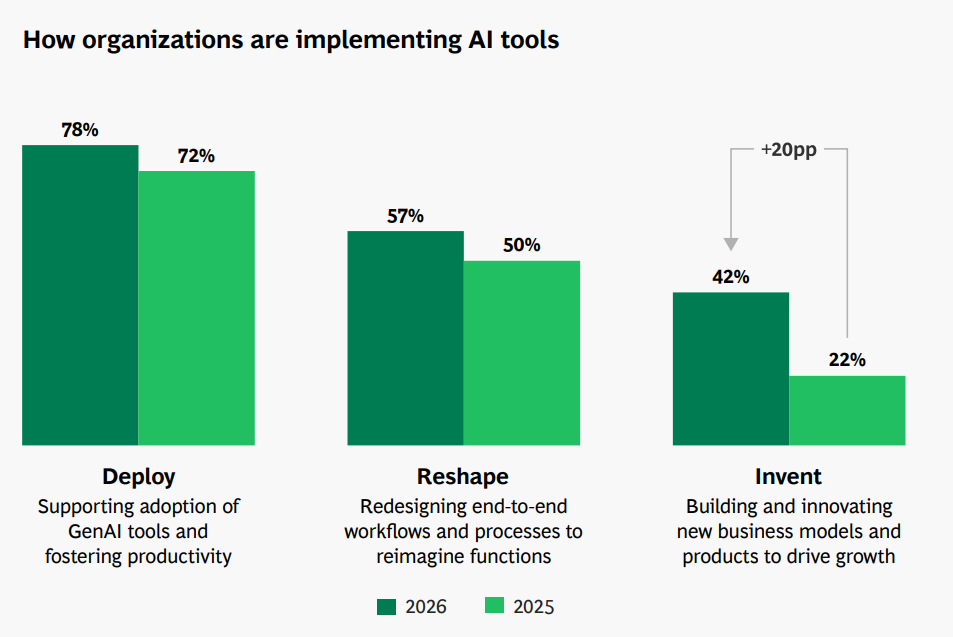
A tool that stalls in a pilot still bills, so it raises the cost per hire before it ever removes an hour from it
4. Building Talent Pipelines to Source Faster
Some teams invest ahead of demand, building pipelines and talent pools so future roles start with candidates already in hand.
The intent is sound, since doing the sourcing work before the clock starts should lower the cost on the next requisition. Whether it pays off depends entirely on whether the pipeline can still be found and used when the role opens.
A talent pool that nobody can search six months later is a sunk cost, and most fragmented stacks turn yesterday's pipeline into exactly that.
5. Compressing the Process to Spend Less Effort per Hire
The last common move is to shorten sourcing, screening, or interview steps to spend less time and money per hire. Fewer steps look like an immediate reduction in days and dollars, and it is the one lever a team can pull entirely on its own authority, without finance, without new tools, without anyone else signing off. It is also the lever most likely to take a step out of the selection process that was doing real work, which is where the saving turns into a future cost.
Why These Methods Lower the Number on Paper, Not in Practice
Buying a tool and lowering a cost are not the same event, and the lag between them is where most of these fixes quietly come apart.
According to the 2025 Deloitte Research on AI ROI, only about 1 in 5 organizations qualify as AI return-on-investment leaders, even as investment keeps climbing, which is the same direction every cost-per-hire shortcut takes.
1. Cheaper Channels Can Lower Quality and Reset the Cost on the Same Seat
The most affordable channel stops being the lowest cost per hire the moment it lowers the quality of who gets hired. A weaker hire that turns over resets the full cost on the same seat, and the second search rarely comes in cheaper than the first.
- For corporate teams, it shows up as turnover and backfill, with the role reopened and the budget charged twice.
- For staffing firms, it shows up as fall-offs and replacement guarantees that erase the placement margin entirely.
The nominal saving on the channel was simply smaller than the cost it set in motion downstream.
2. Cutting Spend Without Capacity Just Overloads the Recruiters You Have
Removing agency support lowers external cost only by shifting that work onto internal recruiters who are already full. Eventually, the internal cost and time to fill rise to meet it.
For a staffing firm, an overloaded recruiter completes fewer profitable placements, so the cost to place climbs even as the agency line disappears. The firm trades a visible, variable cost for an invisible, structural one and calls it a saving.
This is also why simply buying down the number rarely sticks, because the gains depend on the capacity that the cut never created.
3. Tools on Fragmented Data Add Cost Without Removing It
Tools layered on disconnected systems add a subscription and another place for data to live, without removing the recruiter time the cost was hiding in. Automation amplifies whatever structure already exists.
Point it at a fragmented base, and it scales the fragmentation, adding spend and coordination instead of lowering cost per hire.
According to the 2026 McKinsey Study on “Building the Foundations for Agentic AI at Scale,” eight in ten companies cite data limitations as a roadblock to scaling AI, and fewer than 10% have scaled it to deliver tangible value. A tool dropped onto disconnected recruiting data inherits that exact limitation.
4. The Shared Flaw: Treating a Capacity and Quality Problem as a Spend Problem
Every one of these methods assumes cost per hire is about what you buy, so each one buys differently and leaves capacity and quality untouched. When the real drivers are recruiter capacity and hire quality, trimming spend cannot reach them.
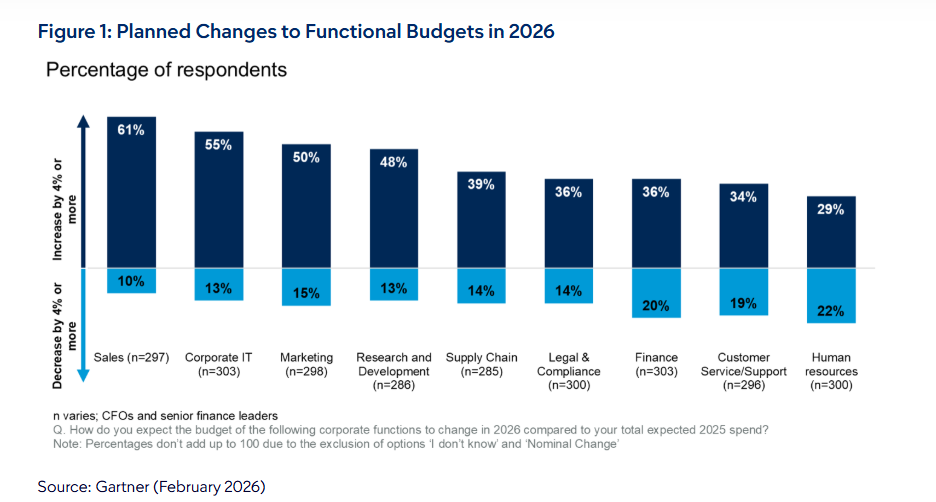
According to Gartner's 2026 survey of financial officers on Headcount Growth and Budget Planning, only 29% of Chief Financial Officers plan to increase the human resources budget for 2026, while 22% expect cuts. The instinct to cut spending is understandable under that pressure, and it still cannot move a number that actually controls capacity and quality.
What Cost Per Hire Is Really Tied To
.png)
Cost per hire comes down and stays down when you act on what it is actually tied to. Three of those ties hold for both audiences. Each audience then has a payoff, the number ultimately rolls up to.
1. Quality of Hire, and the Cost of Getting It Wrong
A role filled twice costs more than any channel saving can recover, which makes first-pass selection quality the highest-leverage cost lever there is. It sits upstream of every efficiency tactic, and it is the one most cost reviews never put a number against.
For example, a role that pays $90,000 and turns over inside a year costs the original search, the ramp months that produced little, the team's lost output while the seat sat empty again, and a second search that often starts colder than the first. None of that lands on the cost per hire line for the original role. It lands later, somewhere the metric is no longer looking.
- For corporate teams, a mis-hire becomes turnover and lost output, charged back to the same headcount line.
- For staffing firms, it becomes a fall-off and a free replacement, charged straight against the deal.
2. The Cost of Restarting Sourcing From Scratch Every Time
The most expensive way to fill a role is to source a stranger when a known candidate already exists. Every restart pays again for reaching the team already had, and most teams restart far more often than they realize because the prior reach was never held anywhere they could use it.
- For staffing firms, the answer is redeployment, re-placing talent the firm has already vetted and placed into a new assignment.
- For corporate teams, it is re-engaging active and past candidates instead of opening every search cold.
Both depend on holding the relationship and its history long enough to use it again, which is precisely where most fragmented stacks fail.
3. Recruiter Capacity
Cost per hire is tied to how many roles a recruiter can carry and close well. Thin capacity spreads the loaded cost across fewer hires and pushes the number up regardless of the channel mix or the tools in place. Capacity is the denominator the formula is most sensitive to, and effort is not a substitute for it.
Adding capacity rather than hours is what lets internal cost per hire fall without anyone working longer or selecting worse.
Telling a recruiter to do more is an effort and work overload, while removing the repeatable work that consumes the recruiter's day is a capacity change, and only one of them moves the number in a sustainable way.
Asymbl Digital Recruiter, Rosa, a pre-built digital worker on the Recruiter Suite foundation, absorbs the repeatable execution across sourcing, screening, scheduling, and outreach, so existing recruiters carry more open roles without each one waiting longer or costing more in loaded time.
That is capacity added without headcount added or increased workload, applied to the exact work that was inflating the internal cost per hire in the first place.
4. For Corporate Teams: Quality of Hire and Business Impact
For corporate talent acquisition, cost per hire ultimately rolls up to quality of hire and the business impact of the people brought in. The lowest possible number was never the goal. A falling cost that buys equal or better hires is, because that is what proves recruiting value past a single efficiency figure and earns the function a seat in the planning conversation rather than just the budget one.
5. For Staffing Firms: Margin and Revenue per Recruiter
For staffing firms, cost per hire rolls up to margin per placement and revenue per recruiter. A lower cost to place widens the spread on every deal. More importantly, it lets each recruiter book more profitable placements without added headcount, which is the only version of growth that improves the margin line instead of just the revenue one.
Two firms can bill the same rates and run the same desks, and the one with the lower cost to place simply keeps more of every dollar it bills. Over a year of placements, that gap compounds into the difference between a desk that funds growth and one that only covers itself.
How Asymbl Helps Lower Cost Per Hire on Both Sides
Asymbl treats recruiting as workforce orchestration on a single Salesforce-based data foundation, built on the two things that lower cost for both audiences. The relationships a firm already has, and the intelligence to use them.
Asymbl runs this model on itself, operating at a 5:1 output ratio, which means five times the output at one-fifth the cost. Its own digital recruiter, Rosa, helped a two-person recruiting team make 100 hires in 100 days while driving a 152x ROI, showcasing the platform's power to deliver a 47% increase in fill rate and save $500K, which is equivalent to three full-time recruiters.
That is the kind of capacity gain that lowers internal cost per hire without cutting corners, and each layer below maps to a driver the earlier sections named.
Recruiter Suite: One Talent Relationship Management Foundation That Makes the True Cost Visible
Recruiter Suite is a talent relationship management platform that unifies the ATS, candidate search, and engagement in one system. Recruiter time, spend, pipeline, and outcomes live together instead of being scattered across tools that each tell a partial version of the cost.
Since the data is connected, the loaded cost becomes visible, and the cost per hire stops being reconstructed manually in a spreadsheet every month. Corporate teams can finally tie cost to quality of hire and see whether a cheaper number bought a worse outcome. Staffing firms can see the true cost to place against the margin on each deal, which is the view that the fragmented stack was never able to capture.
Talent Relationship Management: Hiring From Talent You Already Know
The most reliable way to lower the cost per hire is to stop paying twice for talent you have already engaged with. Managing candidate relationships as a sustainable asset turns past and active contacts into the cheapest source of the next hire, because the most expensive part of sourcing, the reach, is already done.
For staffing firms, this is the redeployment of vetted, previously placed talent into the next assignment. For corporate teams, it is re-engaging active and prior candidates instead of restarting each search cold.
Both are lower cost only when the relationship and its history are held in one place over time, which is exactly what a talent relationship management foundation is for.
Talent Intelligence: Signal-Based Matching That Surfaces Active Candidates Instead of Starting Over
Talent Intelligence is the recruiter's brain running on the Asymbl Intelligence platform. It matches candidates on pipeline history, interview feedback, and assignment outcomes rather than keyword overlap, which means it can find a fit the team already owns instead of paying to discover it again.
By scoring fit across signals the team already has, it surfaces the right active or past candidate before anyone opens a net-new search, removing the single most expensive step in the process.
Better first-pass matching also prevents the bad-hire reset, so it protects corporate quality of hire and staffing placement guarantees at the same time. The match rests on evidence of fit, which is what keeps the cost saving from quietly becoming a quality cut.
Asymbl Intelligence: The Platform That Keeps Relationships and Matching Learning
Asymbl Intelligence is the platform underneath, turning every interaction, placement, and outcome into a signal that sharpens the next match. It learns from the data rather than only storing it, so each hire makes the system better at finding the next one cheaply.
Every layer runs on one Salesforce-based foundation, so a team can start with the relationship and data foundation and expand into intelligence with no rebuild. This is what makes Asymbl a way to lower cost per hire structurally, by changing how recruiting works, rather than a tool that trims one line while raising another.
Conclusion
Cost per hire rewards patience. Keep cutting the visible spend, and the cost returns as turnover, fall-offs, and overloaded recruiters, each one arriving a quarter or two after the number looked better. Act on the capacity, relationships, and quality the number is actually reporting on, and the cost comes down in a way that the next budget cycle does not undo.
Before optimizing your cost per hire, see if you can answer these questions:
- How much of our cost per hire is loaded recruiter time we have never measured?
- When a role turns over, where does the reset cost land, and does any metric charge it back?
- How often are we paying full price to source talent we had already reached and lost?
The answers tell you whether you face a spend problem you can buy your way out of, or a capacity and quality problem you have to build your way out of. For a corporate team, that separates a cheaper hire from a better one. For a staffing firm, a thinner deal from a wider margin on every placement that follows.
See how Asymbl's approach to workforce orchestration lowers the real cost of hiring for corporate teams and staffing firms by connecting the data behind the numbers and giving recruiters the capacity to carry more roles without trading away quality.
Book a demo to walk through what a connected foundation of human recruiters and digital workers could do to your cost per hire.
FAQs
Cost per hire equals the sum of all internal and external recruiting costs over a period, divided by the number of hires made in that same period. External costs include job boards, agency fees, advertising, and software. Internal costs include recruiter and hiring manager hours, sourcing time, and interview load.
The average cost per hire varies widely by industry, role seniority, and how scarce the required skills are, so a single cross-industry figure is more misleading than useful. Senior, specialized, and licensed roles cost multiples of entry-level ones. The more reliable comparison is against your own history for similar roles, which separates a genuinely expensive process from an expensive role and tells you whether the cost is coming from the search or from the seat.
Cost per hire is a budget metric for corporate teams and a margin metric for staffing firms. Corporate teams report it to finance against a headcount plan, where the outcome to protect is the quality of hire. Staffing firms read it as cost to place, set directly against the spread between bill rate and pay rate.
Recruiter capacity and quality of hire influence cost per hire more than any external spend line. Thin capacity spreads loaded cost across fewer hires, and a bad hire resets the entire cost on the same seat through turnover or a fall-off. Fragmented data across the ATS, HRIS, and CRM adds duplicated effort that never appears on the cost sheet. Channel and agency spend matter, but they are rarely the largest driver.
Automation lowers cost per hire only when it runs on connected data and removes work from the stage that was actually inflating the number. Layered on fragmented systems, it adds a subscription and moves data faster between tools that were never built to share it, which scales coordination cost instead of cutting it.
.webp)
Why Staffing Firms Need A Different Agentforce SDR Agent
A Salesforce autonomous sales agent for staffing has to watch placements as closely as prospects. See what an Agentforce SDR does

The Right Fit Starts With a Conversation.
See what working together could look like.
.webp)