


.png)
Most staffing firms have already onboarded an AI recruiting agent, and most aren't seeing reliable performance from it. Recruiters still lose a third of their week to admin work the agent was supposed to absorb.
A digital recruiter carries a job description, a memory, and a KPI it is responsible for. The same standard applies to a human hire. Asymbl built Rosa, its own digital recruiter, before selling one. Asymbl’s two recruiters and one digital worker processed 17,000 applications and hired 100 people in 100 days.
In this blog, we will separate the digital recruiter from the AI recruiting agent and name the four gaps that keep an AI recruiting agent from becoming a digital worker.
Digital Recruiter Worker vs AI Recruiting Agent
According to IBM, “Redefining the Tech Leader’s Mandate: Building the IT Foundation for Agentic AI at Scale” 2026 Report, two-thirds of surveyed respondents say that they are accountable for systems they don’t fully control.
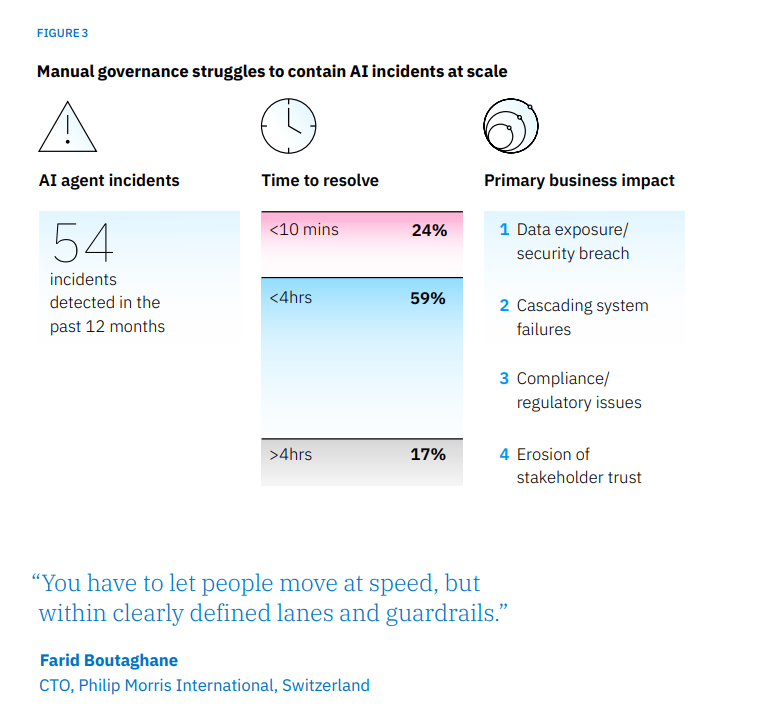
The same report found that businesses experienced an average of 54 AI agent incidents last year that required human correction, and 17% of those were high-severity incidents that took more than four hours to contain. It notes that governance often lags behind AI adoption, reducing visibility and containment as business units move faster.
AI Agent vs Digital Worker
An AI agent perceives its environment, reasons about how to achieve a task, and takes independent action to complete it. It is bounded by the task assigned to it.
A growing number of products now market themselves as digital recruiters, autonomous recruiters, or AI recruiting agents, with capabilities such as sourcing, screening, and scheduling. However, the different that matters for TA leaders is whether it operates as an accountable digital worker with an ongoing role or as a task-scoped agent.
Digital workers are designed, onboarded, and coached like any human worker, with a job description, motivation for success, and shared accountability between IT and business leaders. The four-gap test below helps determine these capabilities
Four Gaps in AI Recruiting Agents
.png)
According to the State of Agentic AI, 2026 Report by Forrester, three-quarters of enterprise leaders mention they are still adopting Agentic AI, while only a small minority have it running in meaningful production beyond “agentish” chatbots, and true scaled multiagent systems are rarer still.
Staffing firms see this gap when they move AI agents from individual tasks into production hiring workflows. An agent can screen candidates or schedule interviews, but that does not mean it can retain context, learn from outcomes, operate with clear accountability, or measure its performance.
1. No Long-term Memory
A human recruiter remembers the person who came in second for a job order 18 months ago. They also remember a client reacting badly to a certain background, and someone withdrawing over relocation.
AI recruiting agent works from the context handed to it for one task. When the task closes, the context closes with it.
For a firm running dozens of open jobs across multiple clients at once, context loss impacts client relationships. Multiply that loss across a desk running twenty open jobs at once. The firm ends up re-learning the same context about the same clients every few weeks. It pays for that repetition in recruiter hours, the exact hours the software was supposed to save.
2. No Learning Loop
An agent can screen 400 applications and recommend 40, out of which your team hires one. However, the agent often doesn’t have visibility into what happens after the recommendation. It doesn’t know which candidate proved to be the right choice or how many of them were rejected.
Clients and leadership measure your firm on fill rate, but the agent never receives that data. An agent without a learning loop stays exactly as good as it was on day one.
Although the context and information needed to improve screening already exists in interview debriefs, recruiter feedback, and even how candidates perform after they are hired, it usually stays with the recruiter and is never fed into an agent’s screening decision-making logic.
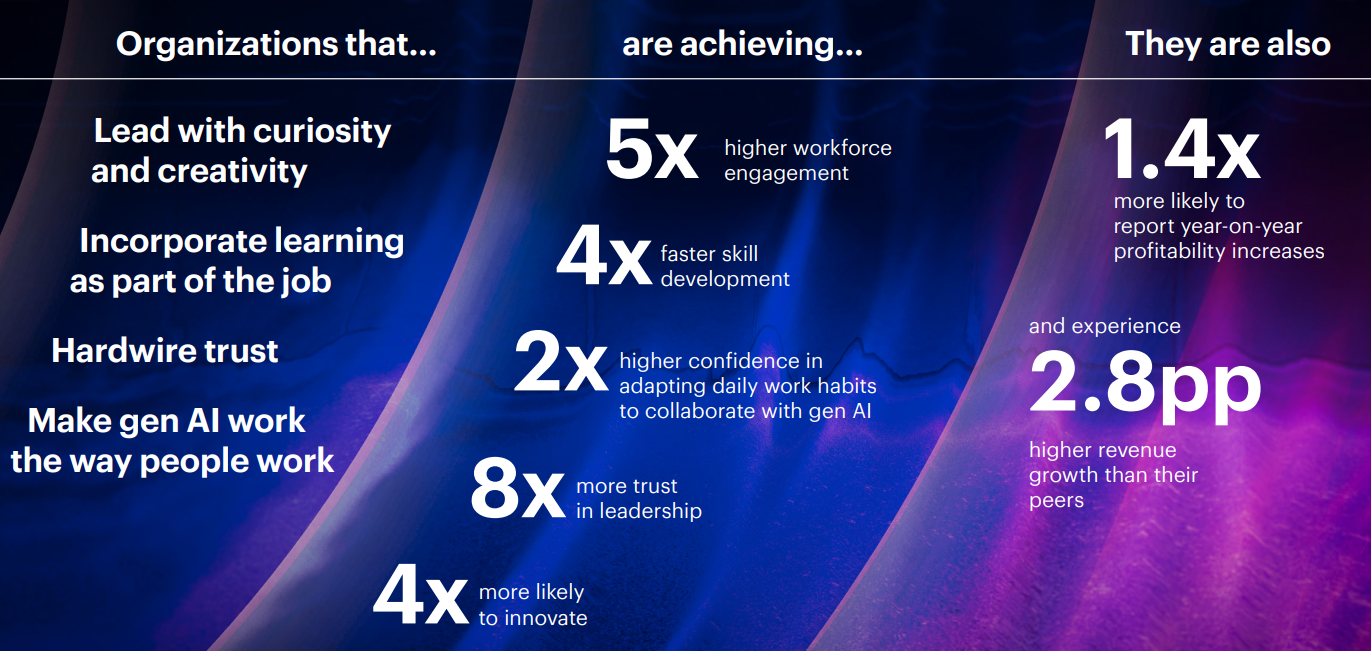
Accenture’s ‘Learning, Reinvented: Accelerating Human–AI Collaboration’ research found that only 11% of organizations are equipped to enable effective human-AI co-learning. Organizations that do see 5x higher workforce engagement and 4x faster skill development, and their people have 2x higher confidence in adapting daily work habits.
If an agent never sees what happened to the candidates it recommended, it has no way to learn which signals actually predicted a successful hire.
The screening decision stays disconnected from the hiring outcome, and the next requisition starts with the same assumptions as the last one. A useful learning loop closes that gap by feeding outcomes back into the decisions the agent makes.
3. No Accountability
An agent can screen out the wrong person or drop a commitment mid-process. When an AI agent makes a similar mistake, the staffing firm, not the vendor that built the agent, is accountable to the client, which makes clear governance and ownership essential.
Leaving critical decision points and context unowned creates a zombie agent. An agent keeps running inside the firm's workflow, and nobody has assigned it an owner or a manager. It drifts into AI purgatory instead, a budget line nobody wants to own. The budget line gets harder to defend every quarter it stays unaccountable to anyone.
According to Deloitte’s “State of AI in the Enterprise: The Untapped Edge” 2026 Report, only 21% of organizations have a mature governance model for their AI agents. The recruiter, often closest to the client, absorbs the fallout personally when something goes wrong on an unowned agent. It's true whether or not the agent was ever supposed to be their responsibility in the first place.
4. No Role or Performance Metrics
Without a defined job description, nobody can say whether the agent did its job. Staffing firms measure activity, including applications processed and hours saved. The activity numbers can increase every quarter whether or not the firm actually placed more people.
No agency leader takes an activity metric, such as 17,000 applications screened into a client conversation. Time to fill, fill rate, and margin are the value the activity should generate.
Ask ten recruiting leaders what their AI recruiter's job actually is. Most will describe a feature list made up of screening, scheduling, and outreach.
Rosa, The Digital Recruiter Asymbl Onboarded Before Selling One
Asymbl built Rosa, its digital recruiter, which was onboarded and coached inside Asymbl's own recruiting function before a single customer ever saw her. Asymbl runs its own hybrid workforce internally before selling any part of it, a practice it calls Customer Zero, and Rosa was the recruiting function's first test of whether that discipline held up against real hiring volume inside a live business.
What does Rosa do
Rosa is the Digital Recruiter pre-built on Salesforce Agentforce and powered by Asymbl Intelligence. She owns a defined set of responsibilities a new recruiter would inherit on day one.
What Rosa owns:
- Job description generation from guided prompts and templates
- Candidate outreach at scale, personalized to each person's profile and the role
- Application screening against job criteria, surfacing the strongest candidate for recruiter review
- Questions from talent answered around the clock without a recruiter involved
- Interview scheduling, including time zone coordination and interviewer briefing materials
- Interview summaries, candidate profiles, and briefing materials for the client contact
- Offer letters drafted for recruiter review and final approval
Every one of those functions still routes through a recruiter for judgment and final approval. Rosa executes the structured parts of the role, while your team keeps the parts that require reading a room, a client, or someone who's stalling.
Customer Zero: 100 Hires in 100 Days
Asymbl’s two recruiters and Rosa, working together, processed 17,000 applications and hired 100 candidates in 100 days.
What that run looked like in full:
- 17,000 applications handled
- 1,800 people pre-screened
- 800 interviews scheduled
- 100 hires in 100 days, with 2 recruiters plus Rosa carrying the volume
- 47% increase in fill rate
- $575,000 saved in hiring costs
- 1,529% return on investment (ROI) since launch
A two-person recruiting team working without a digital worker typically tops out well below that volume. 17,000 applications across multiple clients push past what two people can absorb in the hours available.
Design, Onboard, And Coach: Asymbl Framework
Rosa runs on the same class of reasoning capability any AI recruiting agent could license. Asymbl built a three-phase Design, Onboard, and Coach framework for its own hybrid workforce before ever offering it to a customer.
1. Design around the job
Before Asymbl onboarded a single digital worker internally, including Rosa, it assigned each one a human manager first. The manager understood the specifics of the role, the motivation behind it, and how to measure success.
Design means starting from the job to be done, then choosing the combination of processes and workflows surrounding it. Asymbl connects the right combination to the systems already in place, then orchestrates the whole workflow toward one measurable outcome.
A firm can onboard software first and write the job description later, but it ends up managing the tool around whatever it happens to do well. Design flips that order, starting from the outcome the desk needs and working backward to the software that gets there.
This is what happened before Rosa ever screened a resume outside Asymbl's own workflows. Asymbl assigned a manager and wrote a job description first. The job description defined success as placements made before the digital worker went anywhere near a live job order.
2. Onboard into existing systems
Asymbl designs and onboards each digital worker directly into the systems where the work already happens. It's different from standing up a separate platform someone has to remember to check.
Asymbl captures every requirement and tests every integration before launch. The team trains before go-live and works with the digital worker with confidence, rather than learning it under pressure after it's live.
For Rosa specifically, that meant Asymbl mapped every field in the applicant tracking system before go-live. It also meant testing every notification path against how a recruiter actually works a pipeline. The team ran alongside Rosa for weeks before she carried volume on her own.
Onboarding into what's already there means a recruiter never has to leave the screen they're already working from. They don't have to hunt for what the digital worker did.
3. Coach for continuous improvement
Coaching means active performance management. It includes key performance indicator (KPI) tracking, ongoing performance insight, and continuous optimization of what the digital worker actually does.
Digital workers go through onboarding coached by human managers, the same as any new hire would be. Managers write job descriptions for their digital workers and run weekly one-on-ones with them. They adjust the role as the work reveals what needs to change.
Coaching also means a digital worker's scope can grow over time. A role that started with screening and scheduling can expand into interview summaries once the manager trusts the output. A human recruiter earns more responsibility the same way, after proving out the basics.
For Rosa, that meant a manager reviewing her screening decisions weekly in the early months. The manager tightened her criteria whenever a client's standards evolved. She also adjusted outreach templates whenever response rates dipped on a particular job order.
Coaching adjusts four things in practice:
- Reviewing outputs against the job description
- Refining screening criteria as a client's standards evolve
- Updating the role definition as the job itself changes
- Tightening guardrails wherever an edge case slipped through
What Makes Rosa Different
.png)
Rosa has a defined role, a human manager, clear expectations, and a process for reviewing and expanding what she can take on. She is onboarded into the recruiting workflow, measured against real hiring outcomes, and coached as those expectations change.
1. Persistent memory
Asymbl Intelligence captures every workflow Rosa touches, as well as every decision a recruiter makes in addition to her output, and every outcome that follows. Asymbl Intelligence is the system running underneath every digital worker and every human teammate on the platform.
For example, a recruiter overrides Rosa's ranking on a specific person. Asymbl Intelligence captures the override and the reason behind it. It becomes part of what Rosa draws on. She uses it again the next time a similar profile comes through.
Most systems stop at storing that data, whereas Asymbl Intelligence learns from it instead. The model of what strong talent looks like for a specific client gets sharper the more the desk works. Rosa builds context on what decisions the team made and why. She carries that context into the next screening pass rather than starting cold.
For a recruiter working the same client for the third quarter running, Rosa already carries the history. She knows which two people that client turned down last time, and why.
Talent Intelligence is the specific engine doing that work on the talent side. It moves past resume structure and keyword matching. Instead, it reasons across pipeline history, interview feedback, assignment outcomes, and the unstructured notes a recruiter leaves in a file.
2. A defined role
Rosa, the Digital Recruiter, has a defined role and a motivation for success. It's the specific criteria defining what winning looks like for the job she was hired to do. It's a document, the same job description a new recruiter would get on day one. Managers review performance against it with the same expectation.
Digital workers at Asymbl have job descriptions, managers, and KPIs. They appear in headcount plans and performance reviews the same way a human hire would inside Asymbl's own operation. This is what a structured hybrid workforce looks like from the inside.
Asymbl writes down the division of labor instead of leaving it assumed. Rosa owns structured execution, the screening, the scheduling, the outreach, the first-draft offer letter. Your recruiters own judgment, influence, client alignment, and the actual decision.
3. KPIs & accountability
Rosa's KPIs come directly from her job description, the same document that defines her role.
- Time to fill, measured as the reduction in days from job open to offer accepted
- Time to hire, measured from application to hire
- Resume screening throughput
- Interview scheduling efficiency, measured as the percent of interviews scheduled without a recruiter involved
- Talent response rate, which reads as the quality of communication happening at scale
- Headcount avoidance, measured as recruiter capacity extended without adding new recruiters
- Screening compliance rate, measured as the percent of talent processed according to defined protocol
Rosa's performance shows up in fill rate, margin, and capacity. Staffing operations already use the same metrics to measure the likelihood of meeting the revenue goals.
4. Human oversight and guardrails
Every digital worker at Asymbl answers to a human manager accountable for its performance, including Rosa. No meeting happens without a digital teammate present. No digital worker operates without a human manager watching what it does. In a hybrid workforce, that's simply the baseline.
Asymbl writes down Rosa's boundaries, specifies what she decides alone, what escalates to a recruiter, and when human override is mandatory. It also defines how the system routes an edge case that doesn't fit her trained pattern. Asymbl logs every interaction, and each one stays auditable and traceable back to the moment it happened.
Your team signs the offer, which builds bias mitigation, regulatory compliance, and data security into the process itself. Nobody adds any of this after a placement already went out the door. Screening compliance rate as a standing KPI is what that discipline looks like on an ordinary Tuesday.
Turn Digital Recruiter Capacity Into Measurable Recruiting Results
The question in front of a staffing firm is narrower and harder to answer from a demo. Does the AI agent you're about to onboard have a job, a manager, a memory, and a KPI it's held to, or does it have a feature list and a very good demo?
The four gaps that separate a task-scoped agent from an accountable digital worker do not show up in the sales cycle. They show up in the budget conversation eighteen months later, when someone asks what the tool actually produced, and the answer is either a performance review or a usage report.
Asymbl built Rosa to answer that question before it ever became a customer's problem to solve. Every AI recruiting agent claims to be a teammate, but only a few can show you the job description, the manager, and the KPIs that would make that claim true when it runs against your actual hiring volume.
Book a demo to see what Rosa actually owns, how she's coached, and where a human recruiter still makes the call, before you sign anything that runs unmanaged.
.webp)
Reskilling for Relevance: The New Core Skills of the Orchestrated Workforce
When digital workers join your org chart, who's accountable? Discover the new core skills employees and leaders need inside coherent, hybrid workforces that amplify human growth.

The Right Fit Starts With a Conversation.
See what working together could look like.
.webp)