


Starting a staffing agency does not require a huge operation on day one. You can begin with a niche, a network, a few clients, and enough recruiting capacity to deliver against the jobs you win. Starting a staffing agency that scales depends on what happens once those first placements start landing.
You still have to pay workers weekly while clients pay you on much longer terms. Revenue books before cash arrives. Every client and talent relationship you build creates context that lives only in your head. All such problems compound the moment you get too busy to hold them yourself.
In this blog, we'll walk through the eight steps to start a staffing agency. We'll also cover the day-one decisions that build a modern operating model, and the foundation that supports it.
How to Start a Staffing Agency: Step by Step
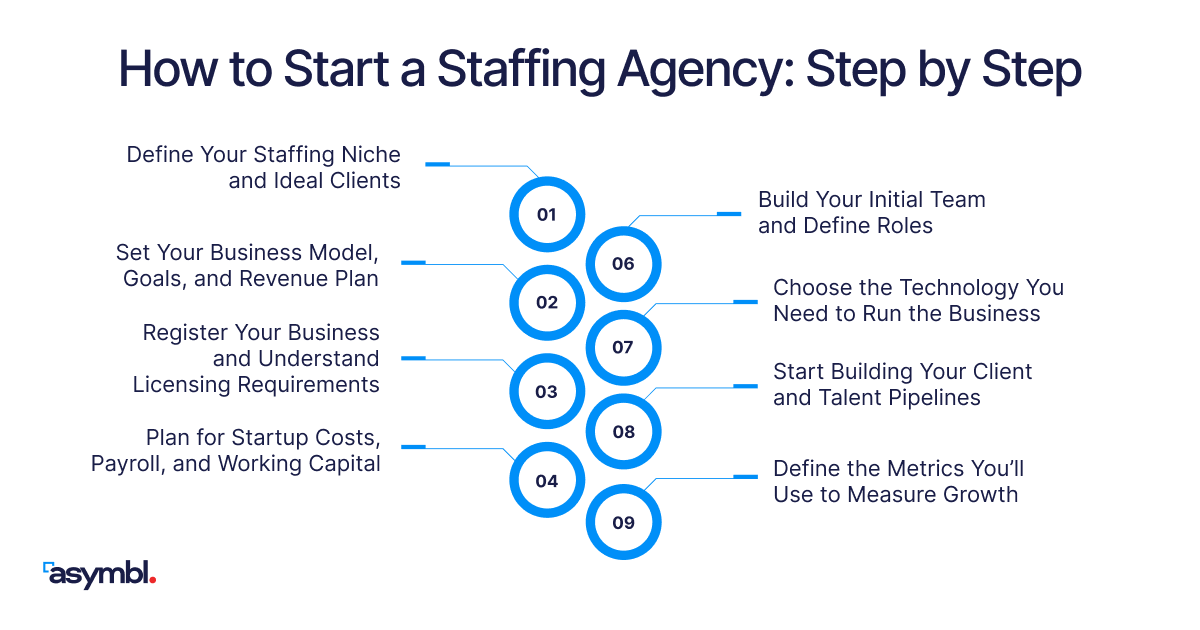
A staffing agency makes money by fulfilling client demand with the right-fit talent. Registering a company and buying an applicant tracking system (ATS) is the smallest part of that work. The niche, revenue model, working capital, team, technology, pipeline, and metrics all have to be defined before moving on to a larger scale.
Step 1: Define Your Staffing Niche and Ideal Clients
Choosing a staffing niche early gives the agency a clear direction to define its ICP, target talent pool, and business development efforts.
The following criteria help you define a niche:
- Industry
- Job family
- Skill set
- Geography
- Employment model
For example, an IT staffing agency might concentrate on software engineering, while a temp agency covers infrastructure, help desk, and security roles.
Step 2: Set Your Business Model, Goals, and Revenue Plan
Permanent placement, temporary staffing, contract staffing, and retained search all connect employers with talent. Yet the economics behind each model differ sharply.
A permanent-placement firm earns a fee around a successful hire and moves to the next search. A temporary or contract staffing agency earns over the life of an assignment. It also carries added responsibility for payroll, time tracking, and worker management along the way.
Those differences influence how much working capital the firm needs and the margin on each placement. They also influence how long revenue continues after the match and what the team manages once the person starts.
A staffing agency business plan should start with how the firm earns; then it should work backward into the volume required to hit a revenue goal.
The following are the leading metrics for revenue realization:
- Job orders
- Placements
- Fill rate
- Average fee or markup
- Revenue per recruiter
- Repeat business
The first-year plan needs a clear line between the jobs the firm wins and the placements the team can deliver. It also needs a clear line to the revenue those placements produce.
Deciding which model the firm runs needs to happen before the legal and licensing work in the next step. So does deciding whether it runs both side by side.
Step 3: Register Your Business and Understand Licensing Requirements
A direct-hire recruiting business mainly connects the client with the talent it presents, so its legal exposure stays comparatively light. A temporary or contract staffing firm becomes the employer of record. It's responsible for paying workers and carrying additional employment obligations throughout the assignment.
Employer-of-record status changes the contracts, insurance, payroll setup, tax responsibilities, and licensing requirements that apply in each state.
The firm needs several things in place before placements create obligations it cannot yet carry. This includes:
- A registered entity like an LLC or corporation
- An employer identification number (EIN)
- A business bank account
- General liability and professional liability insurance
- Client agreements
- Talent agreements and
- Any required licensing
Licensing itself varies by state. Some states require no staffing-specific license at all. Others require registration, a surety bond, or proof of workers' compensation insurance before the firm can place its first worker.
Step 4: Plan for Startup Costs, Payroll, and Working Capital
The initial staffing costs are predictable.
- Business setup
- Insurance
- Technology
- Marketing
- Legal and accounting support
- Founder compensation
Temporary and contract staffing add a cost that is less visible upfront. Workers often need weekly or biweekly pay. Clients pay the agency on much longer terms. This gap means the agency can already book revenue. The cash to cover it is still moving between the invoice and the bank account.
The payroll gap changes how fast a staffing firm can safely grow. Ten successful placements can create more working-capital pressure than two, even when every placement is profitable on paper. Founders bootstrapping a staffing agency with little outside capital should treat that payroll gap as the dominant startup cost. It's larger in practice than the smaller expenses of setting up the business itself.
A staffing agency business plan needs to account for
- Payroll timing
- Client payment terms
- Gross margin
- Cash reserves
- Any financing needed to carry workers while receivables are still outstanding
Growth only helps once the firm can fund the placements it wins. Some firms bridge that gap with a business line of credit or invoice factoring.
Invoice factoring means selling unpaid client invoices to a lender for cash instead of waiting out net-30 or net-60 terms. Either option adds a financing cost in addition to payroll. This financing cost belongs in the same plan as gross margin and cash reserves from the start.
Step 5: Build Your Initial Team and Define Roles
A small staffing agency usually starts with a handful of jobs concentrated in one or two people. One person can even launch a recruiting agency solo before hiring anyone else. The founder sells, takes job orders, recruits, handles client issues, and keeps the operation moving.
The first hire, if there is one, may source, screen, schedule, submit, and follow up. This person may also update records and help close the same placement. Lean staffing works early because every salary has to justify itself before the revenue base is stable.
What matters is knowing which role owns which outcome before volume exposes the gaps.
- Client development has to create demand
- Recruiting turns that demand into a credible talent pipeline
- Operations keeps placements moving after the close
When ownership stays vague, the most urgent administrative task wins. The people closest to revenue lose time to coordination instead.
The early team can stay small as long as the division of work stays clear. The second hire usually goes to whichever function is capping revenue the hardest. It's a recruiter when job orders are outpacing the sourcing capacity to fill them, or it's a client-facing seller when the team has more delivery capacity than active job orders.
Adding headcount to the function that is not the constraint just adds cost without adding placements.
Step 6: Choose the Technology You Need to Run the Business
The technology decision starts with the records that make a staffing business run.
- Clients
- Jobs
- Talent
- Submissions
- Interviews
- Placements and
- The activity connecting them
All of these have to stay visible in one place. Whatever stack the firm chooses has to make that information visible enough for the team to see what is happening. Otherwise, the team ends up piecing the story back together from inboxes, spreadsheets, and personal notes.
Visibility should extend to reporting too. A founder should be able to see fill rate, time-to-fill, and pipeline volume by recruiter. This shouldn't require exporting spreadsheets from three different systems first.
The common mistake is treating every capability as a separate purchase. One system handles applicant tracking, another handles sales, another handles sourcing, another handles scheduling, and another handles outreach. The stack grows faster than the agency does. Every new product creates another place where client or talent context can live and where it can disappear.
Step 7: Start Building Your Client and Talent Pipelines
A staffing firm cannot wait for a job order to start sourcing talent. It also cannot build a talent database indefinitely without client demand behind it. Both pipelines have to grow together.
Client prospecting shows the firm what demand is forming. Talent conversations show it what people are available. When the niche stays focused, information from one side makes the other side more useful.
The first client often comes from an existing relationship, and the first placement often comes from the founder's own network. The value starts compounding once the agency keeps what it learns from both sides.
A person who was not right for one role can be right for the next one. A client with one job today can produce five later. Pipelines become an asset once the firm carries the relationship forward. This beats treating every new job order as a fresh sourcing event.
Early client development tends to run through
- Warm channels
- Past colleagues
- Former employers
- Referrals from talent already placed
- Direct outreach to companies known to hire the niche's talent regularly
Talent development runs the same way through
- Referrals from people already placed
- Professional communities specific to the niche
- Direct outreach instead of waiting for applications to arrive on their own
Step 8: Define the Metrics You'll Use to Measure Growth
A staffing desk can generate plenty of activity without generating enough placements. Calls, messages, resumes, and interviews all contribute to the active pipeline. The business earns revenue only when that activity converts into a filled job or a started assignment. It also earns revenue when a client relationship produces more demand.
A desk that made two hundred calls and sent forty submittals last week accomplishes nothing if they don’t turn into an interview or a start date.
The metrics worth tracking connect the stages in the pipeline together:
- Job orders show demand
- Submittals and interviews reveal how much of that demand is moving
- Fill rate and time-to-fill tell you whether the firm is converting it
- Placements per recruiter and revenue per recruiter measure how much productive capacity the desk creates
- Gross margin shows what the firm actually keeps
Decisions To Take Care of From Day One to Build a Modern Staffing Agency
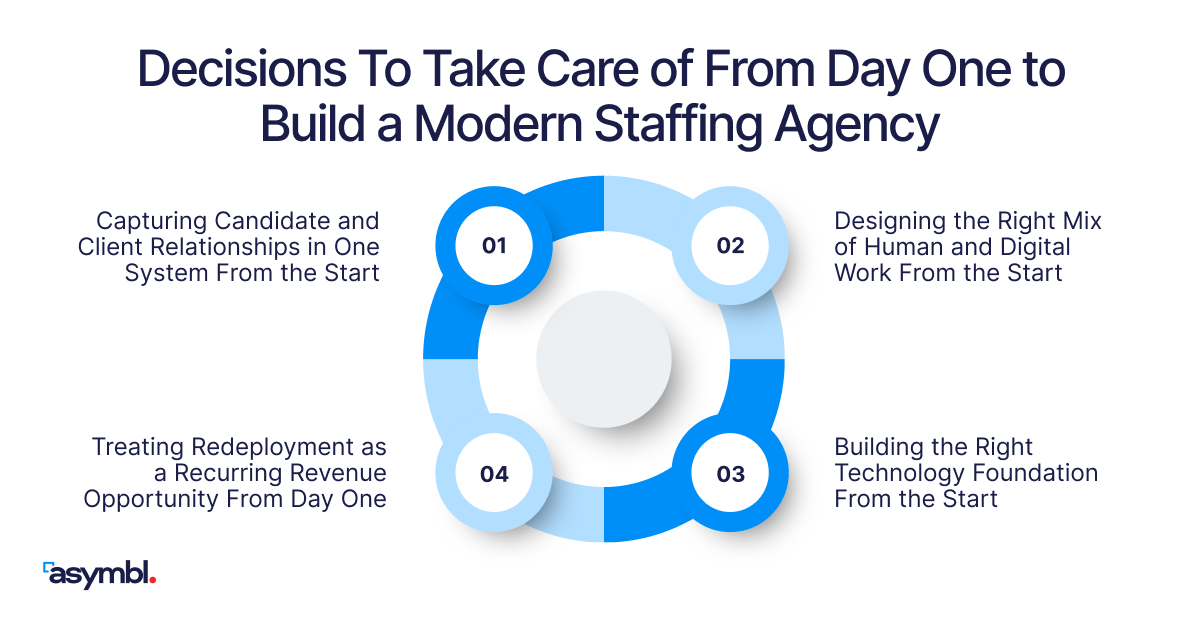
The eight steps above help start a staffing agency. A new client's data, a recruiter's early hours, and a worker's file after the assignment ends face the same test. What happens to them decides whether growth compounds what the firm already built. Or it forces the firm to match every new placement with more people and more manual work.
1. Capturing Talent and Client Relationships in One System From the Start
- The first clients usually belong to the founder's personal network
- The first strong talent usually comes from people the team already knows
This gives the firm a head start, but it creates a risk if the relationship stays only with the person who created it. When that person leaves, changes desks, or simply forgets the context six months later, the business starts the relationship over.
A firm that captures the interaction as it happens avoids that reset
- Client history
- Job requirements
- Past placements
Feedback all become part of the same relationship record instead of scattered notes. So do talent conversations, interview outcomes, availability, assignment history, and upcoming demand.
Staffing runs on the connection between demand and talent. Keeping client data separate from recruiting data also separates the signal that ties them together.
Some details only survive as a shared record. A client might prefer video interviews for a specific role. A specific worker might turn down one assignment because of a commute, but take a similar one closer to home. Either detail disappears when it lives only in someone's inbox.
The value compounds over time. The first talent record can inform the tenth search. The first client conversation can inform the next job order. The database stops being a place where resumes go after a search and becomes the memory of the firm.
2. Designing the Right Mix of Human and Digital Work From the Start
Traditional staffing capacity mostly grows through people. A desk gets busier, and recruiters absorb the added sourcing, screening, scheduling, follow-up, and recordkeeping. The firm adds another recruiter once the workload becomes too much to carry. Revenue rises, but so does the headcount required to produce it.
A recruiter might spend an entire afternoon manually scheduling twelve interviews. This is an afternoon that could have gone to the client call about three new job orders forming instead.
The same trade-off shows up well beyond recruiting desks. The 2025 Deloitte Global Human Capital Trends survey found managers lose nearly 40% of their time firefighting. Very little of it goes to developing the people who report to them.
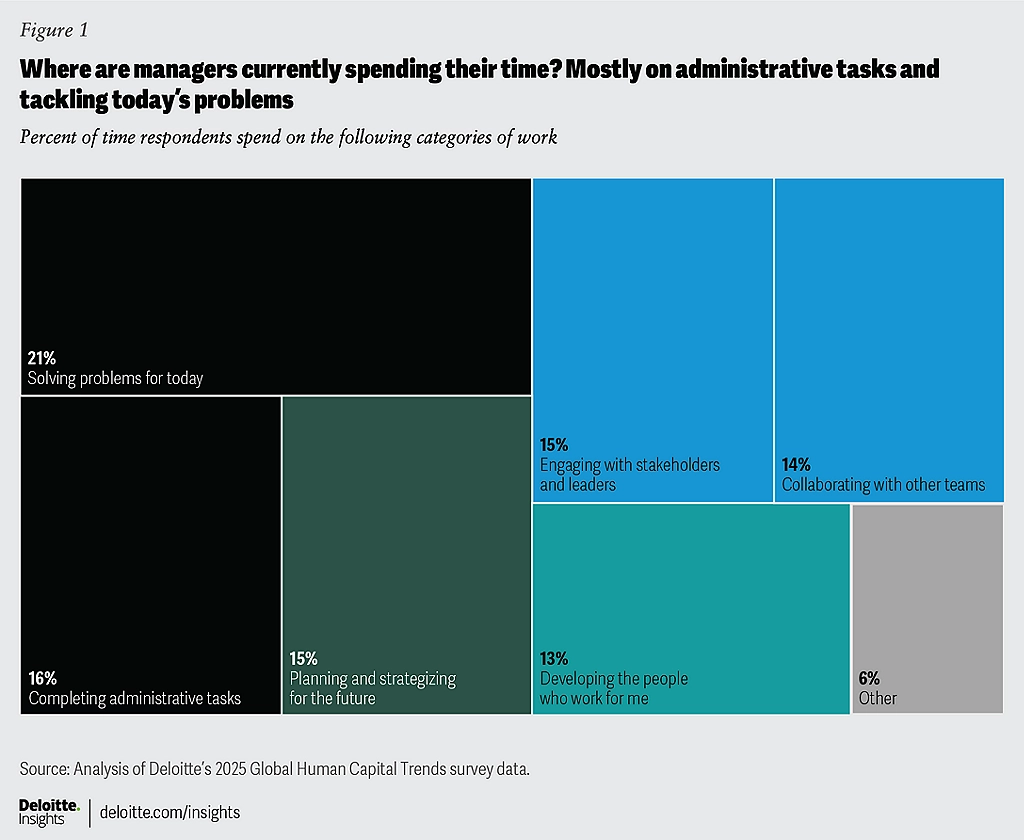
A desk that never separates repeatable work from judgment work carries the same imbalance as it grows.
A newer agency can separate that work earlier instead of waiting for the human-only model to stretch beyond capacity. Recruiters create the most value where trust, judgment, persuasion, client knowledge, talent relationships, negotiation, and closing matter. Those are the parts of the job a person is actually good at.
Sourcing activity, structured screening, scheduling, follow-up, and coordination do not require the same kind of human attention. This makes hybrid workforce design a deliberate choice from the start, rather than a headcount decision made by default under pressure.
Digital workers built to carry defined, repeatable work can sit alongside the human team from day one. It doesn't have to arrive only after the founder is overwhelmed. Recruiters stay close to jobs and talent while the digital worker carries the repeatable work consistently. This happens at a volume no single person could sustain alone.
3. Building the Right Technology Foundation From the Start
Every staffing tool looks inexpensive on its own, but the added cost shows up later. One system owns the client record, another owns the talent record, and a third owns the communication history. A fourth automates work using only the slice of the record it can actually see.
The team ends up doing the integration work between products it originally bought to save time. A recruiter might switch between an ATS, a spreadsheet of client contacts, and a separate messaging tool. This is just to answer one client's question about a worker's availability. It's integration work a connected system would have done automatically.
The technology foundation should keep the client, job, talent, and placement connected, independent of any specialized capability. This changes the evaluation questions a founder should ask:
- Did the firm build the system for a staffing business serving multiple clients?
- Did it target a single employer's internal hiring team?
- Does sales activity live on the same data foundation as recruiting activity?
- Can the firm see what any automated step did, and measure the result afterward?
Asymbl treats that same question as the test for any AI capability a firm adds:
- Does a new tool become another interface added to an already fragmented system? Or
- Does it become a worker that can act from context the system already holds?
A founder who asks that question before buying is already evaluating software the way a connected operating model requires.
Connected architecture depends on whether each new tool strengthens the same foundation, rather than creating another boundary to work around later.
Treating Redeployment as a Recurring Revenue Opportunity From Day One
A temporary or contract placement keeps mattering to recruiting well after the worker starts the assignment. The agency already paid the cost of finding that person, qualifying them, building trust, and matching them to a client. It also gained information about their performance throughout the assignment itself. Letting that relationship go cold at the end means paying the acquisition cost again. This cost returns the next time the firm needs similar talent.
Redeployment turns one placement into a repeatable revenue opportunity. Assignment end dates, availability, skills gained, and client feedback should stay visible while the worker is still on assignment. So should talent preferences and the next likely roles.
The earlier the agency knows an assignment is ending, the earlier it can act. It can match that worker against demand already sitting in the pipeline.
A contractor finishing a six-month assignment with strong client feedback is a strong fit for redeployment. The agency should already match this worker against next month's open job orders while the context is still fresh.
This turns the talent pool into a source of repeat placements. These are workers who can generate revenue again without the recruiting cycle starting from zero.
How Asymbl Supports a Modern Staffing Agency
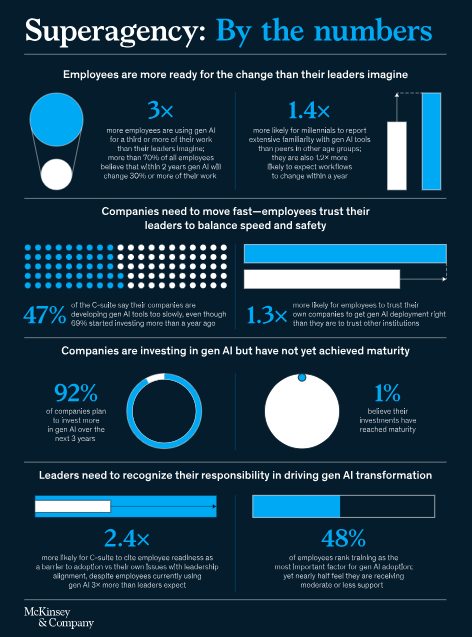
The 2025 McKinsey Superagency in the Workplace report found that almost every company now invests in AI. Only 1% of leaders call their company mature enough that AI runs through daily workflows and drives measurable outcomes.
Recruiter Suite Creates a Connected Foundation for Client and Talent Relationships
Sales, recruiting, and talent often live on separate records at a growing staffing firm. The client who owns the demand and the talent who fills it end up in separate versions of the business. Recruiter Suite closes that gap with one Salesforce-based recruiting environment for nurturing, sourcing, matching, engagement, interviewing, and placement.
Contact Management keeps every relationship at the firm level instead of the individual recruiter's level. This means the next recruiter can see what happened before. The next job order starts with the client context already captured. Past talent activity stays available when another role opens.
For a founder building this from day one, Recruiter Suite starts small by design. A firm with no recruiting or customer relationship management (CRM) system yet can start with data unified in one place. It can add capability later without starting over.
The first records a new agency creates become the foundation. The same system keeps using that foundation as clients, jobs, and recruiters grow.
Recruiter Suite ships with Skills, pre-built automation building blocks for job management, pipeline and submissions, interview coordination, and talent evaluation. These let a firm automate repeatable steps without a separate development project.
Talent Intelligence Turns Talent History and Context Into Actionable Intelligence
A database gets bigger every time the firm recruits. It only becomes more useful once the information inside it improves the next decision. This gap between data volume and data value shows up at the top of the business too. In the 2025 IBM CEO Study, 72% of CEOs named their own data as the key to AI value. Another 68% called connected, enterprise-wide data architecture critical for working across teams.
A staffing firm's talent history is exactly that kind of data. It stays inert until something connects it to the next decision. Talent Intelligence, built on Asymbl Intelligence, makes that accumulated history part of the signal. It saves a recruiter from having to search old records manually.
Matching draws on:
- Pipeline history
- Interview feedback
- Past outcomes
- What the firm has already learned through earlier interactions, going well beyond resume keywords alone.
This changes the value of talent already in the database.
Rosa, a Digital Recruiter, Adds Capacity Alongside Your Human Team
Sourcing, screening, scheduling, outreach, qualification, coordination, and summaries already consume most of a growing desk's time. This work needs to run at a scale no single person can match alone.
Rosa, the Digital Recruiter, adds capacity for exactly that work. She does this without turning the human recruiter into someone who spends the day operating an AI tool. The recruiter keeps doing recruiting work instead. Rosa runs inside Recruiter Suite, so she sees talent history, job data, client context, and pipeline data directly.
The division of labor leaves the human team closer to the work that actually generates staffing revenue. This means understanding the job, building trust with talent, advising the client, handling exceptions, negotiating, and closing.
The capacity gain comes from changing who owns the repeatable work, rather than asking the same recruiter to work faster. This recruiter would otherwise just get one more tool to manage.
Digital Workers Extend Capacity Beyond Recruiting
Recruiting capacity solves only one side of the staffing business. Someone still has to create client demand, engage prospects, answer questions, and qualify opportunities. This person also has to hand the right conversations to the people responsible for building and closing the relationship.
Teddy, a Digital Sales Development Rep, applies the same model on the sales side. He has:
- A defined role
- Clear key performance indicators (KPIs)
- A human manager
He also takes care of the following responsibilities:
- Engages and qualifies prospects
- Hands them to human sellers once the conversation reaches the right point
- Works entirely inside the CRM the sales team already uses
A qualified prospect handoff shows up as an update to a record the seller already checks daily. The principle matches Rosa's. Repeatable execution belongs to a defined digital role. People stay concentrated on the relationship and judgment work that requires them.
Bringing It Together With Workforce Orchestration™
A staffing agency becomes modern once digital workers get defined roles, data, and handoffs. It also needs performance measures and people responsible for how work moves between human and digital teammates. Asymbl calls that operating model Workforce Orchestration™. Each piece a growing agency adds can fit into the same architecture from day one. The founder doesn't need to run five separate systems just to get started.
Recruiter Suite supplies the connected recruiting foundation. Talent Intelligence makes the history inside it useful. Rosa adds digital recruiting capacity, and Teddy shows that the same role-based approach extends into client development.
Human workers keep:
- Judgment
- Relationships
- Negotiation
- Creativity
- Oversight
Digital workers handle defined execution at scale.
How to Start a Staffing Agency Built to Handle the Growth It Creates
A staffing agency proves its foundation the first time growth puts it under strain. This test rarely waits for year two. It shows up the moment a second person needs a client's full history that only one recruiter has ever seen.
A worker finishing an assignment while the recruiter who placed them is unreachable creates the same test. Whatever the firm built in the first few months either holds or breaks under it.
Founders rarely get advance warning. Growth exposes gaps at the exact moment there's no time to fix them.
A firm can test how a connected foundation performs before the growth that requires it arrives. Book a demo to see Recruiter Suite in action. It gives a new agency one connected foundation for client and talent relationships, built to hold as the desk grows.
FAQs
A staffing agency can be started without prior recruiting experience, though industry knowledge shortens the learning curve. Founders who succeed without a staffing background typically bring sales ability, client relationship management, or deep niche expertise. What matters more than a recruiting resume is comfort with a sales cycle, sourcing discipline, and enough niche credibility to earn trust from clients and candidates alike.
A staffing franchise trades a share of ongoing revenue, usually a royalty plus marketing fees, for a proven playbook, brand recognition, vendor relationships, and support with compliance and back-office setup. Starting independently keeps full ownership and margin, but leaves the founder to build brand, process, and vendor relationships from scratch. The better choice depends on whether speed and structure matter more than long-term equity and control; a sharply focused independent agency can still out-compete a generic franchise territory.
A staffing agency recruits and places its own employees at a client's worksite for a defined assignment, sourcing and directing the talent itself. A professional employer organization (PEO) instead enters a co-employment arrangement over a client's existing staff, administering payroll, benefits, and HR compliance for people the client already hired; it doesn't recruit or fill open roles. The core distinction is sourcing: a staffing agency finds and delivers talent, while a PEO administers a workforce that's already in place.
Yes, but usually only as a subvendor under an established prime vendor, not as a direct supplier. Enterprise clients that route staffing spend through a managed service provider (MSP) and vendor management system (VMS) typically set volume, insurance, and compliance thresholds a brand-new agency hasn't built yet. Most new agencies enter these programs by partnering with a prime vendor already on the account, then pursue direct relationships once they have a track record and the back-office capacity for VMS reporting.
Liability typically falls on the staffing agency as the employer of record, since it carries the workers' compensation policy covering the worker for on-the-job injuries. The client can still face liability if unsafe conditions or negligence on the worksite contributed to the injury, which is why staffing contracts typically include indemnification clauses splitting responsibility. Agencies should confirm their workers' comp policy covers assignments at multiple client sites, since some policies default to a single fixed location.
Co-employment risk is the legal exposure created when a client exercises enough day-to-day control over a temp worker, directing schedules, discipline, or work methods, that regulators or courts could treat the client as a joint employer alongside the agency. It differs from employer-of-record duties, which cover payroll, taxes, and benefits administration. Co-employment risk instead concerns liability for wage-and-hour violations or discrimination claims, and agencies manage it through contract language that clearly defines each party's supervisory authority.
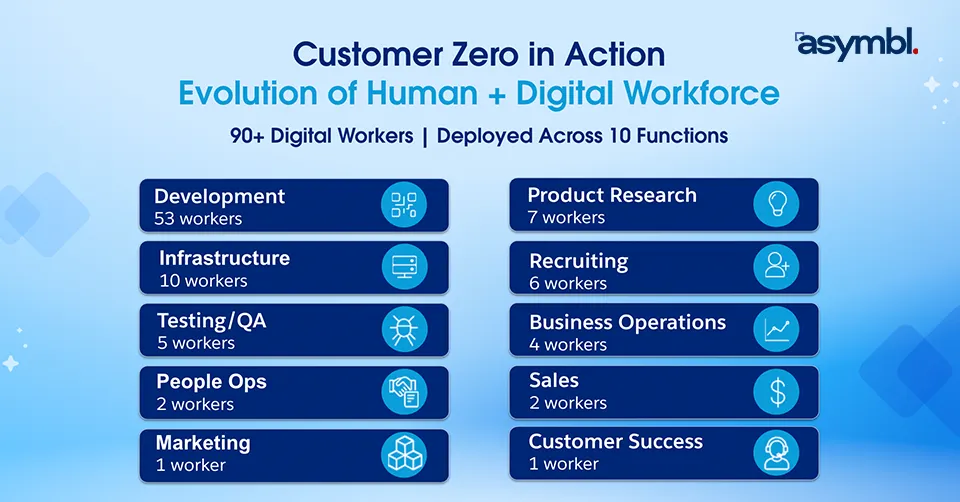
Asymbl's Journey to 40% Digital Workforce and Seeing Results
Asymbl outlines specific workforce orchestration use cases on how they implemented over 60 digital workers in 8 weeks who are orchestrated alongside human workers with a goal of reaching 40% digital labor in 2026.

The Right Fit Starts With a Conversation.
See what working together could look like.
