

Most teams assume the applicant tracking system is broken when requisition volume spikes, visibility disappears, candidate communication falls through the cracks, and recruiters spend more time managing records than talking to people
The ATS is not broken. The core job, organizing candidates, managing workflows, and keeping the firm compliant, still matters. What is broken is the expectation that tracking alone is enough.
Hiring has changed structurally, and AI is raising the stakes further. Digital workers can screen thousands of applications, surface candidates by fit and placement likelihood, and schedule interviews before a human recruiter touches the requisition. That is not a feature you bolt onto a tracking system, but a fundamentally different operating model.
Modern hiring does not need a better tracker. It needs a system that manages the full talent relationship, one that treats candidate experience, hiring manager collaboration, and recruiter intelligence as first-class priorities.
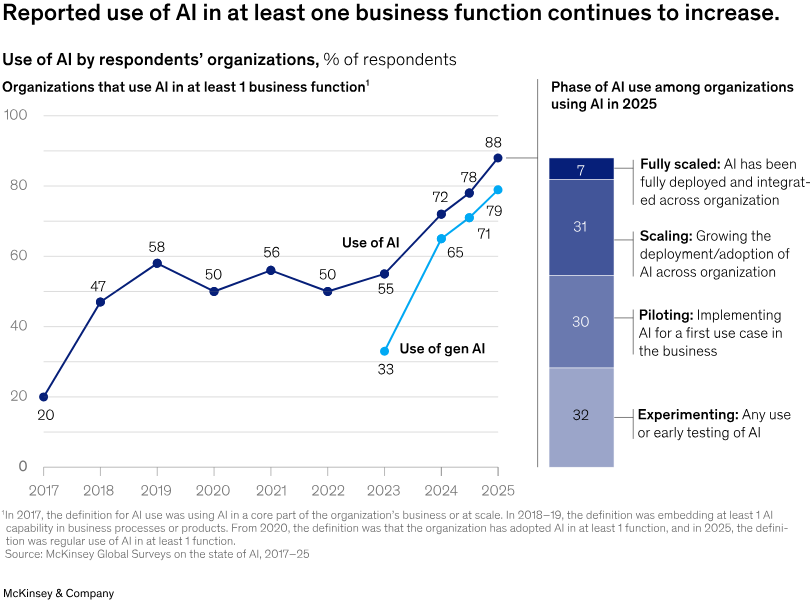
According to McKinsey’s “The State of AI in 2025: Agents, Innovation, and Transformation” Survey, 88% of organizations now report using AI regularly in at least one business function. Nearly two-thirds have not begun scaling it across the enterprise.
Over the past decade, recruiting has grown significantly more complex, with more channels, more candidates, more data, and more expectations, while the systems built to manage it have remained largely unchanged.
The applicant tracking system, the operational backbone of most talent functions, was designed for a different era of hiring, one defined by high-volume inbound applications, compliance requirements, and relatively linear workflows.
Today, hiring is none of those things. Talent is sourced across a dozen channels. Candidates are passive, mobile, and quick to disengage. Hiring managers expect real-time visibility. Business leaders want data that connects talent decisions to workforce outcomes.
The teams that feel the friction most acutely often assume they need a better ATS. The question worth asking is whether the category itself still fits the problem.
What Is An Applicant Tracking System?
An applicant tracking system is software that manages the workflow of recruiting, from posting a job to tracking candidate applications to documenting hiring decisions. In its most common form, an ATS accepts applications, parses resumes into structured fields, moves candidates through predefined pipeline stages, and stores records for compliance purposes.
The Structural Limitations Of Legacy ATS Systems
The limitations of legacy ATS systems are structural, embedded in foundational design assumptions that were reasonable when the technology was built and have not adapted to the recruiting environment that followed.
Understanding those assumptions explains why adding features or configurations to a legacy ATS rarely resolves the friction that modern talent teams describe.
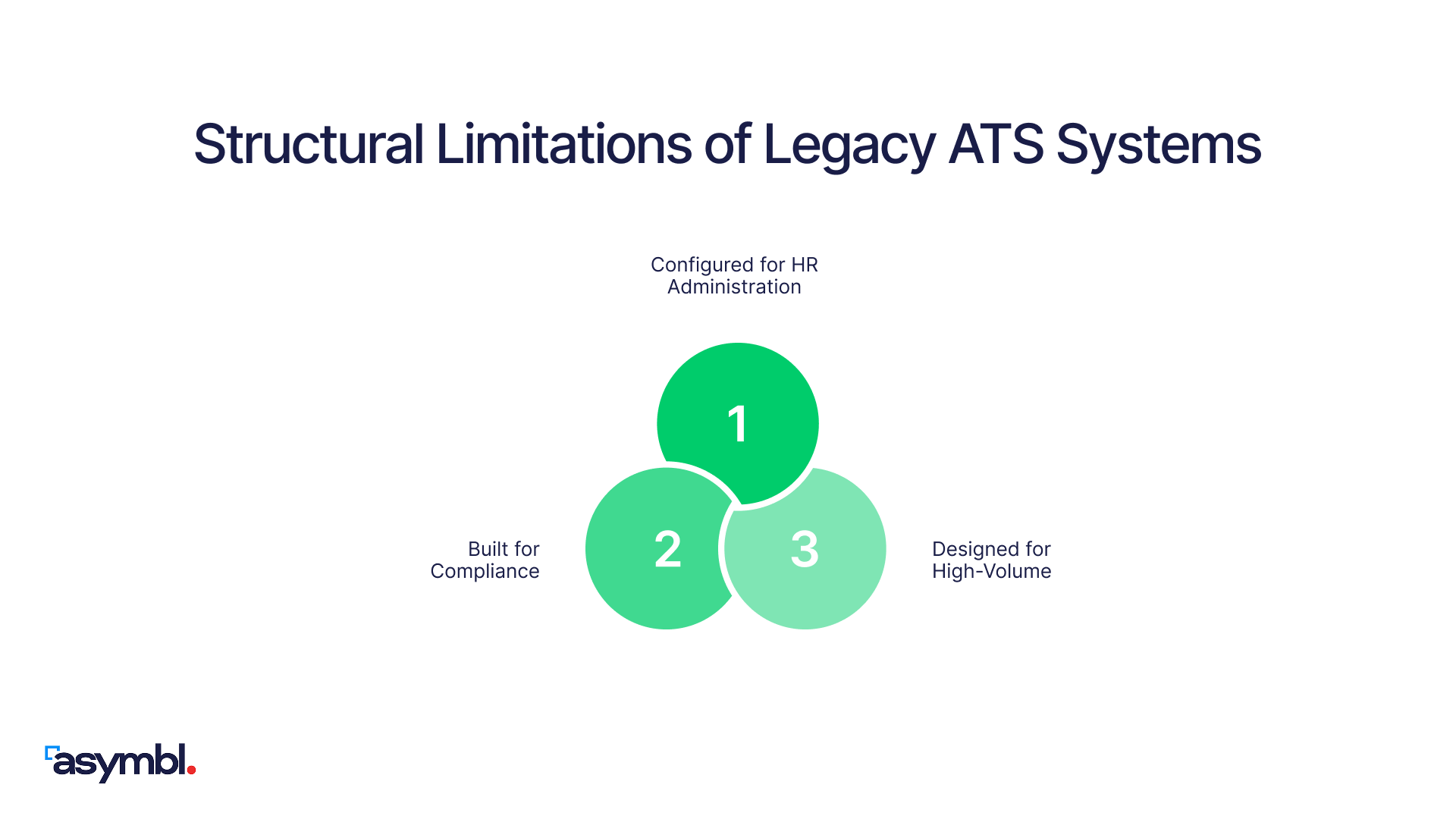
1. Built For Compliance
The original requirement for applicant tracking technology was regulatory. Equal employment opportunity requirements, audit trails, and documentation of hiring decisions for legal review drove the earliest product designs and shaped the assumptions that most ATS systems still carry.
Compliance infrastructure records what happened. It was never designed to improve what happens next. An ATS that began as a compliance tool knows who applied, who advanced, and who was rejected.
It has no mechanism for understanding who should have been found before they applied, or which dormant candidates in the database are worth re-engaging six months later.
Asymbl's Talent Intelligence is built for what the compliance layer never was. It captures pipeline history, interview feedback, assignment outcomes, and the signals embedded in recruiter notes and hiring manager debriefs, building a continuously improving model of candidate fit that the application record of a legacy ATS was never designed to hold.
2. Designed For High-Volume
Legacy ATS platforms were built to solve a volume problem. When thousands of applications arrive for a single role, some mechanism is needed to reduce the pile to a manageable size. The ATS approach has historically relied on keyword filtering. Resumes containing the specified terms advance. Resumes that do not are filtered out.
Keyword filtering narrows the field efficiently. It does not assess quality. It creates a selection process built around the presence of certain words rather than the substance behind them.
Candidates who have learned to write for ATS filters advance. Candidates who are strong but imprecisely worded do not.
The system was designed to reduce volume, and it does that. It was not designed to surface the right people, and it does not do that reliably.
3. Configured For HR Administration
Most ATS platforms generate operational reports, covering time-to-fill by role, source of hire by channel, and application counts by stage. These metrics describe what the recruiting workflow produced. They do not connect to what the business needs.
Workforce planning, skills gap analysis, compensation benchmarking, and labor market conditions represent the strategic layer that talent acquisition leaders increasingly need to work from.
According to a 2026 Gartner Survey on Talent Strategy, only 31% of recruiting teams use labor market data to inform their talent strategy. When the ATS sits apart from the business data, the recruiting function makes decisions with an incomplete picture.
Strategy requires forward-looking data. An ATS built for HR administration was never designed to provide it.
How Modern Hiring Outgrew Legacy ATS Systems
The talent market has changed in ways that legacy ATS systems were never designed to accommodate. Candidate behavior has shifted, the information required to make good hiring decisions has expanded, and the expectations placed on small recruiting teams have grown considerably.
Across all three dimensions, the systems most organizations rely on have not kept pace.
1. Candidates Don't Apply The Way They Used To
Passive candidates now make up the majority of the addressable talent market. The highest-quality hires for most roles are not actively searching job boards. They are reachable through targeted sourcing, referral networks, talent communities, and proactive outreach.
An ATS was designed to manage the inbound funnel, processing applications that arrive, move through stages, and produce a decision. It has no infrastructure for managing outbound sourcing at scale.
A candidate contacted through LinkedIn, nurtured over three months, and eventually brought into a formal process does not fit neatly into the ATS workflow, and in most systems, that candidate's history is lost or fragmented by the time they become an applicant.
Multi-channel talent engagement requires relationship infrastructure. An application intake tool is a different category of system.
2. Hiring Decisions Require More Signals
The shift toward skills-based hiring has changed what recruiters are looking for, and what they need access to. Credential-based screening, which aligned well with keyword filtering, has given way to capability assessment, behavioral evaluation, and evidence of applied skills. None of that data lives in a traditional ATS.
Competitive salary data, skills availability in specific labor markets, time-on-market trends, and forward-looking demand signals also don't live there. The teams that can connect those inputs to hiring decisions are operating with better information than those who cannot.
3. Teams Are Smaller And Expected To Do More
Recruiting teams have absorbed significant efficiency pressure over the past several years. Headcount has compressed. Expectations have not. The result is a tension that no amount of process optimization fully resolves. The administrative burden of modern recruiting is simply too high for the capacity available.
According to 2026 Deloitte’s Report on “State of AI”, 56% of organizations primarily view AI as a productivity and efficiency tool, the promise being that the right technology absorbs the administrative load so recruiters can focus on higher-value work.
The challenge is that AI deployed on top of a fragmented system optimizes parts of a broken workflow rather than addressing the architecture underneath.
When the system itself generates administrative overhead through manual data entry, siloed records, and disconnected tools, adding an AI layer does not eliminate the friction. It redistributes it.
Where Legacy ATS Systems Break The Modern Hiring Workflows
The limitations of legacy ATS architecture surface as specific, identifiable failure points in the day-to-day recruiting workflow, each with a distinct mechanism and each eroding outcome quality in a different way.
The compounding effect of several failure modes operating simultaneously is what most talent teams describe as a broken hiring process, even when individual steps appear to function.
1. The Resume Screening Bottleneck
A traditional ATS processes resumes at intake and filters based on keyword matches. The candidates who advance are those whose resumes align with the specified criteria, not necessarily those who are best suited for the role.
This creates two failure modes simultaneously.
- Qualified candidates who framed their experience in different language are filtered out.
- Unqualified candidates who optimized their resumes for ATS parsing advance to human review.
The recruiter inherits both failure modes downstream, spending time re-screening a pool the system was supposed to have already filtered.
The bottleneck is not the volume of applications. It is the imprecision of the filter at the front of the pipeline.
2. Fragmented Sourcing Creates Blind Spots
A candidate sourced through LinkedIn, reached again through a referral, and later approached through a talent community touchpoint creates three separate records in most recruiting stacks.
Each channel runs its own tracking. There is no consolidated view of who has been contacted, what was discussed, or where each relationship stands.
According to McKinsey’s “The State of AI in 2025: Agents, Innovation, and Transformation” Survey, 88% of organizations now use AI regularly, yet nearly two-thirds have not begun scaling it across the enterprise. The infrastructure gap is the reason.
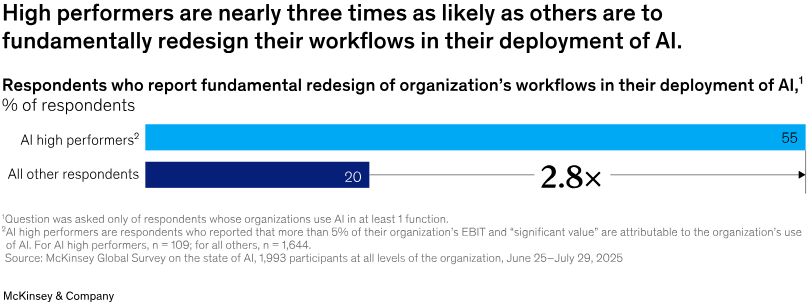
Without a unified data foundation, AI has no consolidated record to work from, and the sourcing blind spot compounds over time as candidate histories are split across disconnected systems.
3. Poor Candidate Experience Erodes Pipeline Quality
Qualified candidates do not wait. When the hiring process is opaque, with long silences, automated rejections with no context, and inconsistent follow-up, the candidates most likely to withdraw are often the candidates most worth keeping.
The ATS, designed to manage the administrative side of the funnel, has no mechanism for maintaining an active, personalized relationship with candidates who are in-process.
Communication defaults to templated status updates. Scheduling is manual. The experience is a function of whoever happens to follow up, instead of the system.
What reads as a sourcing problem, meaning not enough qualified candidates in the pipeline, is often a retention problem in the candidate experience layer.
4. Interview And Assessment Data Lives Nowhere
In most recruiting workflows, structured interview notes, competency scores, assessment results, and hiring manager impressions are captured in email threads, spreadsheet tabs, or post-interview meeting notes. None of it integrates cleanly into the candidate record in the ATS.
The result is that decisions are made without institutional memory. A candidate who interviewed well for a role 14 months ago but was not selected resurfaces as an applicant for a different position, and nobody knows. The relationship, the assessment, the potential are not findable.
Hiring quality improves when organizations can learn from prior decisions. A system that doesn't retain the signal from those decisions cannot support that kind of learning.
5. Recruiter Bandwidth Gets Consumed By Administration
Scheduling coordination, status updates, data entry, stage transitions, and compliance documentation consume recruiter time without contributing to hiring quality. These tasks are the cost of operating an administrative system that was not designed to carry its own weight.
The impact is not just on efficiency. When most of the working day goes to managing records rather than building relationships and assessing candidates, the quality of the outcome suffers.
The conversations that matter, those with hiring managers, candidates, and sourcing targets, get compressed into whatever bandwidth remains.
According to the 2026 Gartner Survey of CFOs on Strategic Priorities, only 42% of CFOs are confident in their organization's ability to hire and retain digital talent. The confidence gap is not just about the external market.
It reflects the operational reality inside talent functions that are stretched thin and working with tools that generate more administration than insight.
Asymbl's Recruiter Agent, a pre-built digital worker embedded in Recruiter Suite, is designed to absorb this administrative load.
Pre-screening, interview scheduling, candidate communication, and dormant pipeline re-engagement run through the digital worker, so the human team focuses on the work that requires judgment, like the conversations, the evaluations, and the decisions that a digital teammate cannot make
How Modern ATS Systems Should Support Hiring Workflows
A talent relationship management system designed for modern hiring operates from fundamentally different architectural assumptions than a legacy ATS.
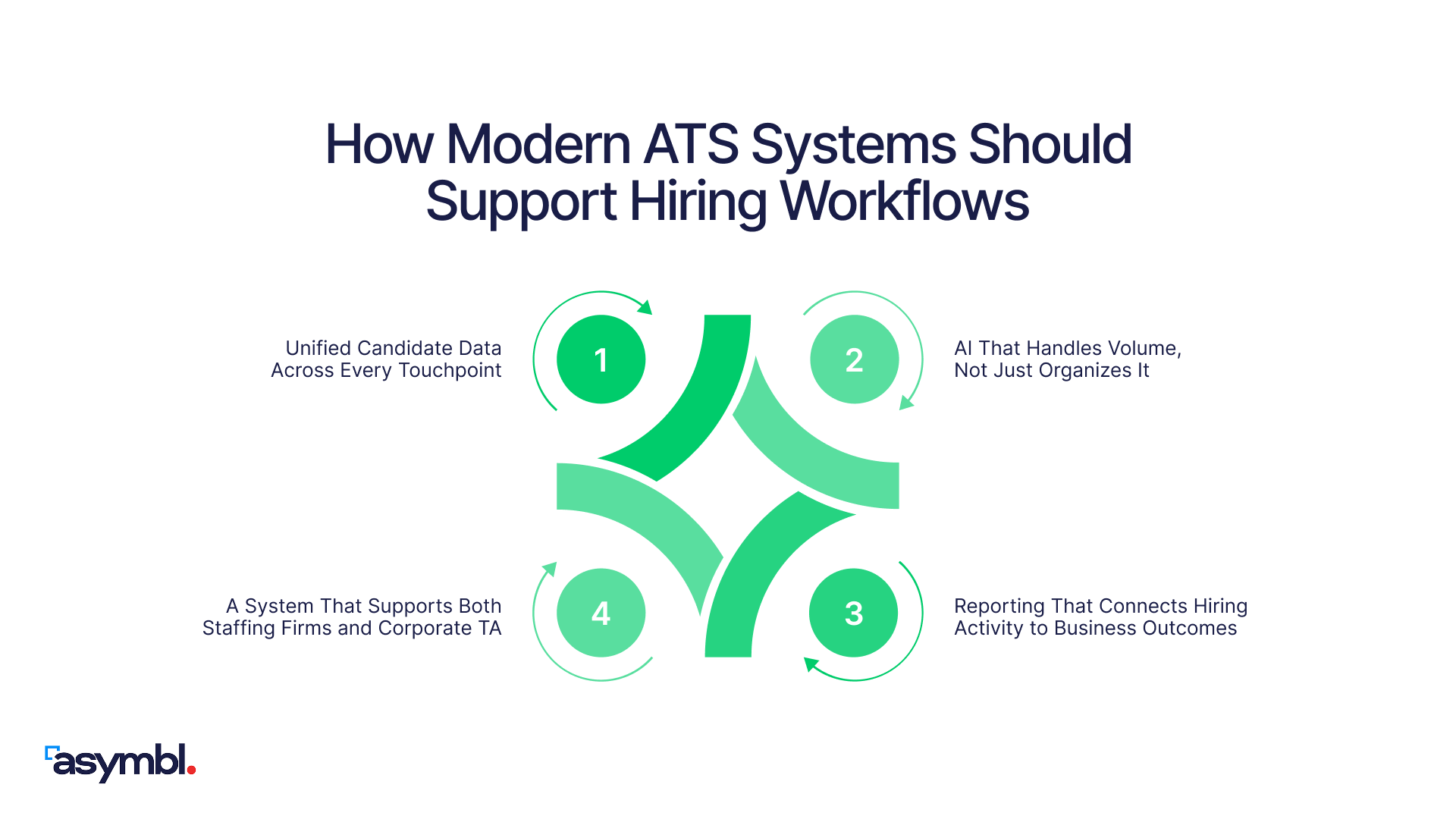
The capability gap shows up in what the system treats as its primary organizing principle, what candidate data it centralizes, and what operational volume it is designed to absorb so recruiters can focus on the work that actually requires human judgment.
1. Unified Candidate Data Across Every Touchpoint
The foundation of effective talent acquisition is a complete candidate record. Not just the application, but the full history of every sourcing contact, subsequent conversation, assessment, offer discussion, and outcome.
A unified record means no candidate relationship gets lost when a sourcing channel changes, when a recruiter transitions off a role, or when a candidate goes dormant and resurfaces six months later.
Asymbl's Recruiter Suite is built on Salesforce, which means every candidate touchpoint, from initial outreach to final offer, lives in a single, unified record. The relationship infrastructure is there before the first conversation, and it persists after the last one.
2. AI That Handles Volume, Not Just Organizes It
There is a meaningful difference between a system that files applications and one that works on them.
Pre-screening at scale, intelligent prioritization, proactive re-engagement of dormant candidates, and automated follow-up that preserves the relationship while the recruiter is focused elsewhere. These are the functions that change the economics of recruiting.
Asymbl's Recruiter Agent, powered by Salesforce's Agent Force infrastructure, processed 17,000 applications for one client, pre-screened 1,800 candidates, and scheduled 800 interviews.
The recruiter team had two people. The result was 100 hires in 100 days, a 152x ROI on the recruiting function.
An ATS does not deliver this. A talent relationship management system with embedded AI capability does.
3. Reporting That Connects Hiring Activity To Business Outcomes
The reports a recruiting function produces should answer business questions, not just operational ones.
Time-to-fill is a useful operational metric. Pipeline conversion by source, quality of hire by team, and hiring capacity against workforce forecast are the metrics that connect talent acquisition to the organization's actual priorities.
When hiring data lives in a Salesforce environment, it sits alongside the same data the business uses to plan and make decisions. The reporting gap between talent and the business narrows.
Leaders see what the recruiting function is producing in terms the business already uses.
4. A System That Supports Both Staffing Firms And Corporate TA
Staffing firms and corporate talent acquisition teams operate differently enough that a single, undifferentiated system serves neither well.
Staffing firms manage client relationships, consultant placements, and contract commitments alongside the talent function. Corporate TA teams operate within workforce planning frameworks, internal mobility requirements, and cost-per-hire benchmarks.
Asymbl Recruiter Suite ships in two configurations, one built for staffing firms and one built for corporate TA. Both run on the same Salesforce foundation. The underlying data model, the reporting infrastructure, and the AI capabilities are shared. The workflows reflect how each model actually operates.
The applicant tracking system was the right tool for the problem it was built to solve. For high inbound volume, compliance requirements, and relatively linear hiring workflows, centralizing applications and documenting decisions made sense.
The problem modern talent functions are dealing with is structurally different. Candidates don't arrive through a single channel. Hiring decisions require more than application data. Teams are managing higher complexity with tighter resources. The system underneath the recruiting function has to reflect that reality.
The organizations making real progress on hiring quality are not asking their ATS to do more.
They are moving to a system designed for the full scope of what modern talent acquisition actually involves, a talent relationship management platform with unified candidate data, embedded AI that handles operational volume, and reporting that connects hiring activity to business outcomes.
This is what workforce orchestration looks like in the talent function. Not more tools added to a broken foundation. A different architecture altogether.
Why Asymbl Is Built For This Problem
The capability gap between a legacy ATS and a modern talent relationship management platform is an architectural gap, and it shows up in what the system treats as its primary unit of work.
Recruiter Suite
Recruiter Suite is Asymbl's end-to-end talent relationship management application, available in configurations built specifically for corporate TA teams and staffing firms.
It runs on Salesforce, which means candidate data, client relationships, pipeline activity, and business metrics sit in the same environment, connected by design rather than integrated through workarounds.
- Job Management
- Pipeline Management
- Interview Management
- Offer and Hire, and
- Contact
Management all operate from a single unified record, the candidate relationship from first contact through final outcome, captured at the firm level, not the recruiter level.
Talent Intelligence
Talent Intelligence is the reasoning engine underneath Recruiter Suite. Where most ATS platforms store candidate data, Talent Intelligence learns from it.
Pipeline history, structured interview feedback, assignment outcomes, and hiring manager observations accumulate into a model that continuously improves its understanding of what good looks like for a given role, client, or context.
Search happens in natural language. Matching scores candidates on fit, context, and placement likelihood rather than keyword presence. The institutional knowledge that normally lives in a senior recruiter's head, and leaves when they do, stays in the platform.
Digital Recruiter
Digital Recruiter is Asymbl's pre-built digital worker for high-volume recruiting operations. It handles the tasks that consume recruiter bandwidth without contributing to hiring quality, like initial pre-screening, interview scheduling, candidate status communication, and dormant pipeline re-engagement.
Human recruiters focus on the conversations, assessments, and closing decisions that require judgment.
The three work together. Recruiter Suite provides the data foundation. Talent Intelligence makes it useful. Recruiter Agent executes at scale. The system is designed for how modern talent acquisition actually operates
Conclusion
Talent acquisition leaders are increasingly being asked to demonstrate strategic value in the terms the business uses, like the quality of hire, time-to-productivity, workforce forecast accuracy, and cost per hire against market benchmarks.
The data to answer those questions does not exist in a legacy ATS, not because the recruiting function failed to capture it, but because the system was never built to produce it.
ATS architecture captures operational events, like applications received, candidates advanced, and offers extended.
It does not connect those events to business outcomes, and it does not sit alongside the workforce planning, performance management, or financial data that would make those connections possible.
The result is a talent acquisition leader who is accountable for strategic outcomes with no reliable data to show they are delivering them. It’s a structural problem, and the only resolution is a system whose data model was built to answer business questions, rather than just recruitment operations questions.
The reporting gap between what a legacy ATS produces and what a modern talent relationship management platform produces is the difference between a function that can prove its strategic value and one that cannot.
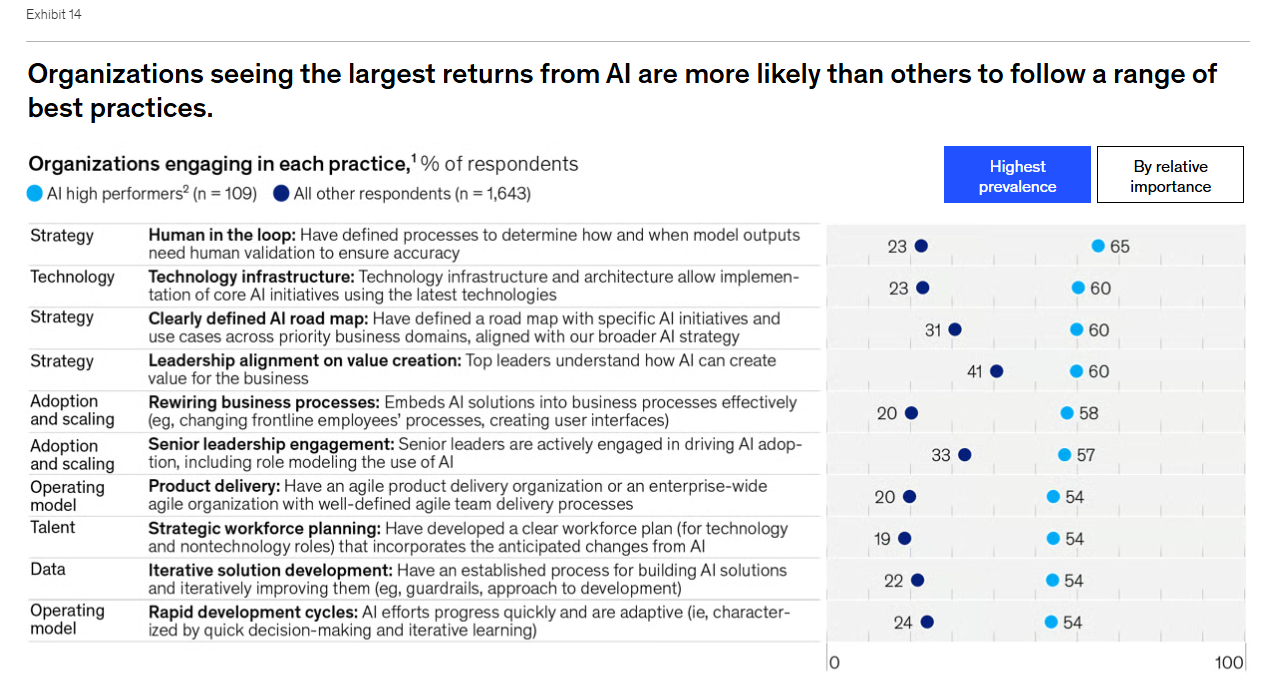
The recruiting teams seeing the clearest results from AI are running it on connected, unified talent data with digital workers embedded in the workflow. If you want to see what that looks like in practice for a team at your scale, request a demo with Asymbl
FAQs
An ATS manages the hiring process from open role to accepted offer. An HRIS manages the employee lifecycle after hire, covering payroll, benefits, and performance. Most organizations run both as separate systems, creating a data gap between recruiting and workforce management. Modern platforms are closing that gap by connecting talent data across the full employee lifecycle.
Workforce orchestration in recruiting means human recruiters and digital workers operating together with defined roles, shared data, measurable performance, and governance built in from the start. It shifts the infrastructure from managing a hiring process to running a coordinated recruiting team, where human judgment and digital execution are designed to work together rather than operate in parallel.
AI can improve individual tasks inside a legacy ATS, including resume parsing, scheduling, and basic scoring. Performance is constrained by the architecture underneath. Fragmented data, undefined digital worker roles, and absent governance create structural limits on what AI can deliver. Effective AI in recruiting requires a unified data foundation, not a bolt-on layer over disconnected systems.
Common applicant tracking systems include Greenhouse, Lever, iCIMS, Bullhorn, Workday Recruiting, and Workable, each serving different hiring contexts from high-volume staffing to enterprise talent acquisition. The more important distinction is not which platform you choose but whether it connects to your broader business data, supports hybrid execution, and is built to scale with your recruiting model.
Most ATS implementations underperform because the system was designed for a hiring model that no longer exists. Recruiting now requires relationship-based pipelines, business-connected reporting, and human-digital execution. A platform built for requisition-centric, inbound-only workflows creates a structural ceiling on what the recruiting function can produce, regardless of which features or integrations are layered on top.
An ATS organizes around the open role. Every candidate is evaluated in relation to a specific requisition, and once the role is filled, the relationship typically ends. A CRM organizes around the candidate relationship over time. Modern recruiting requires both capabilities in one connected system, not linked through integrations but unified on the same data foundation.
.png)
Start Your Agentic AI Implementation in Recruiting
Autonomous AI hiring tools stall without defined roles and escalation rules. See how to implement AI agents in hiring the right way

The Right Fit Starts With a Conversation.
See what working together could look like.
.webp)