


.webp)
The biggest limitation of automated interview scheduling is that most solutions automate the meeting, instead of the candidate movement in the pipeline.
A candidate moves to the next step quickly only when the right interview happens with the right people, at the right time, followed by the right next action. It requires coordination across candidates, recruiters, hiring managers, interview panels, and recruiting systems.
When automation stops at booking, recruiters remain responsible for everything that determines whether scheduling actually succeeds. They chase confirmations, resolve conflicts, manage exceptions, and ensure candidates do not lose momentum.
For corporate Talent Acquisition (TA) teams, the goal should be creating a workflow where interview coordination becomes defined digital work, owned by a system that can execute, adapt, and escalate when human judgment is required.
In this blog, we will examine why interview scheduling creates hidden pipeline leakage, generic calendar tools fall short, and what corporate teams need from automated interview scheduling built into the hiring workflow.
Interview Scheduling Is a Bigger Hiring Bottleneck Than It Looks
Hiring teams spend a lot of time improving sourcing, screening, and interviews, while scheduling is treated as a supporting task. However, the time between screening and interview is often where hiring pipelines slow down, making scheduling a larger operational challenge than it first appears.
1. Scheduling Delays Start as Calendar Friction and End as Pipeline Drag
A scheduling delay begins as something no one would escalate. One hiring manager has no open slots this week, or a candidate misses an availability email over a weekend.
Each moment is individually recoverable, but across forty open roles, four interview panels each, and a candidate pipeline that refreshes weekly, the individually recoverable moments stack into pipeline drag that no single person owns.
2. Back-and-Forth Coordination Extends Time to Hire and Time to Fill
When scheduling adds three to five days between screen and interview, and a role runs two or three interview rounds, the coordination layer alone can add two weeks to a requisition that the demand plan assumed would close faster.
By the time leadership notices time to fill increasing, the scheduling delays have already been absorbed into the hiring timeline. The metric captures the outcome, but not the series of small coordination delays that produced it.
3. Candidate Momentum Drops When the Next Step Is Not Immediate
The strongest moment to book an interview is the moment the candidate finishes a screen and is still engaged. Interest is highest, the conversation is fresh, and the candidate has just spent energy presenting themselves.
When the next step waits on manual follow-up, the candidate's momentum decays. They remain interested on paper and the opportunity stops feeling active.
Corporate roles worth filling attract candidates who are in more than one process at a time. A slow scheduling motion hands every competing employer the time to build trust, move the candidate forward, and manufacture the sense of progress that the delayed process failed to create.
4. No-Shows Increase When Scheduling Depends on Manual Follow-Through
No-shows are a downstream signal of an inconsistent scheduling process. When reminders, confirmations, and preparation details depend on recruiter bandwidth, a busy week means a candidate walks into an interview under-informed or forgets it entirely.
A candidate who booked ten days ago, received no reminder, and was never told who they are meeting or what to expect is a candidate at high risk of not showing.
A stronger scheduling process holds the candidate through that window with reliable confirmations, timely reminders, and clear preparation. When those touches fire consistently, the candidate arrives informed and expected, and the no-show rate drops.
5. Recruiter Admin Time Becomes a Hidden Capacity Tax
Recruiters check calendars, send availability emails, and chase feedback after the interview. None of it requires the judgment that makes a recruiter valuable, and all of it consumes the hours that judgment needs.
It pulls recruiters away from candidate relationships, hiring manager alignment, closing, and the evaluation work that determines quality of hire. For a TA operations leader, this is a capacity tax.
IBM’s Institute for Business Value found that HR functions are on track for a 35% productivity gain over the next two years, driven largely by automating routine coordination work.
Manual Scheduling Creates Pipeline Leakage After Screening
After a recruiter identifies a qualified candidate, every delay in coordinating interviews adds friction to the process. Candidates may lose interest, accept another opportunity, or disengage when the next step depends on back-and-forth emails and calendar availability.
1. Qualified Candidates Are Most Vulnerable Between Screen and Interview
After a screen, the candidate is warm and still evaluating. They have shared goals, experience, availability, and interest, and they are watching to see whether the company moves with the urgency it asked them to show.
When the interview is not booked quickly, the process loses continuity. A candidate who felt engaged during a strong screening conversation can feel forgotten before the hiring manager ever enters the picture. The silence looks like disinterest, and the candidate reciprocates it.
The organization has already paid to source, engage, and screen this candidate. Losing them at the scheduling step writes off that entire investment at the exact point it was about to pay back.
2. Slow Scheduling Gives Competitors Time to Move First
A strong candidate is often in conversation with several employers. While one team is still coordinating calendars, another has already booked the interview, run the conversation, and moved toward an offer.
Every day between screen and interview creates room for a competing process to become the more compelling one. Speed here decides which conversation the candidate is still weighing.
The team that schedules within hours is present in the candidate's decision at the moment the decision is forming. A team scheduling within a week arrives after the decision has started to settle.
3. Candidate Experience Weakens When Communication Becomes Inconsistent
Some candidates receive a same-day scheduling link, clear interview details, and preparation notes, while others wait for a recruiter to manually follow up and get a bare calendar invite with no context.
Manual scheduling makes candidates experience a function of individual habits and workload. At the scale a corporate TA team operates, that inconsistency becomes visible in the aggregate.
Candidates compare notes, Glassdoor reviews accumulate, and a process that feels uneven erodes the employer brand the organization spends money to build.
4. Pipeline Velocity Slows Where Most Teams Stop Measuring
Most teams track the major funnel stages, like application, screen, interview, offer, hire. The movement between those stages gets far less attention, and scheduling lives entirely in that unmeasured space.
- A candidate is marked as moved to interview while no interview is actually booked
- A hiring manager is marked as reviewing availability while the pipeline sits stalled
- A recruiter is marked as following up while the candidate is cooling
Pipeline velocity depends on the speed of movement between stages, while the standard metric set watches only the completion of the stages.
Until a team measures the gaps, scheduling delay stays a silent tax on velocity that surfaces only as an aggregate time-to-fill number nobody can fully explain.
Generic Calendar Tools Only Solve the Availability Problem
Generic calendar tools cut the back-and-forth of finding an open time and give candidates a way to self-schedule.
Interview scheduling in a corporate hiring function depends on candidate stage, role urgency, hiring manager rules, panel composition, interview sequencing, feedback movement, and next-step communication.
1. Booking Links Create Open Slots Without Recruiting Context
A booking link shows when someone is free, but does not know which interview stage the candidate is in, which hiring manager should join, whether the round requires a panel, what instructions the candidate needs, or what should happen after the interview is done.
The recruiting work around the scheduled slot, matching the right interviewers to the right stage, sequencing rounds correctly, briefing the candidate, and moving the candidate forward afterward, stays entirely manual.
2. Calendar Automation Cannot Prioritize Candidates by Stage or Urgency
A final-round candidate for a business-critical role should not move at the same speed as an early-stage candidate for a backfill. A candidate at risk of dropping off needs faster scheduling than one who is comfortably engaged.
Generic scheduling tools book time in the order of requests received. They have no concept of which hiring motion needs acceleration and which can wait, so every candidate gets the same undifferentiated engagement regardless of what the business actually needs from that specific hire.
The recruiter ends up supplying the prioritization manually, deciding which candidates to expedite and which to let the tool handle on its default cadence.
3. Self-Scheduling Breaks When Stakeholder Rules Are Not Built In
Self-scheduling works efficiently when a candidate needs a single interviewer at a convenient time. However, it becomes fragile the moment the process involves multiple interviewers, role-specific panels, location constraints, executive availability, interview sequencing, internal approvals, or candidate accommodations.
Each of those conditions is a rule the workflow has to respect. When the rules are not built into the scheduling logic, the candidate still gets a self-scheduling link, and the recruiter becomes the enforcement layer, checking that the booked time honors the panel, the sequence, and the constraints the tool never knew about.
4. Reminder Workflows Reduce No-Shows but Do Not Manage Candidate Movement
Confirmation and reminder sequences reduce no-shows by keeping the candidate informed between booking and interview.
The candidate journey does not end at the interview. After the conversation, the process still needs to request feedback, update the candidate stage, trigger the next round, escalate a delayed debrief, and keep the candidate informed about where they stand.
When automated interview booking ends at the calendar invite and the reminder, everything downstream returns to the recruiter. The candidate who interviewed well on Monday waits on a human to move them, and the momentum the reminder protected leaks away in the days after the interview instead of the days before it.
5. Scheduling Tools Still Leave Recruiters Owning the Exceptions
Exceptions are not edge cases in recruiting. They are a steady share of the volume, and they are precisely what generic tools cannot resolve within recruiting rules. When the tool hits an exception, it hands the situation back to the recruiter, who becomes the safety net for everything the automation could not handle.
This is why teams can own a scheduling tool and still lose hours to scheduling admin. The tool absorbs the straightforward cases and returns every complicated one.
Why Recruiters Still Manage Scheduling Even After Automation Exists
.webp)
Even with automation across the hiring funnel, recruiters continue to spend significant time managing interview logistics. Every scheduling change, availability conflict, and follow-up message creates another point where human coordination is required.
- The Tool Books the Meeting, but the Recruiter Still Owns the Outcome: When a tool books a meeting, it has completed a task. The recruiter still owns whether the right candidate met the right interviewers at the right time, was prepared, showed up, and moved forward afterward with the correct next step triggered.
- AI Assistants Suggest Actions Without Taking Full Responsibility: The current generation of AI recruiting assistants generates messages, recommends interview times, summarizes availability, and suggests next steps. However, it still requires a human to check, decide, approve, correct, and follow through. The work becomes AI-assisted admin, where the recruiter reviews the assistant's output and remains responsible for every action taken on it.
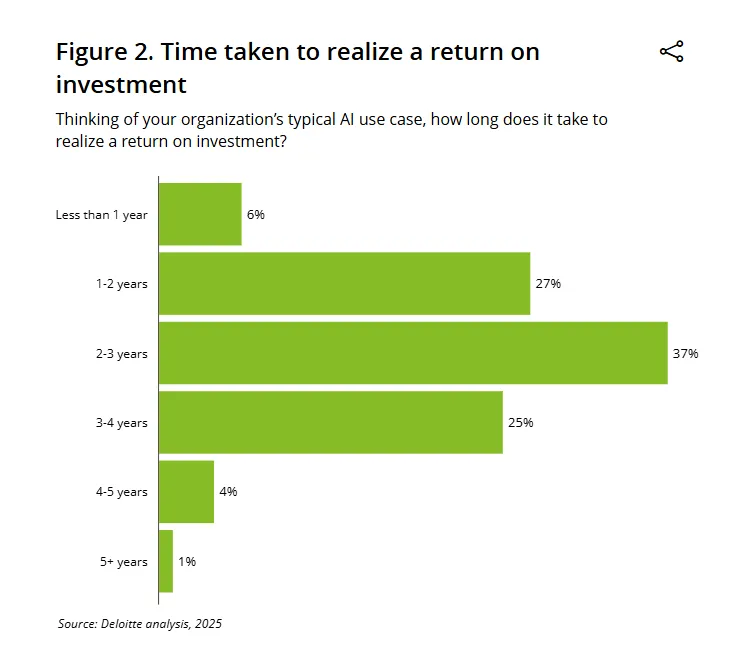
Deloitte found that only 6% of organizations reported payback on their AI investments within a year, against the seven-to-twelve-month payback typically expected of technology spend.
- Disconnected Candidate Data Forces Recruiters Back Into the Workflow: To schedule confidently, a system needs the candidate's stage, communication history, role, hiring team, interview type, priority, availability, and prior interactions. When that context lives across an applicant tracking system, a calendar, an email thread, recruiter notes, and hiring manager messages, no automation can act on the full picture.
As long as the context the scheduler needs is scattered across systems that do not share a record, the automation operates on fragments and the human keeps supplying the whole.
- Hiring Manager Changes Create Manual Rework: Hiring managers change plans. A conflict appears, a priority shifts, a panel member becomes unavailable, an interview needs to move. In most scheduling setups, every change becomes manual rework, because the workflow cannot absorb an ordinary change inside its own rules.
A digital worker handles routine changes automatically within defined boundaries and escalates only the changes that require a recruiter's decision.
- No Feedback Loop Means the System Never Learns From Scheduling Outcomes: Every scheduling outcome carries a signal. No-shows, reschedules, response times, hiring manager availability patterns, feedback latency, candidate drop-off, and interview conversion all reveal where the hiring process is slowing and why.
A system without a feedback loop cannot improve. It schedules the tenth interview exactly the way it scheduled the first, with no memory of which interview types create reschedules, which hiring managers need earlier escalation, or which stages leak the most candidates.
A digital worker treats every scheduling outcome as training data, learns the patterns that predict friction, and adjusts before the friction repeats.
Automated Interview Scheduling Should Be a Digital Worker Responsibility
Recruiters should not be the system of coordination for a process that follows repeatable patterns. Interview scheduling involves gathering availability, resolving conflicts, triggering communication, and maintaining momentum.
Moving this responsibility from recruiters to digital workers eliminates avoidable bottlenecks and creates a more responsive hiring workflow.
Scheduling Has a Clear Job to Be Done
The job of interview scheduling automation is to move a qualified candidate from screen to interview with the right stakeholders, at the right time, with the right instructions, and with the right follow-up.
A digital worker can own that job more efficiently than a calendar tool because the responsibility is broader than availability matching. The full job includes booking, confirming, reminding, rescheduling, escalating, updating the candidate record, and triggering the next workflow step. Each of those is a defined action with a defined success condition.
When scheduling is framed as a single job with a clear definition of done, it becomes something a digital worker can be held to, the way a recruiter is held to filling a role.
The Digital Worker Should Act Independently Within Defined Guardrails
A scheduling digital worker should not wait for recruiter approval on every routine action. It should book standard interviews, send candidate instructions, manage reminders, handle normal reschedules, update the candidate stage, and request feedback once the interview is complete, all on its own.
Guardrails define where independence ends, and specify which interviews it can schedule, which calendars it can access, which messages it can send, when it can reschedule without asking, how long it waits before escalating, and which exceptions require a recruiter.
Human Recruiters Should Step In Only for Judgment, Escalation, or Relationship Risk
Recruiters step in for the situations that require judgment or influence rather than coordination, such as:
- A high-value candidate who needs personal handling
- A sensitive reschedule that could damage the relationship
- A hiring manager delay that needs escalation, and offer-stage urgency where speed is decisive.
Each of these scenarios is a moment where a human presence changes the outcome, while everything else runs without them. The recruiter's calendar clears of the mechanical work, and their attention concentrates on the handful of scheduling moments where empathy, persuasion, or authority actually move the hire forward.
Candidate Experience Should Improve When Humans Leave the Admin Loop
When a digital worker owns the admin, candidates get faster next steps, clearer instructions, reliable reminders, fewer delays, and smoother rescheduling than a busy recruiter could deliver consistently.
The candidate no longer waits days for a recruiter to complete work a digital worker handles in minutes, and the recruiter's time is available for the conversations that build trust.
Scheduling Intelligence Should Compound Across Interviews, Roles, and Hiring Teams
A digital worker that operates on connected data can see which hiring managers respond slowly, which interview types lead to reschedules, which reminders reduce no-shows, which stages create drop-off, and which roles need tighter escalation.
The intelligence should accumulate across interviews, roles, hiring teams, and candidate segments instead of resetting with every new requisition. The scheduling process for the hundredth role should be smarter than it was for the first, informed by everything the earlier hundred taught it.
What Corporate Teams Need From Automated Interview Scheduling
For corporate recruiting teams, interview scheduling becomes complex as hiring volumes increase and more stakeholders enter the process.
Connected Candidate, Role, Calendar, and Hiring Manager Data
Your scheduling system needs to know:
- Who the candidate is
- What role they are being considered for
- What stage they are in
- Which hiring manager owns the decision
- What interview format applies
- What communication has already happened.
This context makes a scheduling decision correct, and when that data lives in one connected record, the system can act on the full context. When it lives across disconnected tools, the system acts on a fragment, and the recruiter supplies the rest.
Rules That Reflect Interview Stage, Role Urgency, and Candidate Priority
Scheduling rules should encode how the business actually hires. Interview stage, role urgency, candidate priority, hiring manager availability, and candidate drop-off risk should all influence how a given candidate moves.
Encoding those rules is what turns automated interview scheduling into recruiting workflow logic rather than calendar automation. The system stops treating every candidate identically and starts moving each one at the speed the hire requires.
Automated Movement From Screening to Interview to Feedback
The candidate should keep moving without a recruiter pushing every step. Screening flows into interview scheduling, interview flows into feedback collection, and feedback flows into the next round, with the system carrying the candidate across each transition rather than parking them until a human intervenes.
Visibility Into No-Shows, Reschedules, Bottlenecks, and Pipeline Leakage
No-shows, reschedules, delayed confirmations, hiring manager response time, feedback latency, and candidate drop-off should surface as pipeline signals instead of staying buried as scattered events. When they surface as data, a TA operations leader can separate calendar activity from actual hiring progress.
A spike in reschedules on a particular panel, a hiring manager whose feedback consistently lags, a stage where candidates drop off at an unusual rate, each becomes a fixable pattern rather than an invisible drag.
A Scheduling Model That Reduces Admin Without Weakening Candidate Experience
Reducing scheduling admin gives recruiters time back. Protecting candidate experience keeps that speed from creating friction, because fast scheduling with unclear communication still frustrates candidates.
A model that saves recruiter time while producing a colder candidate experience has only moved the cost somewhere else.
The right model gives candidates fast next steps, clear communication, reliable reminders, and a smooth path through interviews, and it gives recruiters more time for candidate relationships, hiring manager alignment, and closing.
Asymbl: Automated Interview Scheduling Inside Talent Relationship Management
Asymbl treats interview scheduling as one job inside workforce orchestration, the discipline of designing, managing, and scaling a blended workforce of human and digital workers so they operate as one.
In recruiting, that shows up as Talent Relationship Management: connected data, intelligent matching, structured workflows, and digital labor working together.
Recruiter Suite Keeps Scheduling Connected to the Candidate Record
Asymbl Recruiter Suite gives corporate recruiting teams a Salesforce-based environment for managing candidate movement, interview coordination, feedback, and the full hiring workflow.
Scheduling stays connected to the candidate record, the role, the stage, the hiring team, and the communication history rather than living in a separate calendar.
Interview Management inside Recruiter Suite standardizes how the team evaluates candidates without adding friction, with templates configured by role type and structured feedback captured from everyone involved and attached to the candidate record.
When the scheduling action and the hiring context share one record, the system can act on the full picture at the moment it books, and the recruiter no longer has to reconcile a calendar tool against an applicant tracking system manually.
Rosa, Digital Recruiter, Handles Scheduling as Defined Digital Work
Rosa, Asymbl's pre-built Digital Recruiter, takes on repeatable recruiting execution, including interview scheduling and coordination, as defined digital work.
Rosa books standard rounds against live interviewer availability, briefs the candidate, absorbs ordinary reschedules inside her guardrails, and escalates only the conflicts that need a recruiter’s judgment.
Rosa carries a job description and a motivation for success, the criteria that define what done looks like for her. She operates within defined guardrails that determine what she schedules independently and when she escalates.
In a production run inside Asymbl, Rosa gave a two-person recruiting team the capacity to hire 100 people in 100 days, processing 17,000 applications, pre-screening 1,800 candidates, and scheduling 800 interviews, with a 47% increase in fill rate, $575K in hiring cost savings, and 1,529% ROI.
Talent Intelligence Preserves Candidate Context Across Every Interview Step
Asymbl Talent Intelligence is the reasoning layer that keeps candidate context usable across every interview step. It draws on pipeline history, interview feedback, engagement records, and hiring workflow context, so scheduling decisions carry the full relationship rather than reducing the candidate to an open time slot.
The more context the system retains, the less the candidate has to repeat themselves across rounds and the less the recruiter has to manually reconstruct the story before each interview.
Turn Interview Scheduling Into Defined Digital Work
Between screening and interview, every unanswered email, unavailable panel, delayed confirmation, and missed follow-up creates another opportunity for the candidate to choose a faster-moving employer.
This is why automated interview scheduling cannot be measured by how quickly it books meetings. A booking link can find an available time, but cannot own the outcome of moving a candidate forward.
Corporate TA teams need scheduling to become defined digital work:
- A workflow with a clear responsibility
- Measurable outcomes, and
- The ability to act across candidate data, calendars, hiring rules, and communication channels.
A digital worker can handle routine coordination, manage exceptions within guardrails, and keep candidates moving without making recruiters the operational bridge between every stakeholder.
The result is a hiring process where recruiters spend less time coordinating movement and more time influencing outcomes, building candidate relationships, aligning hiring managers, and closing the talent the business needs.
If interview scheduling is still pulling recruiters into calendar coordination instead of candidate relationships, book a demo with Asymbl to see how Recruiter Suite, Rosa, and Talent Intelligence move candidates from screen to interview without a human recruiter in the middle of every engagement step.
Voice AI Screens Candidates. Recruiters Nurture and Place Them
Evaluating Voice AI in recruiting? Discover why vocal realism is just the delivery channel, and how designing workflow handoffs keeps recruiters focused on closing hires.

The Right Fit Starts With a Conversation.
See what working together could look like.
.webp)