

Chapter 8: The Asymbl Solution: How We Help Staffing Firms Get All Six Right
The six challenges in this guide are interconnected. Budget constraints limit technology investment. Disconnected data undermines speed. Poor speed erodes redeployment rates. Without a scalable foundation, solving one challenge in a silo creates a new bottleneck somewhere else. Firms can break that cycle by building the right operating model instead of layering on individual tools. That model weaves in AI consumption, software licensing, and recruiter capacity into one system where all three cost structures produce returns together. With the hiring surge building and the roles themselves evolving, the firms that have this model in place will meet the demand. The firms still assembling it from disconnected parts will lose placements to competitors who can move faster.
This model shows up at Asymbl as a connected set of products and practices, working together in concert.
Recruiter Suite: Built the Way Staffing Firms Operate
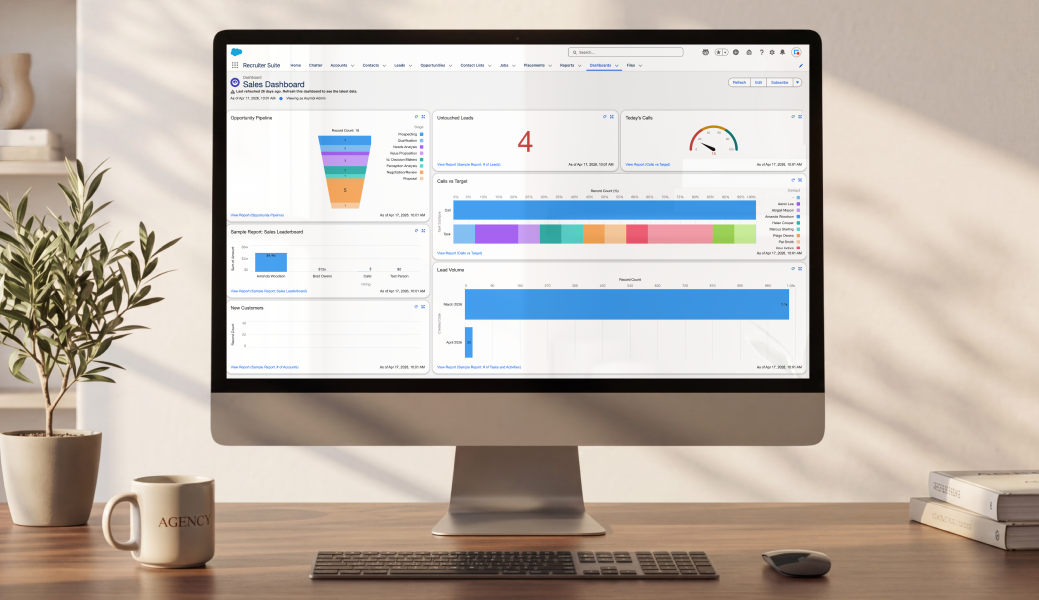
Staffing technology has traditionally been built around managing job requisitions first. Recruiter Suite starts with relationships.
This distinction drives every workflow, data model, and reporting view inside it. When a recruiter logs in, they see their client and talent relationships, and their open roles in one place. When a placement is made, the candidate record stays active, visible, and ready for the next match.
Moving off a firm’s current ATS doesn't have to mean losing what's in it. Asymbl migrates candidate databases into Salesforce while the business keeps running, without turning the switch itself into a distraction. And that experience runs deep: Asymbl has completed more than 1,000 Salesforce implementations for staffing and recruiting clients.
The remaining two challenges, the Talent Paradox and Scale, are addressed by Talent Intelligence and Digital Labor Advisory in the sections that follow.
Time
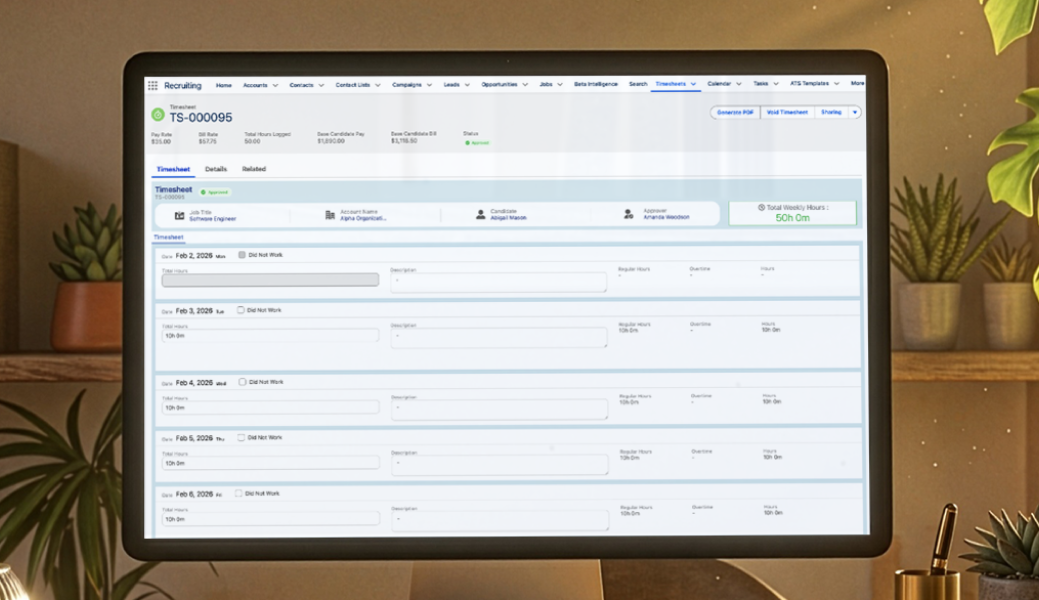
Recruiter Suite also extends into the back office through Asymbl Time. Timesheet capture, complex pay rules, approval workflows, and billing run inside the same system where recruiting happens, so there's no manual reconciliation between front-office placement data and back-office payroll. Billing cycles compress, payroll errors drop, and ops teams spend less time on administrative processing and more time on revenue.
For staffing firms managing the three cost structures together, Time addresses a specific allocation problem: the hours ops teams spend reconciling timesheets, correcting payroll discrepancies, and chasing approvals across disconnected systems. That administrative friction sits in the gap between a successful placement and the revenue it's supposed to generate.
Talent Intelligence
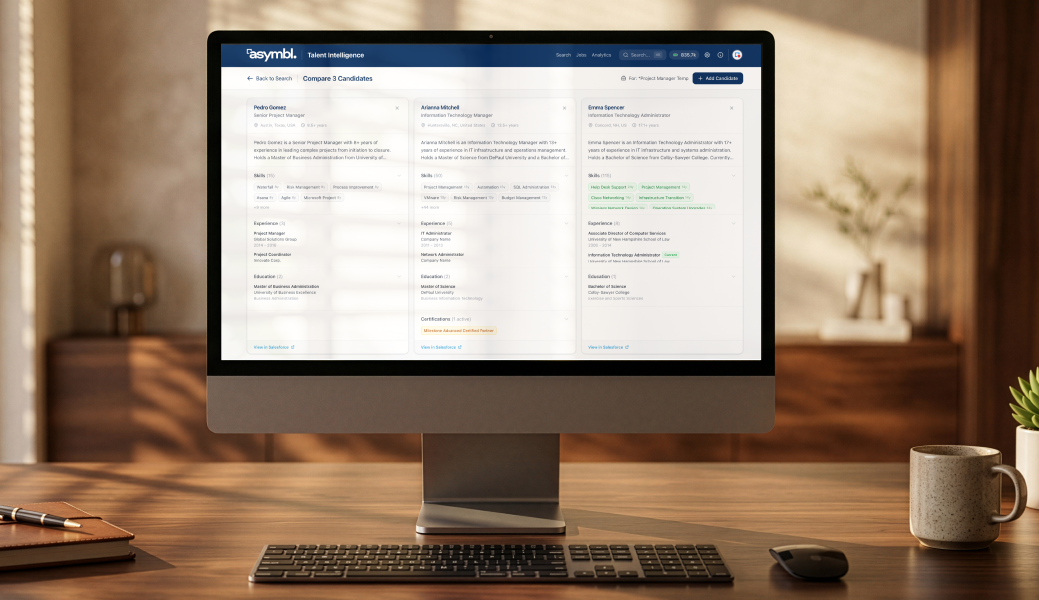
Talent Intelligence is built to solve the real problem described in Chapter 5: more candidates, less signal. Recruiting data already holds more signal than any keyword search can surface, pipeline history, interview feedback, or placement outcomes. Talent Intelligence turns those signals into a reasoning engine that scores every candidate by fit. It powers every search and digital worker inside Recruiter Suite, and the more it's used, the sharper it gets.
- Replaces boolean keyword search with natural language search, surfacing candidates recruiters would otherwise miss
- Scores every candidate with a win probability, so recruiters know who to prioritize before the first call
- Automates profile creation from resumes and job descriptions, so recruiters never re-key what a document already contains
- Gets sharper with every placement outcome it learns from
Rosa, Digital Recruiter

Rosa is Asymbl's pre-built Digital Recruiter, ready to work from day one. She handles the volume work that consumes recruiter time: sourcing intake, applicant screening, candidate pre-qualification, and interview scheduling. Recruiters own a different part of the cycle: building candidate relationships, exercising judgment on fit, and closing placements.
Rosa helped a two-person recruiting team hire 100 people in 100 days. She processed 17,000 applications, pre-screened 1,800 candidates, and scheduled 800 interviews, while fill rate improved 47%, delivering a 1,529% ROI. The human team stayed focused on relationships and final placements.
Digital Labor Advisory
AI pilots in staffing tend to follow the same story: a promising pilot, some early excitement, then a gradual return to the old way of working. How the work is designed around the technology is usually the real constraint, more often than the technology itself.
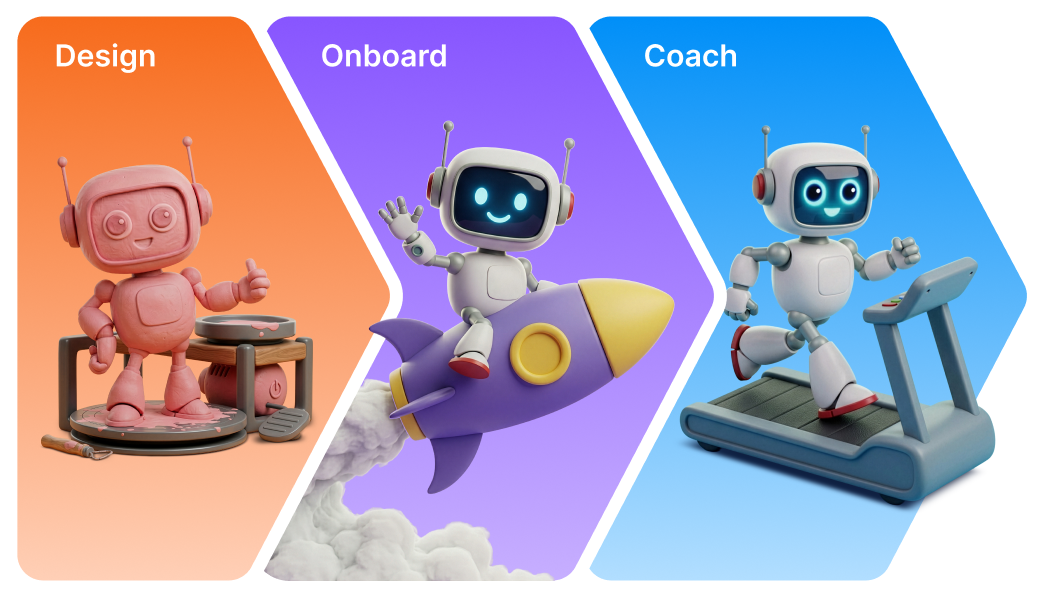
Our Digital Labor Advisory practice exists to build the operating model that makes digital workers perform: defining the digital worker's role and outcomes before deployment, structuring onboarding so the team adopts it without disruption, and coaching continuously so performance improves over time. For staffing firms, Digital Labor Advisory most directly addresses the budget and scalability challenges from earlier in this guide. It builds the business case upfront, validates ROI within the first 90 days, and creates the infrastructure for a firm to scale revenue without scaling headcount at the same rate.
Digital labor is already reshaping staffing operations, wherever it's treated as part of how the firm operates instead of a standalone tool. For firms with workflow-specific needs that pre-built products don't address, Digital Labor Advisory supports the design and deployment of custom digital workers scoped to the firm's operations, delivered through the same Design, Onboard, Coach framework.
Talk To Our Experts
We're here to guide your transformation.
